



BART Monetizes Empty Parking With New Online Leasing Tool
BART began offering select parking lots to non-BART riders to generate new revenue to help address its FY27 $376M operating budget deficit brought on by remote work.

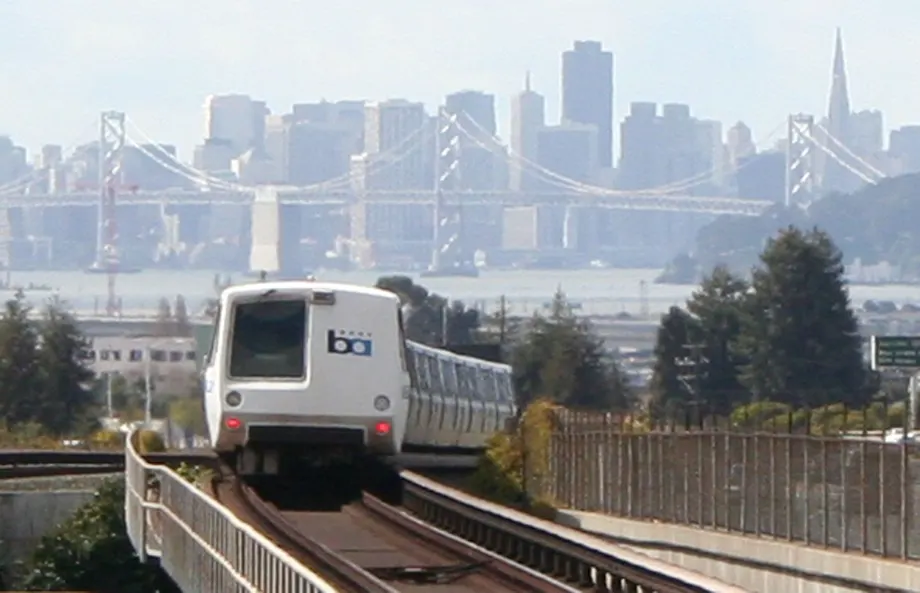
BART leases portions of its parking lots at all stations that offer parking, except for the six stations, which fill up with BART parkers on weekdays.
BART
- BART has introduced an online leasing tool to rent out select parking lots to non-riders.
- This initiative aims to generate additional revenue to help address a projected $376 million budget deficit for fiscal year 2027.
- The budget shortfall is partly due to the increased prevalence of remote work.
*Summarized by AI
Oakland, California’s Bay Area Rapid Transit (BART) officials say the agency has generated $6 million in new revenue since the pandemic by leasing its underutilized parking lots to companies seeking daytime parking.
BART began offering select parking lots to non-BART riders to generate new revenue to help address its FY27 $376M operating budget deficit brought on by remote work.
To streamline the process and attract more business, BART recently launched a new online portal for those looking to rent at least 25 spaces for six months or more. Interest to date has come from local businesses looking for employee and fleet vehicle parking.
BART’s Revenue-Generating Plan
BART leases portions of its parking lots at all stations that offer parking, except for the six stations, which fill up with BART parkers on weekdays.
Restrictions to this new program include, but are not limited to, long-term parking storage, parking for nearby residences, or any commercial activity, such as car rentals. Limited exceptions can be made related to these restrictions for those who accept all maintenance and operations responsibilities for the permitted areas, officials said.
BART also offers special event permits to allow others to use parking lots or plazas for community events at a rate of about $2,000 per day in addition to operational costs.
“BART is looking to generate new revenue in creative ways,” said Chief Communications Officer Alicia Trost. “While demand at some of our lots exceeds supply on weekdays, many of them have capacity we can offer to others to generate new revenue. Our parking lots are also a great venue to hold outdoor events on the weekends, offering easy access to transit and parking spaces.”
Expanding the Plan
Long term, BART has active Transit-Oriented Development projects to build housing on BART’s parking lots and land to increase both ridership and lease revenue.
During the height of the pandemic, BART reimagined its parking lots as COVID testing sites, farmers markets, vaccination sites, and even rented parts of the Castro Valley Station parking lot to display model accessory dwelling units, or ADUs, which interested parties could tour ahead of purchasing a home.
BART has also hosted sold-out events in its parking lots to increase ridership.
The agency said it continues to explore revenue-generating ideas utilizing our existing resources.
Quick Answers
BART is offering its parking lots to non-BART riders to generate new revenue and help address a $376 million operating budget deficit for fiscal year 2027 caused by the impact of remote work.
*Summarized by AI
More Management

METRO Opens Submissions for 2026 Motorcoach Awards
Nominations are now being accepted for METRO Magazine’s Operator of the Year and Innovative Operator of the Year awards.
Read More →
New York MTA Advances Final Contract for Second Avenue Subway Expansion
Contract Four is the largest in the Second Avenue Subway Phase 2 project and includes construction of station infrastructure, tracks, and signals for the subway expansion, MTA officials said. Work on Contract Four will begin in 2027.
Read More →
Transit Agencies Highlight Safety Gains at National Summit
Leaders from 15 major transit systems shared crime-reduction results and safety initiatives while discussing the role of continued federal support.
Read More →

NITA Names New Leadership, Expands Reduced-Fare Program at First Board Meeting
The new regional transit authority appointed its first board chair and interim executive director while extending reduced fares across CTA, Metra, and Pace for eligible riders.
Read More →
Beyond the Checklist: A Structured Approach to Transit Maintenance
Reliability-Centered Maintenance helps transit agencies move beyond routine checklists to focus limited resources on the assets and failures that have the greatest impact on safety, reliability, and service.
Read More →
APTA 2026 Nominating Committee Selects Leadership Slate, Names Chair and Vice Chair Nominees
Leadership changes will help shape the association’s priorities and its representation of the transportation industry during the 2026–2027 term.
Read More →
DART Launches Major Security, Fare Enforcement Initiative
The 90-day demonstration will deploy coordinated security teams at five light rail stations while testing controlled access and gathering data to guide future investments.
Read More →
Advancing Fare Collection Through Technology and Innovation
Learn about delivering 1300 gates at 91 stations while managing fare evasion. Explore the large scale deployment, solution customization and real-world results that affect the region. Prepare for deployment in your region now.
Read More →
Game Day in Motion: Moving Millions During the 2026 World Cup
Between packed transit stations and team motorcoaches, see how agencies and operators across North America tackled the transportation demands of the 2026 FIFA World Cup.
Read More →
Surface Transportation Extension Averts Shutdown, Leaves Transit Funding Gap
The stopgap keeps federal transportation programs moving, but missing advance funding could complicate the transit and rail projects agencies are planning next.
Read More →