



Heightened security involves transit facilities, too
The events of Sept. 11 brought about many changes in our country, perhaps most notably a heightened awareness of safety issues at home and at the office.
The events of Sept. 11 brought about many changes in our country, perhaps most notably a heightened awareness of safety issues at home and at the office. Since “the office” for transit systems can take many forms, including the bus, shop and administrative/management offices, providing a safe working environment in transit presents special challenges. Yet, as transit providers, we must do everything possible to keep our employees and our customers safe. As I write this, military confrontation with Iraq has just begun. While it is my hope that by the time you are reading this, the military confrontation will be over, the vulnerability to our cities and to our transit systems will remain. And as transit providers, we are often on the front lines when disaster strikes and depended upon to provide transportation from and to city centers. What can transit agencies do to keep their employees and customers safe? That is almost an impossible question to answer. Depending on geographical location, one agency’s security measures may need to be completely different than another agency’s only a few miles away. Even though terrorist attacks of the past have been, for the most part, concentrated in major cities, this may not remain true. If terrorism moves to more rural areas, it could be a lot more difficult to fight. Shop needs to be involved From Dan Franklin, our director of safety, I learned more about the procedures and plans that TARC has in place to ensure the security of employees and customers. While there is no one right way to do anything, I highly recommend that all maintenance shop managers either participate in the development of, or are aware of, any crisis management or disaster management plans in place at their transit property. Being prepared is a big first step in security. TARC’s crisis management plan was developed following a 2001 Federal Transit Administration security audit involving a critical look at the operations of every department at TARC, including the maintenance shop. The goal of the audit was to find out what we were doing wrong, what we were doing right and how we could be doing a better job at providing security. We looked at several security issues:
What types of crises could we face in the TARC workplace?
What kind of steps can we take to identify and defuse a “smoldering” crisis waiting to happen?
What kind of emergency notification system do we have in place for responding to emergencies during non-business hours? How good is it?
What other measures can we take to anticipate and respond to crises in the workplace? Improvements cited Several practices came about as a result of the security audit:
We installed a digital security system on all properties, including our maintenance shop.
We organized a Safety and Security Committee composed of team members agencywide.
We have regular fire drills and other evacuation drills.
We are in the process of having security cameras installed on 10 of our coaches as a “test run.”
Duress alarms have been installed at each of our facilities. It could happen here Developing a crisis management plan makes everyone realize that “it could happen here,” and no property or locale is safe. This is not a scare tactic, but a reality wake-up call. Identifying the types of crises that might occur on your property and in your shop, and where you are vulnerable, will help you to be proactive, not reactive, in addressing security issues. It will also help you to prepare a game plan for action. Think of it as preventive maintenance. Just as you regularly check and inspect the function and operation of critical systems and parts on your buses to avoid mechanical breakdowns, so, too, should you regularly check and inspect your shop for any security “red lights.” Being prepared is smart.
More Management
People Movement: Connectpoint Expands Leadership Team, Stadler Names New Group CEO, and More
In this edition, we also spotlight recent personnel moves at Burns, UZURV, and more, highlighting the people taking on new roles across the transportation industry.
Read More →
More Than a Summer Job: Building the Next Generation of Transit Talent
The Delaware River Port Authority and PATCO have transformed their internship program into a hands-on professional development experience that introduces students to the breadth of transportation careers — and creates a pipeline for future employees.
Read More →
LA Metro Board Awards 220 Battery-Electric Bus Contract to ENC
The contract, which is the largest base award of battery-electric buses by a U.S. transit agency, will be built in Southern California, sustaining good jobs as LA prepares to welcome the world in 2028
Read More →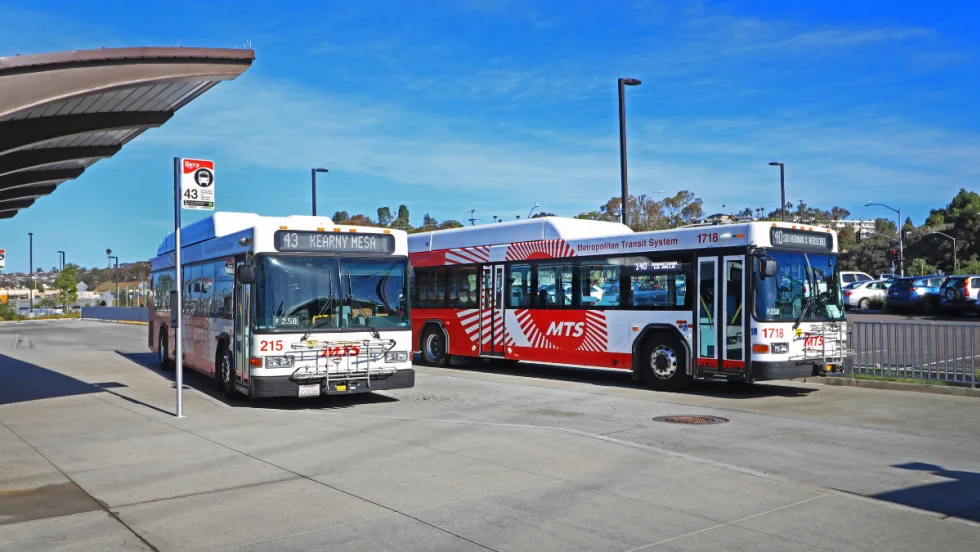
What’s Behind San Diego MTS’s Award-Winning Transit Strategy
Named one of APTA’s 2026 Outstanding Public Transportation Systems with 50 million or more annual passenger trips, California’s San Diego Metropolitan Transit System points to gains in ridership, safety, technology, and reliability as foundations of its success.
Read More →
Public Transit Conference Returning to GFX in 2027, Call for Papers Now Open
The Call for Papers is now open, allowing transit agency professionals and industry experts to help shape the PTC educational program by submitting session ideas for consideration.
Read More →
Indian River Transit’s Community-Focused Approach Earns National Recognition
Named APTA’s 2026 Outstanding Public Transportation System in its size category, Florida’s Indian River County transit system continues to grow ridership through fare-free service and a focus on evolving community needs.
Read More →
ENC Lands MATA Contract and More in Biz Briefs
In this edition of Biz Briefs, we spotlight the latest developments shaping the future of mobility.
Read More →
From Surviving to Thriving: Building Stronger Transportation Organizations
Bus Business Consultants founder Brian Dickson shares lessons on leadership, organizational health, and creating options for long-term success in a changing transportation industry.
Read More →
Everett Transit, Community Transit Outline Consolidation Agreement
The proposed agreement calls for a 50% increase in bus service in Everett, a new microtransit zone, continued paratransit service, and the transfer of Everett Transit operations to Community Transit.
Read More →
Strada360’s Steve Lassey on Turning Transit Data Into Better Decisions
From breaking down data silos to preparing for AI, Strada360 CEO Steve Lassey discusses how transit agencies can use technology to improve operations, customer information, and long-term decision-making.
Read More →