



Houston Metro equips buses with air sterilization device
A team of graduating seniors from Rice University created, with the help of Houston Metro, a system for public transit that would continually clear the air in the bus of pathogens.

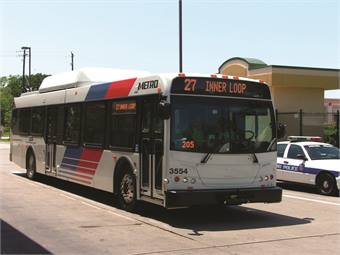
A team of graduating Rice University seniors created, with the help of Metropolitan Transit Authority of Harris County (Metro), a system for public transit that would continually clear the air of pathogens that can lead to tuberculosis (TB), flu and pneumonia.
The students designed and installed a $500 device on a Metro bus in Houston that has proven effective at killing 99.8% of the pathogens that circulate through the air filtering system.
The device, called FluProof, incorporates high-powered ultraviolet lamps that sterilize the air on the fly.
One team member said research by others has suggested that buses, being enclosed public spaces with people in close proximity of one another, can provide an environment for the spread of TB and other diseases.
The Rice project stemmed from the results of a study called the Houston Tuberculosis Initiative (HTI). Researchers worked from 1995 to 2004 to identify patterns of transmission in the region that — though the disease is still rare — has the second-largest TB population in the nation. They were surprised to find a correlation between riders of city buses and cases of tuberculosis. A study published last fall in the journal Tuberculosis pointed out that some routes, particularly long ones, indicated a higher number of cases of the disease.
The lead author of the HTI study, Marsha Feske, a former graduate student at the University of Texas Health Science Center at Houston and research fellow at The Methodist Hospital Research Institute prompted the Rice project when she decided to act on the research results. She enlisted the students, who approached Metro and asked if the agency would be interested in a project focusing on cleaning the air inside the bus. “Anything we can do to improve the customer environment for our patrons, we’ll take a look at,” Andy Skabowski, sr. VP, service delivery, for Metro said.
With Metro staffers offering technical assistance, the student team came up with a streamlined system that enables a Metro bus to power it while surpassing even their own stringent requirements that FluProof kill 99% of airborne pathogens.
“They did a wonderful job,” Skabowski said. “Metro has tried some other systems that we had some reliability issues with, so we gave [them] this opportunity.”
Team members have filed for a patent on FluProof and hope to commercialize it. In the meantime, Metro will keep tabs on their progress.
The news of the project came on the heels of an announcement that Washington Metropolitan Area Transit Authority removed a bus driver and his bus from service after he was diagnosed with viral meningitis.
The driver’s bus was thoroughly sanitized. In addition, as a precaution, the agency disinfected all 164 buses at its Northern Division.
Skabowski said if the agency had a staff member diagnosed with a communicable disease, the first step it would take would be to fully understand its potential exposure and form a plan based on that information.
About one-and-a-half years ago, Skabowski recalled, Houston was dealing with some cases of the bird flu. The agency looked to local health officials to identify transfer points of concern and then shaped a plan around those areas to best protect its employees, patrons and the public. Measures taken included increased cleaning intervals in vehicles, stations and offices with special focus on doorknobs, sink handles and elevator buttons, as well as providing hand sanitizers, wipes, and masks and gloves — which were optional — to operators. Additionally, Metro has doctors on contract to consult if an employee is diagnosed with a communicable disease.
More Bus

Report: Transit Bus Manufacturing Supports 34,100 Jobs, $5.1B in GDP
The “Buses Mean Business” report examines the transit bus manufacturing industry’s economic footprint, supply chain, and rising demand for vehicle replacements.
Read More →
Biz Briefs: New Flyer Delivers in Columbus, Houston, Beep and Freebee Merge, and More
In this edition of Biz Briefs, we spotlight the latest developments shaping the future of mobility.
Read More →
People Movement: Dan Dipert Coaches Adds Third-Generation Leader, Keolis Names New Valley Metro VP/GM, and More
In this edition, we also cover recent appointments and announcements at the Wabtec, SilverRide, HNTB, and more, showcasing the individuals helping to shape the future of transportation.
Read More →
New York MTA Plans Largest Bus Fleet Upgrade in More Than a Decade
The agency is seeking manufacturers for 650 new CNG buses to replace aging vehicles, improve reliability, and advance its broader fleet modernization strategy.
Read More →
Building a Flexible Path to Transit Electrification
John Hroncich discusses BAE Systems’ modular and scalable approach, lessons learned from decades of real-world operations, and how agencies can identify electrification strategies that fit their fleets.
Read More →
Bus Tech Talk: Keeping Transit Technicians Ahead of the Technology Curve
LA Metro’s Obed Mejia discusses technician training, evolving maintenance technology, fleet replacement, and strategies for getting the most out of today’s transit fleets.
Read More →
Biz Briefs: RIPTA Unveils New Frontrunners, Clevland RTA Adds New Siemens, and More
In METRO's latest installment, we take a look at recent news from Siemens, Prevost, Dodge, and more partnerships making headlines across the transportation sector.
Read More →
People Movement: Holly Arnold Joins Transdev and More
In this edition, we also cover recent appointments and announcements at Pace, CamTran, MCI, and more, showcasing the individuals helping to shape the future of transportation.
Read More →
The High Cost of Transit Buses: Industry Leaders Look to Procurement Reform
Transit leaders and policymakers examine how standardized bus designs, streamlined procurement, and predictable funding could help agencies stretch budgets and deliver better service.
Read More →
The Business Voice Behind Public Transportation
As chair of APTA’s Business Members Board of Governors, Ray Melleady explains how more than 850 business members are partnering with transit agencies to advance funding, innovation, and industry-wide collaboration.
Read More →