



Innovative Operator Profile: Evolution of an Operation
Robert Swarthout Sr. was the owner of a Texaco gas station when he was approached by a local bus company that wanted to park its vehicles in the area adjacent to the station. In exchange, the company would buy its gas from the station.
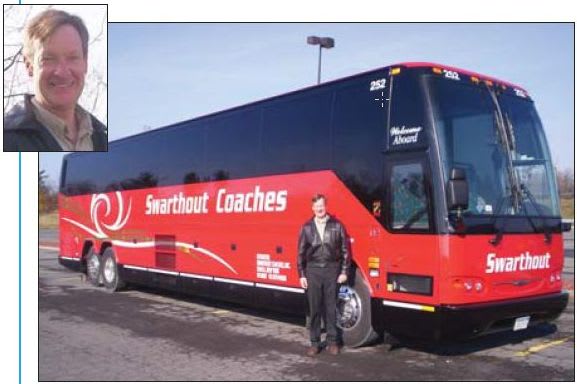
Robert Swarthout Sr. was the owner of a Texaco gas station when he was approached by a local bus company that wanted to park its vehicles in the area adjacent to the station. In exchange, the company would buy its gas from the station. Swarthout agreed, which led to the next stage in his business’ evolution.
“One morning, sometime in the 1950s, the owner of the bus company asked my father if he could pick up some kids because his driver was sick,” Robert Swarthout Jr. explains. “So he went out and picked up these kids on a school bus run.” At the time, there were no federal laws mandating CDLs for large truck and bus drivers. “That’s when he got the idea that having a school bus contract would work well with a gas station.”
In 1974 the operation went strictly to charters. Five years later, Robert Jr. joined the company. Fifteen years after that, Robert Sr. passed away and Robert Jr. became president. It was his father’s gift for taking advantage of rare opportunities when they presented themselves that enabled the company to make the transition from gas station to school bus operation to what it is today — Swarthout Coaches and Tours.
The Ithaca, N.Y.-based motorcoach company currently provides transportation services primarily to Cornell University, Ithaca College and SUNY Courtland. To accommodate student and business cultures that favor luxuriating in the finer things in life, Swarthout Coaches and Tours recently purchased a 56-passenger, 45-foot Prevost motorcoach equipped with flat-screen TV, sound system and reclining seats. The company will acquire a second such vehicle early next year.
Swarthout’s motorcoaches are equipped with some of the most advanced safety solutions on the market today. Drive Cam, SmarTire and the Kidde Dual Spectrum fire-suppression and detection system can all be found on the operation’s vehicles. The systems work synergistically to keep the operation running smoothly by preventing a wide range of mechanical and driver behavioral problems.
DriveCam, for example, is an event-triggered video recording system designed to teach drivers to monitor their conduct on the road, as well as safeguard the operator against false liability claims. The other solutions are aimed at preserving vehicle integrity, thereby cutting down on unnecessary costs related to fuel and unscheduled downtime. “We always try for better utilization of equipment,” Swarthout says.
The solutions are also guarantors of customer satisfaction. “The technology benefits customers because it makes the buses more reliable and efficient,” he says. Swarthout knows that a successful business model requires satisfying passenger demands. “If you take care of the customer, they’ll stick with you,” he says. “But customers will only tolerate problems so far. If you’re hauling an athletic team, they want to be at the game on time.”
Swarthout has a company Website (www.goswarthout.com) up and running, which has begun to generate more business for his operation. “We’re making improvements to our Website,” he says. “And as time goes by, we’re seeing what used to be four or five emails a month be four or five emails a day.”
AT A GLANCE
Motorcoaches: 12
Fleet mix: 6 MCI, 6 Prevost
Employees: 28
Drivers: 19
Service area: Central New York
Services offered: Charters, tours, athletic
Average annual mileage: 569,000
President: Robert Swarthout Jr. (pictured)
More Motorcoach

People Movement: Dan Dipert Coaches Adds Third-Generation Leader, Keolis Names New Valley Metro VP/GM, and More
In this edition, we also cover recent appointments and announcements at the Wabtec, SilverRide, HNTB, and more, showcasing the individuals helping to shape the future of transportation.
Read More →
METRO Opens Submissions for 2026 Motorcoach Awards
Nominations are now being accepted for METRO Magazine’s Operator of the Year and Innovative Operator of the Year awards.
Read More →
Biz Briefs: Alstom Lands Canadian Contract, LYT to Supply California TSP, and More
In METRO's latest installment, we take a look at recent news from Complete Coach Works, Beep, FlixBus, and more partnerships making headlines across the transportation sector.
Read More →
Biz Briefs: RIPTA Unveils New Frontrunners, Clevland RTA Adds New Siemens, and More
In METRO's latest installment, we take a look at recent news from Siemens, Prevost, Dodge, and more partnerships making headlines across the transportation sector.
Read More →
People Movement: Holly Arnold Joins Transdev and More
In this edition, we also cover recent appointments and announcements at Pace, CamTran, MCI, and more, showcasing the individuals helping to shape the future of transportation.
Read More →
ABA Report: Motorcoach Travel Generates $161.6B Economic Impact
The 2025 analysis finds motorcoach travel supported nearly 900,000 jobs and generated $28 billion in federal, state, and local taxes.
Read More →
CharterUP’s Armir Harris on Technology, AI, and the Future of Group Mobility
In a recent episode of METROspectives, CharterUP Founder/CEO Armir Harris discussed the company’s evolution from an online charter bus marketplace into a technology platform supporting public- and private-sector mobility and much more.
Read More →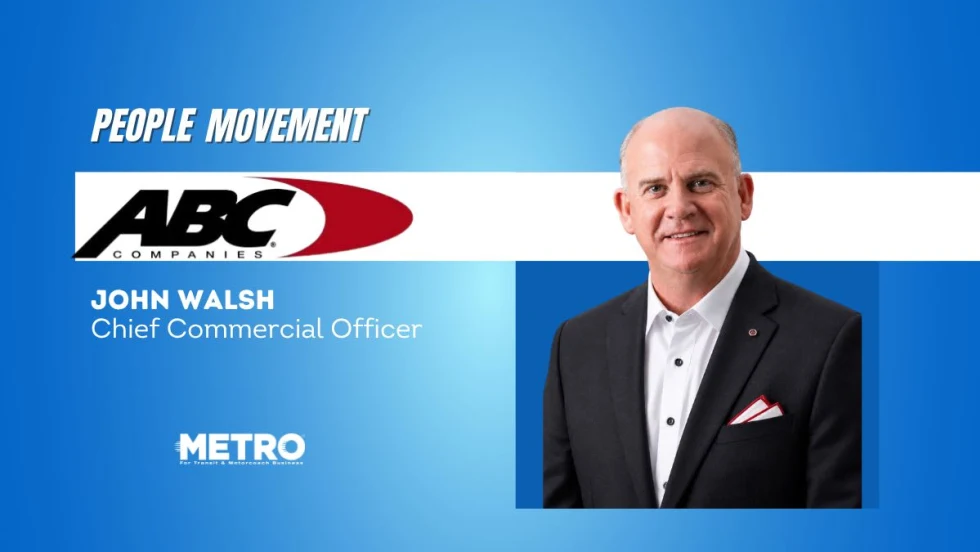
People Movement: ABC Names John Walsh as Chief Commercial Officer
In this edition, METRO also covers recent appointments and announcements at the DART, STV, and more, showcasing the individuals helping to shape the future of transportation.
Read More →
From Surviving to Thriving: Building Stronger Transportation Organizations
Bus Business Consultants founder Brian Dickson shares lessons on leadership, organizational health, and creating options for long-term success in a changing transportation industry.
Read More →
Biz Briefs: Luminator Marks Milestone and More
From manufacturers and suppliers to transit agencies and motorcoach operators, these updates offer a snapshot of the projects, partnerships and business moves driving the industry forward.
Read More →