



Inside the Next Generation of Motorcoaches
From advanced driver-assist systems to upgraded passenger amenities, leading manufacturers are refining proven coach platforms to meet evolving operator and rider expectations.


METRO’s Motorcoach Product Roundup highlights how leading OEMs are building on established designs to deliver greater reliability, operational efficiency, and a more connected, comfortable travel experience for both passengers and drivers.
METRO
- Manufacturers are enhancing motorcoach platforms with advanced driver-assist technologies.
- Upgraded amenities are being introduced to improve passenger experience.
- These changes align with the evolving expectations of operators and riders.
*Summarized by AI
Motorcoach manufacturers continue to refine their offerings as operators balance rising expectations around comfort, safety, and performance with the realities of day-to-day fleet operations.
Across North America, today’s coaches are less about dramatic reinvention and more about thoughtful evolution — integrating advanced driver-assist technologies, improved passenger amenities, and enhanced serviceability into proven platforms.
METRO’s Motorcoach Product Roundup highlights how leading OEMs are building on established designs to deliver greater reliability, operational efficiency, and a more connected, comfortable travel experience for both passengers and drivers.
ABC Companies
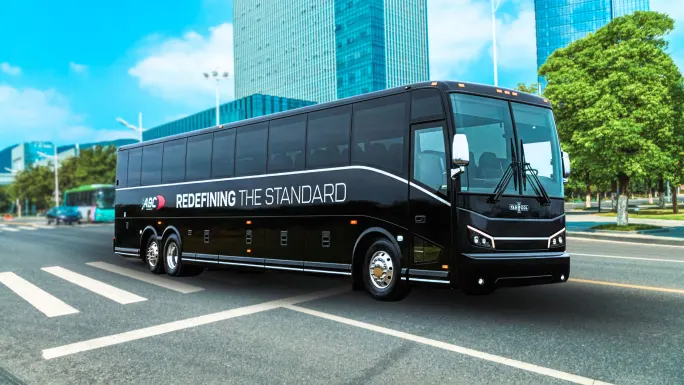
ABC Companies’ Van Hool CX45 combines passenger comfort, driver-focused technology and fleet-friendly serviceability for North American operators.
ABC Companies
The Van Hool CX45 remains a trusted choice for operators across North America, offering a thoughtful balance of passenger comfort, driver support, and day-to-day reliability. A modern interior, leatherette seating, and convenient charging outlets help create a more connected passenger experience, while the ergonomic driver’s seat and available technologies such as adaptive cruise control and a 360-degree camera system support confidence behind the wheel. For operators, consistent components across model years help simplify maintenance and service. LHP Telematics, paired with 24/7 support from the ABC FleetAssist team, adds another layer of visibility and operational reliability.
Daimler Coaches North America
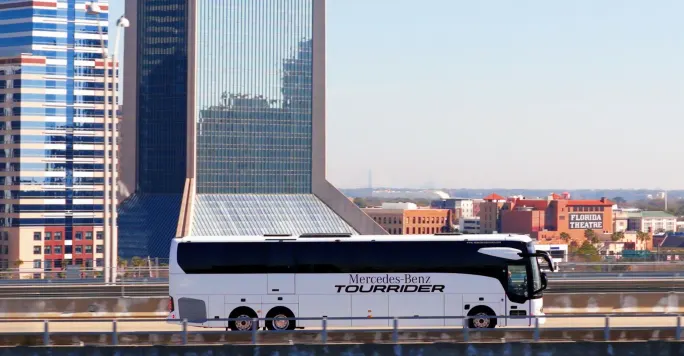
The Mercedes-Benz Tourrider integrates advanced safety systems and premium amenities, backed by an expanding U.S. support network.
Mercedes-Benz
Designed for North American operators, the Mercedes‑Benz Tourrider integrates a stainless‑steel frame with advanced technologies including Active Brake Assist 5, Sideguard Assist, adaptive cruise control, and a 360-degree camera for enhanced situational awareness. ADA accessibility, premium passenger comfort, and an ergonomic driver environment further support long‑distance performance. With its new Jacksonville headquarters and PDI facility, expanded parts infrastructure, and a growing service network, Mercedes‑Benz is strengthening its long‑term commitment to the U.S. motorcoach market, ensuring operators have the support, reliability, and technology they need to deliver safe, comfortable service every day.
Motor Coach Industries (MCI)
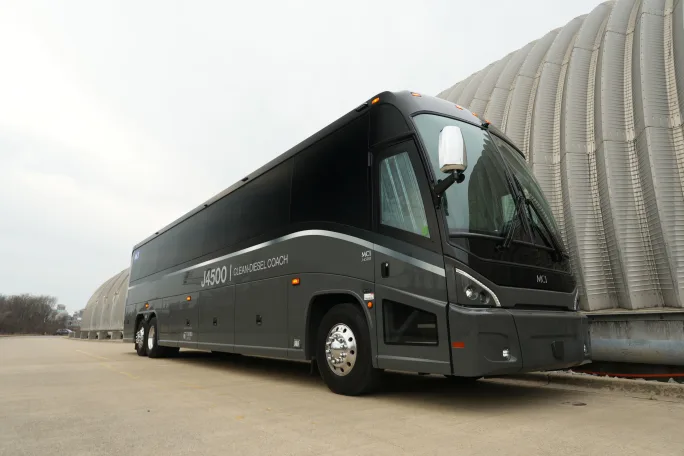
MCI’s J4500 remains a mainstay for long-distance travel, offering upgraded comfort, proven performance and enhanced safety features.
MCI
Motor Coach Industries (MCI) continues to refine its flagship J4500, a staple in North American over-the-road fleets. Designed for long-distance travel, the coach emphasizes passenger comfort with upgraded seating, onboard connectivity, and a quieter ride, while delivering proven performance through its Detroit Diesel engine and Allison transmission. Enhanced safety features and easier maintenance access support operational efficiency. Alongside the J4500, MCI’s D-Series coaches serve high-capacity commuter needs, reflecting the company’s focus on reliability, accessibility, and incremental innovation across its lineup.
Prevost
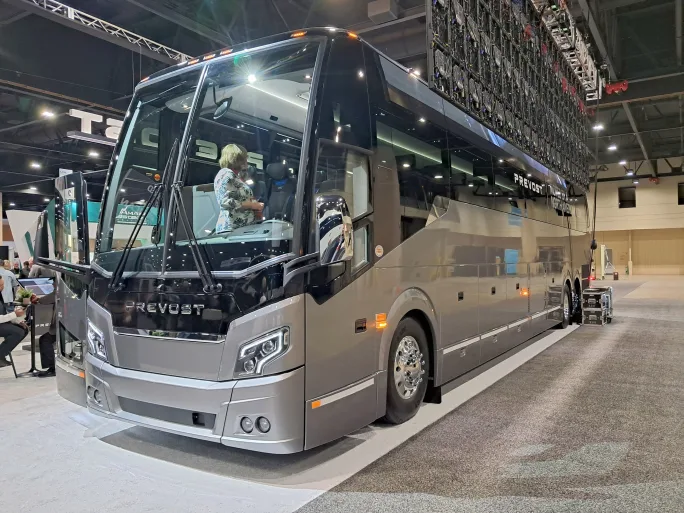
Prevost’s H3-45 continues to serve premium and line-haul markets with its high-deck design, durability and extensive service support.
METRO
Prevost, a Volvo Group subsidiary, has long held a strong position in the North American motorcoach market, particularly in the premium tour, charter, and entertainer segments. Its H3-45 model, with its high-deck design and three-axle configuration, is a familiar presence on highways and a common platform for both line-haul service and luxury conversions. Known for its structural durability and consistent ride performance, the coach has remained largely evolutionary in design. Prevost’s extensive service network and parts infrastructure continue to play a central role in fleet lifecycle management for operators.
TEMSA
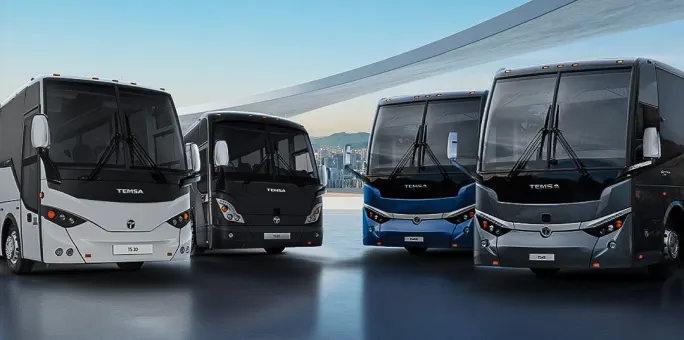
TEMSA’s motorcoach lineup blends fuel efficiency, modern amenities and zero-emission options to meet a range of North American operating needs.
TEMSA
TEMSA continues to expand its presence in the North American market with a versatile lineup of motorcoaches designed for charter and transit applications. Models such as the TS45 and TS35 emphasize fuel efficiency, passenger comfort, and modern styling, offering amenities like onboard Wi-Fi, ergonomic seating, and advanced climate control. The TS30 complements the lineup as a compact, full motorcoach solution ideal for shorter routes and niche operations. The TS45E further strengthens the portfolio with a zero-emission alternative for operators pursuing sustainable transportation. Built for durability and lower operating costs, TEMSA coaches deliver flexible, cost-effective solutions across diverse service needs.
Quick Answers
Advanced driver-assist systems in motorcoaches include technologies designed to enhance driver safety and performance, such as adaptive cruise control, lane-keeping assist, and collision avoidance systems.
*Summarized by AI
More Motorcoach

From Surviving to Thriving: Building Stronger Transportation Organizations
Bus Business Consultants founder Brian Dickson shares lessons on leadership, organizational health, and creating options for long-term success in a changing transportation industry.
Read More →
Report: Canadian Motorcoach Industry Generates $4.4B in Economic Impact
The 2025 Motorcoach Economic Impact Report finds motorcoach travel supported nearly 25,000 jobs and generated $980 million in federal, provincial, and local taxes.
Read More →
Prevost Opens Expanded Chicago-Area Service Center
The $8.1 million Elk Grove Village investment nearly triples facility space while adding service capacity, parts storage, and customer amenities.
Read More →
People Movement: Dan Dipert Coaches Adds Third-Generation Leader, Keolis Names New Valley Metro VP/GM, and More
In this edition, we also cover recent appointments and announcements at the Wabtec, SilverRide, HNTB, and more, showcasing the individuals helping to shape the future of transportation.
Read More →
METRO Opens Submissions for 2026 Motorcoach Awards
Nominations are now being accepted for METRO Magazine’s Operator of the Year and Innovative Operator of the Year awards.
Read More →
Biz Briefs: Alstom Lands Canadian Contract, LYT to Supply California TSP, and More
In METRO's latest installment, we take a look at recent news from Complete Coach Works, Beep, FlixBus, and more partnerships making headlines across the transportation sector.
Read More →
Biz Briefs: RIPTA Unveils New Frontrunners, Clevland RTA Adds New Siemens, and More
In METRO's latest installment, we take a look at recent news from Siemens, Prevost, Dodge, and more partnerships making headlines across the transportation sector.
Read More →
People Movement: Holly Arnold Joins Transdev and More
In this edition, we also cover recent appointments and announcements at Pace, CamTran, MCI, and more, showcasing the individuals helping to shape the future of transportation.
Read More →
ABA Report: Motorcoach Travel Generates $161.6B Economic Impact
The 2025 analysis finds motorcoach travel supported nearly 900,000 jobs and generated $28 billion in federal, state, and local taxes.
Read More →
CharterUP’s Armir Harris on Technology, AI, and the Future of Group Mobility
In a recent episode of METROspectives, CharterUP Founder/CEO Armir Harris discussed the company’s evolution from an online charter bus marketplace into a technology platform supporting public- and private-sector mobility and much more.
Read More →