



Intercity Bus Industry Outlook: A Mix of Apprehension & Optimism
Industry leaders see both promise and peril ahead as intercity bus travel rebounds, but unpredictable market forces threaten to reshape the sector.
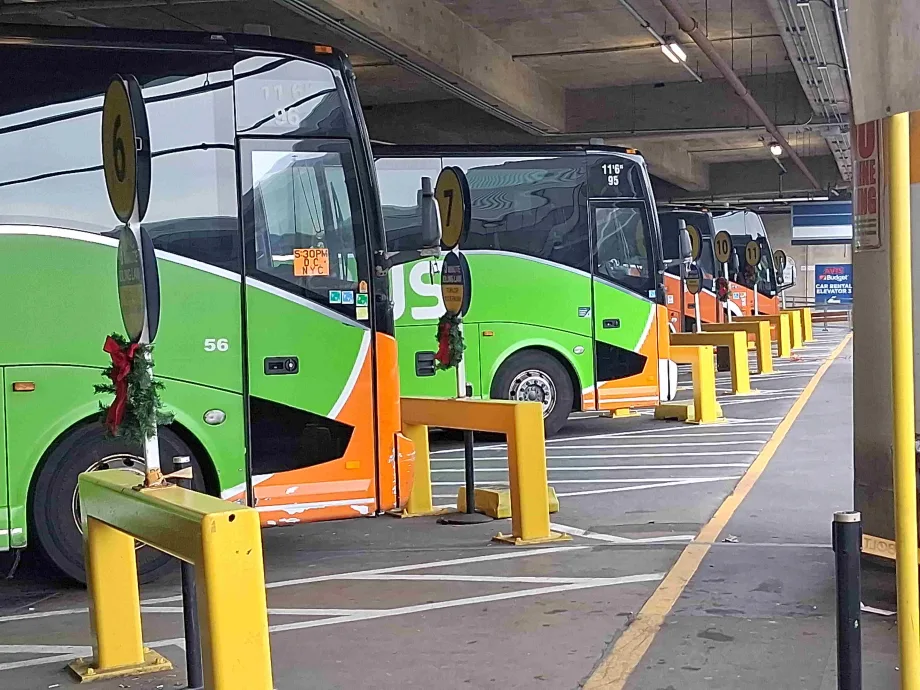
FlixBus continues to expand its footprint with new routes and modern coaches serving key corridors.
Joseph P. Schwieterman
- Intercity bus industry leaders are uncertain about the future, facing potential disruptions alongside opportunities like increased demand due to rising travel costs.
- Brian Antolin, CEO of Metrolane, notes that while 2024-25 traffic growth momentum has slowed, the rise in oil prices might encourage more people to choose bus travel in the summer.
- Traffic performance is expected to vary significantly among bus lines, depending on specific customer niches and geographic areas.
*Summarized by AI
It's a “touch-and-go” time for the country’s intercity bus lines, according to the motorcoach professionals and economists. The optimism industry leaders feel is tempered by apprehension about the many disruptive forces looming.
“No one knows what to expect,” observed Brian Antolin, an industry expert and CEO of Metrolane, a mobility platform connecting local travel providers with intercity bus, rail, ferry, and air travel. “The momentum behind the traffic growth during 2024-25 has faded, but other factors — particularly the rising cost of driving and flying due to the oil price surge — could boost demand by summer.”
The scenarios that Antolin describes are a mix of good and bad, leaving industry leaders on edge. Many expect the traffic performance to vary sharply between bus lines, depending on their customer niche and geographic region, but how this will play out is impossible to predict.
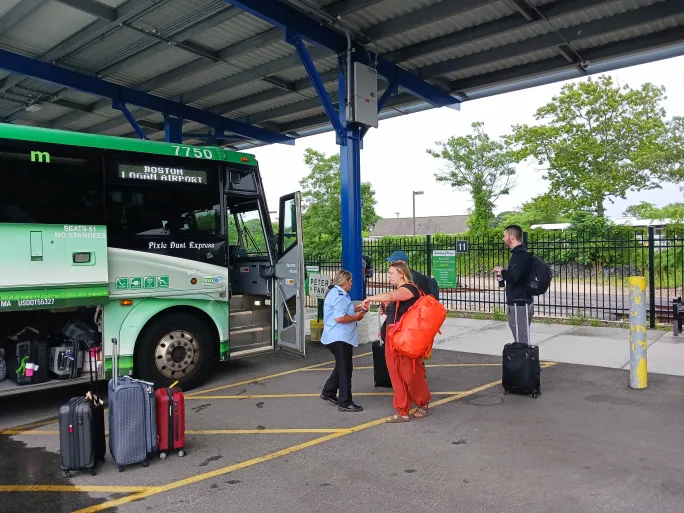
The industry didn’t see broad-based expansions like in 2024, when Peter Pan and Vonlane — a first-class operator with an on-board attendant on each scheduled run — undertook major expansions in the Northeast and the South, respectively.
Joseph P. Schwieterman
Favorable Trends Imbue Optimism
The biggest source of optimism at the start of 2026 was the expected growth in intercity travel nationwide.
Goldman Sachs forecasted 2.6% real GDP growth in the U.S. for 2026, up slightly from 2024. David Mericle, Goldman’s chief U.S. economist, noted that “wage gains and rising wealth should also help sustain consumer spending growth.” The projection was made before the escalation of the conflict in Iran and the subsequent oil price surge, but intercity bus lines have ridden the wave of growing demand for personal travel.
The recent performance of smartly branded bus systems supported by the state government is also good news. Ambitious expansion over the past several years has continued to attract new riders.
Colorado’s Bustang reported impressive traffic gains last summer, and Virginia Breeze’s monthly ridership reached record levels in late 2025. This spring, Virginia Breeze will launch the “Tidewater Current,” a new route linking the Norfolk region with Richmond and Harrisonburg —its first route not to serve Washington, DC.
Perhaps the most exciting recent development in this category, however, was the doubling of Ohio’s GoBus service footprint in March. Many communities, including Oxford and Urbana, gained service, supported by stations Cincinnati and Cleveland built within the last few years that have ample seating, attractive ticket counters, and short-term parking for pickups and drop-offs. Marketing upgrades are also in the mix.
“State governments are developing new social media strategies and customized apps to attract new markets,” said Terry Cordell, executive director of Transcor Data Services, which works closely with state bus lines on technology enhancements.
Although not every state is seeing growth, the direction is positive.
A third favorable development is the big investment in Greyhound by Flix SE, the legacy line’s parent company. Greyhound has received around 200 new buses over the past few years and improved on-time performance. Its improving reputation and efficiency are helping keep travelers coming back. New equipment for Trailways and megabus.com affiliates, as well as for FlixBus partners, is also a bright spot.
Flix SE’s investments have allowed for several service expansions, including:
- Greyhound’s new Denver – Seattle route via Salt Lake City and Boise.
- Flix/Greyhound’s expanded Chicago – Indianapolis service, now 13 trips in each direction on busy days.
- New direct Maine - New York and Minneapolis - St. Cloud, MN routes by FlixBus, the latter being an extension of Chicago service
- Still another source of optimism is strong traffic on lines focusing on Spanish-speaking travelers, despite a decline in immigration activity along the US/Mexico border.
“These specialty lines tend to have higher passenger counts on each schedule operated than other types of carriers, so their importance is larger than it may appear,” noted Antolin.
Limousine Express recently added a daily El Paso–Dallas service, expanding its network to Los Angeles and central Texas. The company (also called “Los Limos”) offers reserved seating and has a strong social media presence.
Headwinds on the Horizon
Several other factors raise industry concerns about what lies ahead. For one, heightened Amtrak competition on busy corridors appears to be strengthening, particularly on the busiest routes.
Amtrak’s record ridership last year appears to have come at the expense of bus service on certain corridors, such as Chicago – St. Louis, Oakland – Sacramento, and Portland – Seattle. The passenger railroad’s on-time performance has improved, and relatively few new bus-to-train connecting routes have recently come online.
Another drag is the slower-than-normal pace of new commercial bus offerings.
Based on our DePaul University frequency analysis of 67 routes, service levels have been mostly flat, with some drops in rural areas and the West. January schedules dipped slightly, dropping 0.3% on the second Saturday of January, for example. Yet, on the last Friday in February, departures rose 1.9% on busy days.
Peter Pan and FlixBus/Greyhound still have more than 60 trips in each direction between New York and Washington, DC, with four other lines offering an additional 16.
FlixBus and Greyhound’s new routes are among the most heavily publicized recent expansions. Even so, some rollouts merely filled the voids left by the shutdown of several regional bus lines, most notably Burlington Trailways and Southeastern States, which made their last scheduled runs last year.
The industry didn’t see broad-based expansions like in 2024, when Peter Pan and Vonlane — a first-class operator with an on-board attendant on each scheduled run — undertook major expansions in the Northeast and the South, respectively.
Finally, turning a profit is being hampered by increasingly pronounced peaks and valleys in traffic. Strong demand during busy seasons and on weekends is accompanied by weaker conditions during low seasons and during midweek.
"The swings are a big problem on many routes, said Antolin, who added that “[a]s a result, we are seeing an upswing of less-than-daily services along both thinly traveled routes and major corridors."
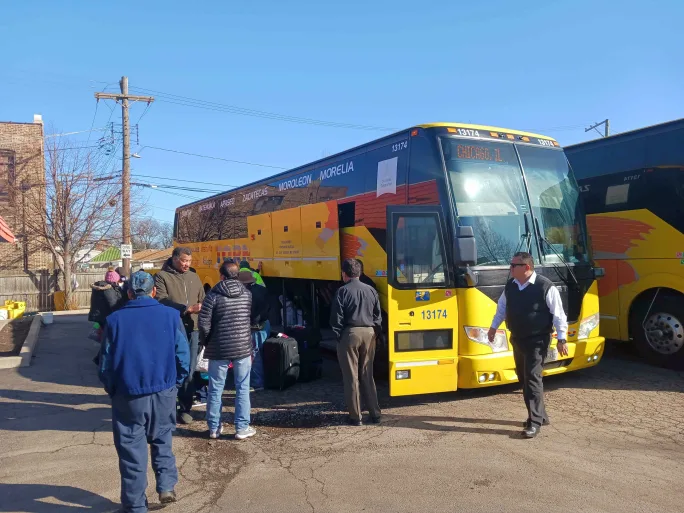
Another source of optimism is strong traffic on lines focusing on Spanish-speaking travelers, despite a decline in immigration activity along the US/Mexico border.
Joseph P. Schwieterman
The Expected Stimulus from the Oil Shock
The biggest potential stimulus to traffic comes from the oil price shock that began in February.
In the near future, it’s “pain at the pump” for operators.
Diesel fuel rose to $5.35/gallon in late March, about $1.80 higher than a year ago. Filling a 180-gallon tank on a motorcoach now often costs over $900. As a result, the cost of running a 300 route (based on seven mpg) tends to be up more than $75, or $150 round-trip, compared with a year ago. Plus, for now, the oil-price shock is likely slowing travel growth due to the burden felt by consumers.
But rising fuel prices will ultimately create a stimulus — and possibly a big one.
Motorcoaches are several times as fuel-efficient as commercial airplanes and diesel trains, and more than eight times as fuel-efficient as driving.
“When fuel prices surge, longer trips tend to be replaced by shorter trips, which benefits bus travel,” said Antolin. This was felt in 2011 through 2014, when throngs turned to BoltBus, which last ran in 2021, Greyhound, Megabus, and other lines to avoid more costly driving and short-hop flights.
Industry leaders expect a similar reaction if fuel prices remain high, particularly outside the Northeast Corridor, where the driving culture is less pronounced. Antolin anticipates a possible one-quarter lag before the stimulus occurs, expecting that “it will be a strong summer if oil remains high, which will make airfares unaffordable to many.”
Samantha Rouzan, a graduate analyst who supports DePaul’s research, added, “With the cost of living already high, rising fuel prices will push many people to search for alternatives to driving — particularly when they are traveling alone,” she said.
What is the cumulative effect of these forces? Anticipating traffic growth roughly mirroring the projected 2.6% GDP growth rate is reasonable, but the diverging forces suggest avoiding making an exact projection.
If high fuel prices push travelers away from air and car travel and fears of a recession ease — both big "ifs” — demand growth should exceed the GDP projection. Another wild card is a possible resurgence of civil unrest over controversial federal immigration policies, which could deter bus trips to and from big cities.
All told, many believe that intercity buses will carry more passengers than last year, underscoring the sector’s vitality. But providers are bracing themselves: it may be a bumpy ride.
About the Author: Joseph P. Schwieterman, Ph.D., is the director of the Chaddick Institute at DePaul University, which will host a free webinar on the Outlook for Intercity Bus travel on April 22 at 12:15 pm CT. To receive his free Intercity Bus E-News newsletter, contact chaddick@depaul.edu.
Quick Answers
Industry leaders are optimistic due to rising costs of driving and flying, which could boost demand for intercity bus travel by the summer.
*Summarized by AI
More Motorcoach

From Surviving to Thriving: Building Stronger Transportation Organizations
Bus Business Consultants founder Brian Dickson shares lessons on leadership, organizational health, and creating options for long-term success in a changing transportation industry.
Read More →
Report: Canadian Motorcoach Industry Generates $4.4B in Economic Impact
The 2025 Motorcoach Economic Impact Report finds motorcoach travel supported nearly 25,000 jobs and generated $980 million in federal, provincial, and local taxes.
Read More →
Prevost Opens Expanded Chicago-Area Service Center
The $8.1 million Elk Grove Village investment nearly triples facility space while adding service capacity, parts storage, and customer amenities.
Read More →
People Movement: Dan Dipert Coaches Adds Third-Generation Leader, Keolis Names New Valley Metro VP/GM, and More
In this edition, we also cover recent appointments and announcements at the Wabtec, SilverRide, HNTB, and more, showcasing the individuals helping to shape the future of transportation.
Read More →
METRO Opens Submissions for 2026 Motorcoach Awards
Nominations are now being accepted for METRO Magazine’s Operator of the Year and Innovative Operator of the Year awards.
Read More →
Biz Briefs: Alstom Lands Canadian Contract, LYT to Supply California TSP, and More
In METRO's latest installment, we take a look at recent news from Complete Coach Works, Beep, FlixBus, and more partnerships making headlines across the transportation sector.
Read More →
Biz Briefs: RIPTA Unveils New Frontrunners, Clevland RTA Adds New Siemens, and More
In METRO's latest installment, we take a look at recent news from Siemens, Prevost, Dodge, and more partnerships making headlines across the transportation sector.
Read More →
People Movement: Holly Arnold Joins Transdev and More
In this edition, we also cover recent appointments and announcements at Pace, CamTran, MCI, and more, showcasing the individuals helping to shape the future of transportation.
Read More →
ABA Report: Motorcoach Travel Generates $161.6B Economic Impact
The 2025 analysis finds motorcoach travel supported nearly 900,000 jobs and generated $28 billion in federal, state, and local taxes.
Read More →
CharterUP’s Armir Harris on Technology, AI, and the Future of Group Mobility
In a recent episode of METROspectives, CharterUP Founder/CEO Armir Harris discussed the company’s evolution from an online charter bus marketplace into a technology platform supporting public- and private-sector mobility and much more.
Read More →