



Merging Private and Public Bus Operations
Turning a typically competitive relationship into a partnership means revenue for both private and public bus operators. See how some operations do it.
While the private and public bus sectors typically operate as separate entities, there are times when a partnership between the two is mutually beneficial. Motorcoach operators should see the partnership as a way to earn more revenue by providing transit agencies with commuter service. Transit agencies may experience savings of 30% to 40% when they outsource some of their services, according to the Reason Foundation in Los Angeles. "That's not small change, and for a transit agency trying to make budget dollars go as far as possible, that's enough to make a big difference," says Robert Poole, director of transportation studies at the foundation. "You could provide significantly more service with the same amount of dollars if your unit cost is a third or more lower." For years, the Connecticut Department of Transportation (DOT) has had contracts with private bus operators to provide daily commuter service. In fact, the agency's bus service is privatized. Transit and Ridesharing Administrator Michael Sanders says these types of contracts allow the agency to maintain the service quality desired since the private sector is able to fulfill such service with more modern coaches. Currently under contract is Coach USA Aeroline in East Hartford, Conn. General Sales Manager Carl Lajeunesse says the bus company provides peak-hour commuter services that come out of three different cities in Connecticut: Coventry, Meriden and Willimantic. Lajeunesse says such contracts are marginal operations for the DOT because of the small number of hours that the company actually uses the vehicles. However, he also says it does supplement income of such service by chartering those same buses. "There's other revenue available for that equipment," Lajeunesse says. "If there wasn't, it would be a losing proposition." For the Connecticut DOT, having these types of contracts benefits the agency because private bus operators are used to operating the equipment and providing quality service, as well as maintaining the equipment, says Sanders. Currently, the DOT has four motorcoach operators under contract, running seven different routes. About two-thirds of the DOT's transportation system is run by the state-owned Connecticut transit system and one-third is run by private contractors, Sanders says. "We run part of the system with the public operation and we run part with the private operation," he says. "We like the mix because [it's] relatively cost effective." However, this type of work is only for about four to five hours of work per day for the drivers, says Lajeunesse. "It's not the best piece of work they can get, but it is something that goes every day, so it gives the driver an opportunity to accumulate some hours doing this," he says. "Our primary business stream is more charter work. This type of operation supplements the charter work." For the DOT, when turnover happens, and it happens with at least one route every year, it goes out for competitive bid. Sanders says there's a change in operators about every two or three years. "As we put new services out, to the extent it might be a demonstration service where state law might now require us to do a competitive bid, we could give it to whomever we want for that demonstration period," Sanders says. "But once it leaves the demonstration period, we have to put it out for competitive bid." In terms of profit, times are rough for everyone, including private bus operators. For Coach USA Aeroline, the payment schedule with the state of Connecticut has crawled along. Costs and inflation have grown a bit faster than what the state is willing to pay, Lajeunesse says. "They haven't been able to get any additional money to offset the increases in costs that we've been facing. We're in the middle of a budget crisis here in the state of Connecticut," Lajeunesse says. "The budget has a shortfall of $650 million, and I don't know where that's going to lead as far as getting additional monies for providers."
Private contracting at MBTA For the Massachusetts Bay Transportation Authority (MBTA), outsourcing has helped the agency carry its commuter services from suburban communities into Boston. "Effectively, these are services that fill the gap or the niche between the commuter rail branches that we operate, and that's kind of their route," says Alan Castaline, deputy chief operating officer for the MBTA. MBTA has two different private contracting programs. One is strictly commuter service from suburban communities into Boston running 15 different routes by 10 different carriers. The other consists of a few carriers that provide more traditional local transit services or all-day services that are under subsidy of the MBTA. "Overall, it would be much more expensive if we tried to provide it ourselves," Castaline says. "Within that group of 15 routes, there's a wide range of cost effectiveness in there." Private bus operator Plymouth and Brockton in Plymouth, Mass., holds two types of contracts with the MBTA. One is based on incremental cost, where it gets a portion of the cost by way of financial assistance to provide commuter service in the morning and afternoon. The second contract allows Plymouth to receive the total cost by providing an extension of the subway system using a bus. "The two contracts are limited to an 8% return investment," says Plymouth Transportation Manager John Greene. "Everything cross-subsidizes. It subsidizes these particular trips. As we know, the more service, the more miles you can write into your fixed cost. So that's helpful all the way around." With a competitive bid process, the MBTA's contracts typically last about five years. The 10 carriers for 15 routes provide services to about 4,000 to 5,000 passengers daily.
Retaining control With shared service, the question of control always arises. For the Connecticut DOT, the agency maintains total control over the service. "We set the schedules, the fares, we take the complaints, we designate the stops," says Sanders. "So it's really total control as if it was our own operation." For the MBTA, despite not running the services directly, Castaline says the contracts define the responsibilities of the carrier under the contract to maintain good standing. "Obviously, there's agreed-upon routes and schedules and equipment that is used," says Castaline. "We're allowed under the contract to inspect the equipment and we'll look at it at a spot case, especially if we get complaints from riders." There's good reason for transit agencies to have more control, says the Reason Foundation's Poole. "When you first decide you are going to buy the service outside, it forces you to specify very carefully what you are buying, how you are going to measure what you are actually getting and what to do if performance isn't up to snuff," he says. While big cities like Denver, Los Angeles, Indianapolis, San Diego and Las Vegas have all been successfully outsourcing for quite some time, other cities fall into problems when considering such contracts. "It's certainly easier if you're in a relatively start-up situation where you've created much of the transit operation from scratch, which tends to be the case in fast-growing communities," says Poole. "The problem with 13C is that it protects existing unionized transit agency jobs and makes it very difficult to use private contractors to replace them. But if you're starting largely from scratch, you can start out with private contractors without any limits of that sort."
A growing operation For most medium-size to large cities, outsourcing is too much of problem because of labor regulations like Section 13C. Unless a city has need for growth geographically, many transit agencies are locked into current service areas. For Foothill Transit in West Covina, Calif., the need for growth prompted it to take over several routes in the San Gabriel Valley from the former Southern California Rapid Transit District (RTD). "The routes were transferred in accordance with the rate of attrition of RTD," says Julie Austin, executive director of Foothill Transit. Since all the bus services operated by Foothill Transit are contracted, the agency does a competitive bid for the service, which includes about 32 lines. Coach USA Transit Services is one of the agency's operators. It took the contract over from Laidlaw, which had been contracting with Foothill for quite some time. Each contract has a three-year term with a two-year option and, once that is up, Foothill puts the service out for bid. This year, Coach USA won the contract. "Foothill has a very good reputation within the industry," says Ted Harris, general manager at Coach USA Transit Services. Several of the reasons Coach took the contract is because of Foothill's on-time delivery service, vehicle cleanliness and operator conduct. The amount of the contract (about $23 million) was also an enticement for Coach. Winning such a contract will help the company in the long-term development of the business. "We can show the industry that we're providing excellent customer service and excellent delivery of vehicles," says Harris. "That will stand us in good stead with other contracts." Coach's profit margin from the Foothill contract is about 5% and, despite unexpected costs when going from 15 to 40 to 150 buses with this new contract, it is still profitable for the operator. It even received from Foothill a state-of-the-art facility, which Harris says is more than capable of handling the new fleet. Currently, Coach is bidding for a contract with Capital Metro in Austin, Texas, which, if awarded, would be another big contract for Coach USA Transit Service.
More Management
People Movement: Connectpoint Expands Leadership Team, Stadler Names New Group CEO, and More
In this edition, we also spotlight recent personnel moves at Burns, UZURV, and more, highlighting the people taking on new roles across the transportation industry.
Read More →
More Than a Summer Job: Building the Next Generation of Transit Talent
The Delaware River Port Authority and PATCO have transformed their internship program into a hands-on professional development experience that introduces students to the breadth of transportation careers — and creates a pipeline for future employees.
Read More →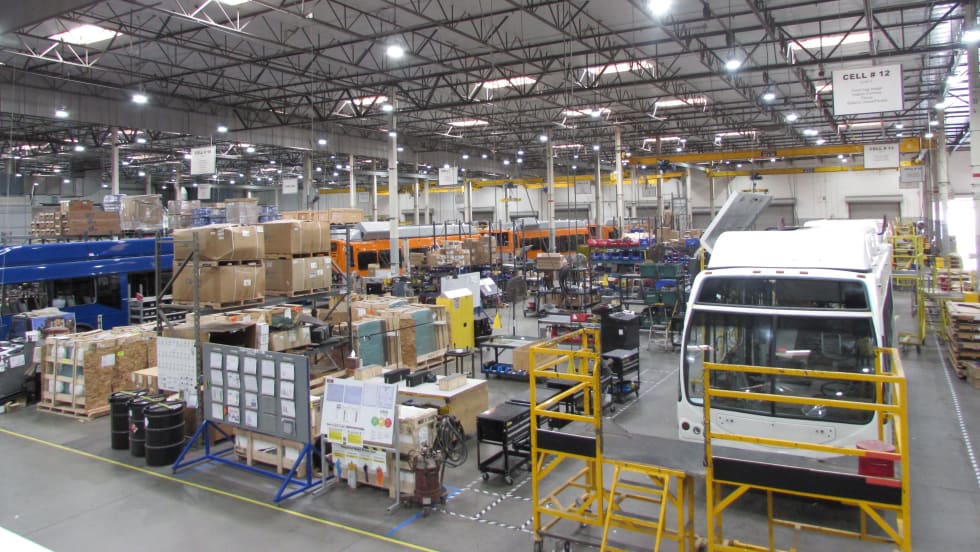
LA Metro Board Awards 220 Battery-Electric Bus Contract to ENC
The contract, which is the largest base award of battery-electric buses by a U.S. transit agency, will be built in Southern California, sustaining good jobs as LA prepares to welcome the world in 2028
Read More →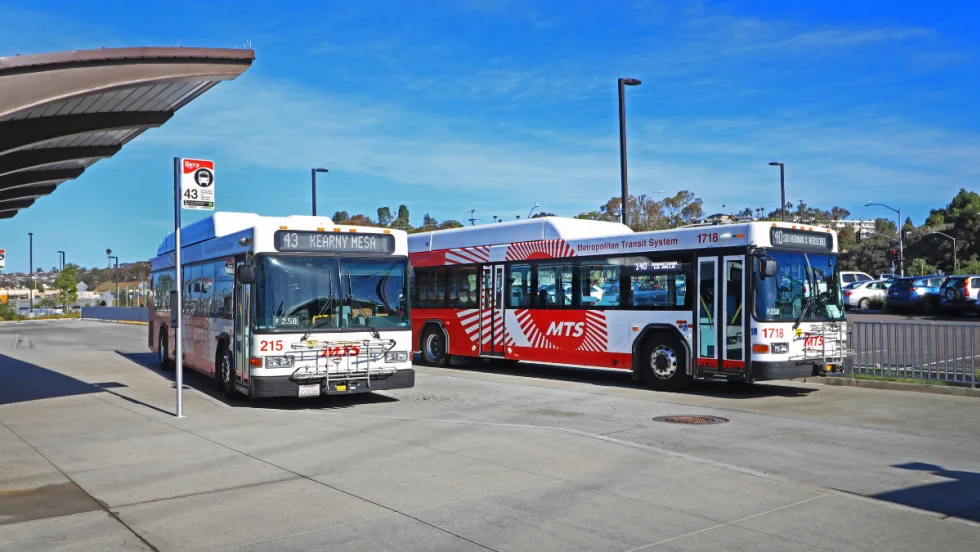
What’s Behind San Diego MTS’s Award-Winning Transit Strategy
Named one of APTA’s 2026 Outstanding Public Transportation Systems with 50 million or more annual passenger trips, California’s San Diego Metropolitan Transit System points to gains in ridership, safety, technology, and reliability as foundations of its success.
Read More →
Public Transit Conference Returning to GFX in 2027, Call for Papers Now Open
The Call for Papers is now open, allowing transit agency professionals and industry experts to help shape the PTC educational program by submitting session ideas for consideration.
Read More →
Indian River Transit’s Community-Focused Approach Earns National Recognition
Named APTA’s 2026 Outstanding Public Transportation System in its size category, Florida’s Indian River County transit system continues to grow ridership through fare-free service and a focus on evolving community needs.
Read More →
ENC Lands MATA Contract and More in Biz Briefs
In this edition of Biz Briefs, we spotlight the latest developments shaping the future of mobility.
Read More →
From Surviving to Thriving: Building Stronger Transportation Organizations
Bus Business Consultants founder Brian Dickson shares lessons on leadership, organizational health, and creating options for long-term success in a changing transportation industry.
Read More →
Everett Transit, Community Transit Outline Consolidation Agreement
The proposed agreement calls for a 50% increase in bus service in Everett, a new microtransit zone, continued paratransit service, and the transfer of Everett Transit operations to Community Transit.
Read More →
Strada360’s Steve Lassey on Turning Transit Data Into Better Decisions
From breaking down data silos to preparing for AI, Strada360 CEO Steve Lassey discusses how transit agencies can use technology to improve operations, customer information, and long-term decision-making.
Read More →