



Metro-St. Louis tax victory helps restore transit services
Passed in April, Proposition A will enable Metro-St. Louis to continue operations without further cuts, as well as begin restoring its workforce.
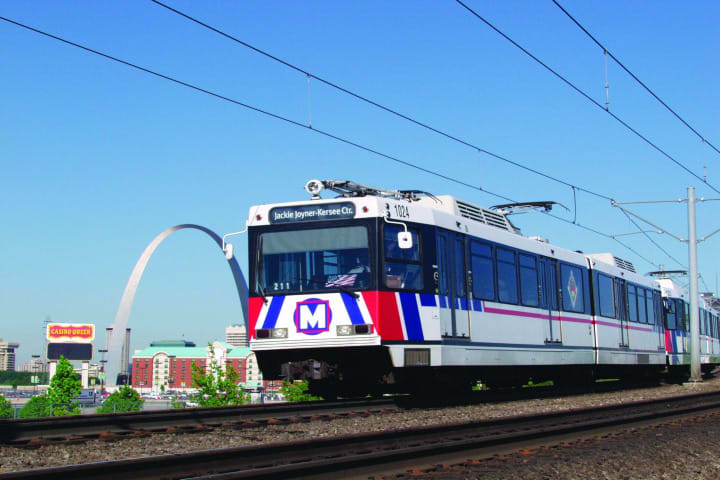
In April, St. Louis County voters approved Proposition A by an overwhelming 63 percent, enabling Metro-St. Louis to begin restoring transit services that were reduced in 2009 and reviewing routes to determine which should be reconfigured or extended.
"In its 60-year history, Metro has only had two sales taxes passed — in 1974 and 1994," said Jerry Vallely, a Metro spokesman. "In 1997, St. Louis City and St. Louis County voted on new sales taxes — one-quarter of 1 percent for the city and one-half of 1 percent for the county. City voters passed it; however, county voters defeated it."
The St. Louis County Council had also voted to put a one-half of 1 percent sales tax on the ballot in November 2008. It was defeated 52 percent to 48 percent. As Metro had warned, the defeat meant service reductions on about one-third of all MetroBus, Metro Call-A-Ride (service to disabled and elderly), and MetroLink light rail services in March 2009, as well as laying off approximately 300 employees.
A one-time emergency appropriation of $12 million from the Missouri Legislature allowed Metro to temporarily restore about one-half of the cut services in August 2009. Metro said the $12 million would run out in May or June 2010 and deeper service reductions to about one-half of pre-March 2009 levels would result.
With the previous defeats and strong opposition to adding more taxes, Vallely said that Metro was surprised by Proposition A's overwhelming victory.
"We were optimistic of passage because this effort was supported by a broad, diverse and very active coalition that brought together the faith-based community, the educational community, civic and activist groups, labor, business, the healthcare industry and regional political leadership," he said. "A campaign committee called Advance St. Louis formed to run the campaign under leadership of Chancellor Mark Wrighton of Washington University and Mayor John Nations of the West County community of Chesterfield. The group raised more than $700,000 to support the campaign and was able to mobilize all constituencies, despite a vocal campaign by opponents mostly associated with the Tea Party and other conservative groups."
Metro believes the voters responded to a campaign focused on a factual, truthful explanation of the transit needs for the region and the importance of a comprehensive public transit system in efforts to attract economic development and new jobs to the region, Vallely added.
Proposition A's passage in the county also triggered the one-quarter of 1 percent sales tax in the City of St. Louis that voters approved in 1997. Metro estimates the revenue from the sales tax in the county should be about $74 million with about $8 million from the city. Those new revenues should begin arriving at Metro in the fall.
In addition to the cuts made in 2009, Metro had cut millions out of operations and internal costs; frozen salaries three out of the last five years; reduced workers comp costs; reduced benefits expenditures; and taken other similar steps to avoid service cuts. Metro had foregone its regular bus replacement schedule over the last two years, even cancelling bus orders and was unable to apply for federal funds for many capital projects because it lacked the money to provide the local match.
A little over a week after Metro's tax victory, President/CEO Robert J. Baer said one of the first steps toward rebuilding its public transit system was to complete the screening, hiring and training of the best candidates for new jobs as operators, mechanics, and others needed to restore and expand service. He said Metro would be hiring about 40 employees each quarter for the remainder of the year, for a total of about 120 by the end of 2010.
Additionally, Metro immediately began removing the "Temporarily Restored" signs at bus stops where service would have been eliminated if Proposition A had failed.
"Metro also is working to expedite the usual 18-month period between bus orders and deliveries to about 12 months and is talking to other transit agencies to see if they have buses we can buy or lease," said Vallely. "Service will be completely restored, including some route geographic expansions and reconfigurations, by June 2011."
Following the recent wave of changes, Metro will begin looking at more significant bus route expansions, planning the next new MetroLink line and working on some transit services new to St. Louis, such as bus rapid transit, Vallely added.
The agency will also proceed under its new long-range plan that sets out a menu of options to meet the region's transit needs over the next 30 years in defined timeframes of one to five years, five to 10 years, and 10 to 30 years. The plan, called "Moving Transit Forward," is available at www.metrostlouis.org.
More Bus

Finding the ‘Happy Medium’: Optimizing Maintenance Without Sacrificing Reliability
The key to maintenance optimization isn’t doing less work—it’s doing the right work at the right time on the right assets.
Read More →
LA Metro, City of West Hollywood, and Partners Advance Smarter Bus Lane Enforcement
The award-winning partnership combines AI-powered detection with human oversight to improve bus reliability, accessibility, and enforcement efficiency.
Read More →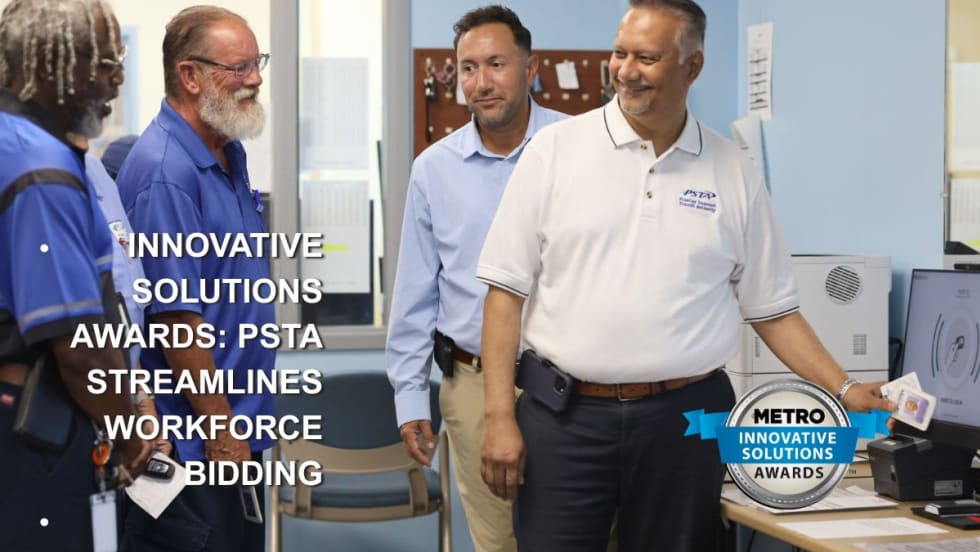
PSTA Modernizes Workforce Management with Digital Bidding System
The award-winning Workforce Transit Modernization project replaced paper bidding with a transparent digital platform, cutting administrative effort while improving access for operators.
Read More →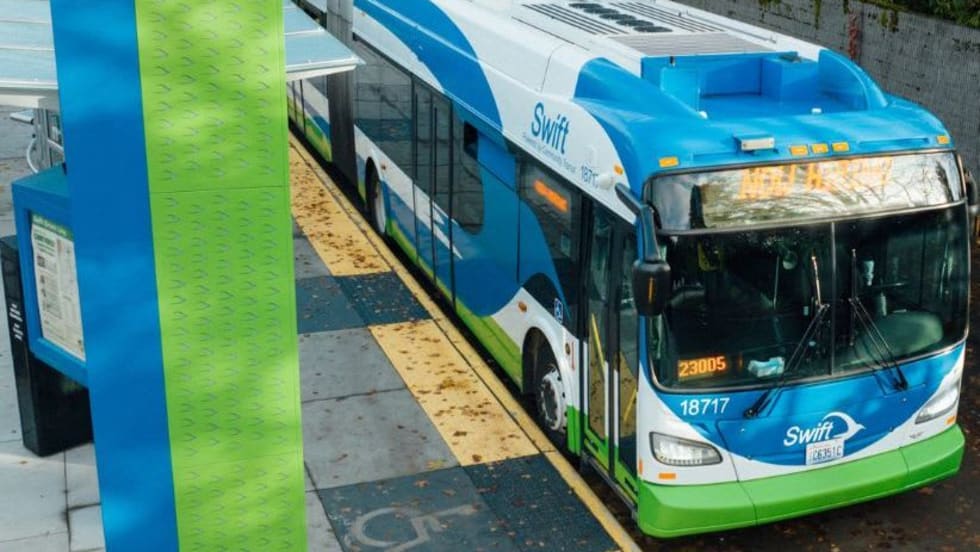
Washington's Community Transit Sets Six-Year Roadmap for Growth, Expansion
Approved TDP targets more bus service, new mobility options, Swift BRT expansion, and a potential Everett Transit annexation.
Read More →
DART Customer Satisfaction Reaches Six-Year High
Overall satisfaction rose to 74.9%, while the agency’s Net Promoter Score reached a record 33.7.
Read More →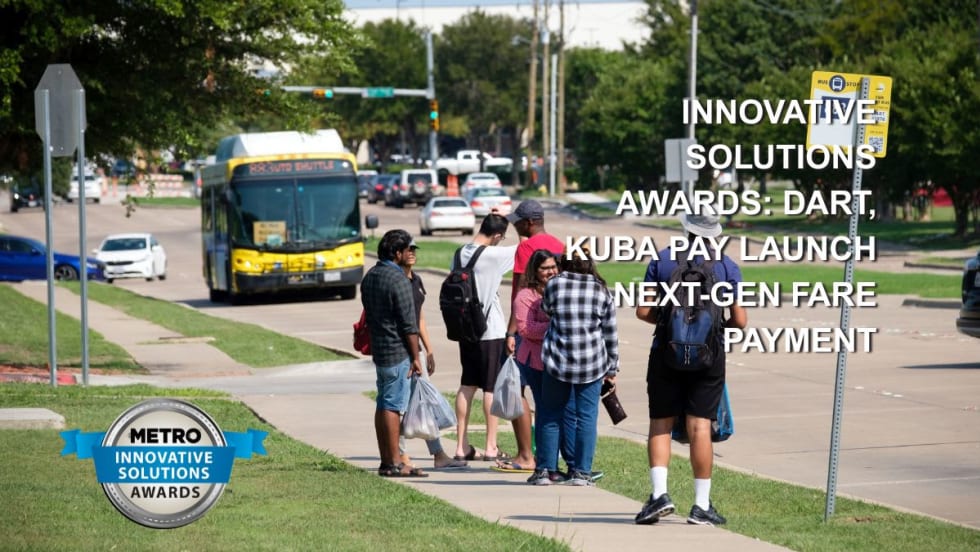
How DART's GoPass Is Redefining Regional Mobility
Serving 14 transit agencies, GoPass simplifies multimodal travel by allowing riders to plan, pay for, and manage an entire trip through one app.
Read More →
Biz Briefs: OCTA Taps Clean Energy for Hydrogen Station, Stadler to Supply Via Rail Vehicles, and More
From manufacturers and suppliers to transit agencies and motorcoach operators, these updates offer a snapshot of the projects, partnerships and business moves driving the industry forward.
Read More →
METRO Magazine Announces 2026 Innovative Solutions Awards Winners
Projects Recognized for Advancing Mobility Through Technology, Accessibility, Workforce Innovation, and Operational Excellence
Read More →
Biz Briefs: STV teams with Amtrak, Motorcoach Operators Boost Fleet and Land Contracts, and More
From manufacturers and suppliers to transit agencies and motorcoach operators, these updates offer a snapshot of the projects, partnerships and business moves driving the industry forward.
Read More →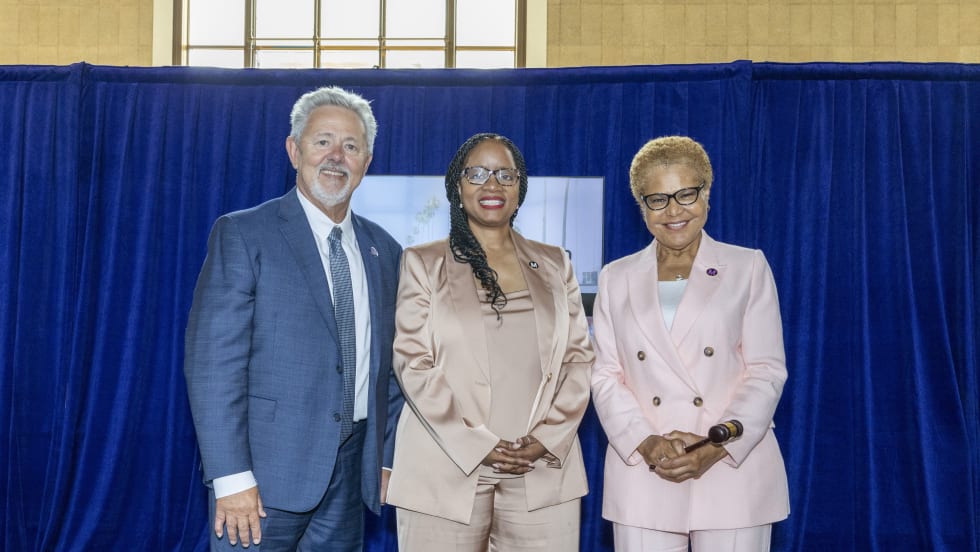
LA Metro Marks Banner Year, Sets Ambitious Goals for New Fiscal Year
Incoming LA Metro Board Chair and Los Angeles Mayor Karen Bass joined outgoing Board Chair Fernando Dutra and LA Metro CEO Stephanie Wiggins to review accomplishments from fiscal year 2026, which included the opening of new rail extensions, advancement of major transit projects, expanded safety programs, and new rider amenities.
Read More →