



New Developments in Transit Seating
Updated style and durable materials predominate among manufacturers' latest product offerings. Standout features include sleeker, more comfortable designs, seat belts and more sophisticated fabrics.

Seating companies have been working to meet all types of transit and motorcoach customer demands, ranging from enhanced comfort and style to reduced cost and maintenance. In their efforts to produce quality seats that satisfy these requests, companies are offering heated seats, new and upgraded materials, European style and ergonomic design, and easier installation. We spoke with six transit seating professionals to find out about their latest developments and products.
4One LLC
The Meridian. Pennsylvania-based 4One LLC, a joint venture between USSC Group Inc. and the Freedman Seating Co. that provides driver and passenger seating, offers the Meridian, a high-back urban-style seat with thick cushions, European design and springs incorporated into the seat for more comfort.
Ted Dowling, the company’s North American sales director, says he also refers to the durable and inexpensive model as, “the knee-saver.” The ergonomic design of the seat also has built-in lumbar and neck support.
In developing The Meridian, 4One ran vibration and frequency tests never used before, to ensure that the seat responded well to all vibrations that occur during a bus ride.
The biggest customer demand, according to Dowling, is for a heavier lift capacity seat. 4One and USSC responded to that need by making the highest seating capacity 650 lbs. The company is also adding a convenience for drivers by providing all pneumatic air, instead of electrical components.
Ten years ago, according to Dowling, the average seat would last about six years. These days, transit authorities want the seat to last for the life of the coach. If a seat is damaged and proves beyond mending, 4One sells a repair kit. It replaces the foam, bushings and shocks to keep the seat from coming apart. Since many transit authorities have limited funds to spend on seat replacement, this can be a cost-effective alternative to purchasing new seats. The Meridian has a 10-year warranty.
A transit agency in the Pacific Northwest will soon use this model on their New Flyer buses. Since the weather is frequently rainy, vinyl will be used for the seats. 4One also offers wool, polyester, leather and More-Care (an anti-microbial vinyl used in the medical field, made by the company Morbern). The material is often used in small bus applications by partner company, Freedman Seating.
“We’re always looking at different products and markets, and listening to the customer,” Dowling says. “We’re always at the design table.”
American Seating
InSight. Grand Rapids, Mich.-based American Seating presents its newest family of seats, named Insight, launched after extensive research and nearly three years of development. It addresses the needs identified by public transportation industry stakeholders and their customers: increased comfort, improved style, accessibility, vandal resistance, easier installation and low maintenance.
InSight has been well-received from transit agencies and OEM builders throughout the U.S. and Canada, according to the company.
“We listened to our customers,” says American Seating Chairman Ed Clark. “InSight is our advanced technology solution to meet the needs of our customers. We feel it’s going to set a new standard in public transit seating.”
Comfort was a leading concern identified in research compiled by the company. To accommodate this, the Insight features a large personal sitting area, more legroom, a high back, padded seat and back cushions, increased standing-aisle hip space and a seat module made of energy-absorbing material.
To provide an inviting interior, InSight offers a thin profile, a one-piece sculpted module and an integrated grab rail for a clean, sleek appearance. The design also provides the aging population, and those with disabilities that rely on public transportation, a contoured seat shape and increased spaciousness to allow for easy entrance and exit. The modular design and patent-pending lightweight mounting system supports easy installation and part replacement.
Vandalism, maintenance and cleaning concerns were answered by using a hard-wearing, advanced technology composite resin with corrosion-resistant materials, and by keeping fasteners out of easy access of passengers. Exclusive vandal- and cut-resistant cushions are also available, along with stainless steel back panels.
InSight also includes an array of model types for passenger seating and ADA requirements and can accommodate a wide range of vehicle layout requirements and configurations.
Braun Seating
Generation 3. Braun Seating focuses on paratransit seating and recently introduced a new seat model with three-point integrated seat belts in both their fixed and fold-away seats. Options include armrests, grab handles, child restraints and customizable material, such as vinyl or cloth.
Thoroughly tested, this seat is certified to comply with all applicable FMVSS requirements. The impetus for designing the Generation 3 was an integrated seat belt requirement: all transit vehicles less than 10,000 lbs. produced after Sept. 1, 2007 are required to have 3-point seat belts in all forward-facing seating positions, according to theNational Highway Traffic Safety Administration.
“This seat model stands out due to the ease of installation,” says Jay Schooler, sales. “As opposed to the typical three handles, this model only needs one handle for installation, that, when pushed in, installs the seat. Feedback so far has been very positive regarding the ease of operation.”
Kustom Seating
Venus. Kustom Seating, an ISO-9001:2000 registered company, introduces their latest product. Manufactured in the U.S., Venus emphasizes flexibility, ergonomics, a lightweight design, durability and affordability.
“Our customers have different seating requirements, depending on the transit authority or OEM. Whether it is width, height, materials or mounting, the features need to be adaptable and affordable,” says Gene Germaine, business development manager. “We feel modular designs that offer flexibility to the various specifications are the only way to economically address these requirements.”
According to Germaine, customers, now more than ever are demanding a reduction in maintenance costs, weight and price, while five years ago the focus was on continuity with previously supplied products.
The Venus model comes in various widths, multiple back heights with or without headrests or grab handles, numerous mounting options (longitudinal, transverse, cantilever and pedestal), and a unique diversity of materials (stainless steel, powder-coated carbon steel, fire retardant foams, specification-compliant fabrics, thermo-formed plastics or FRP).
Responding to a demand for European styling, the Venus design embraces the easy flow of curves and the thin ¬profile that riders are looking for. It is also attractive, lightweight and durable, with a slimmer profile, providing greater passenger density or additional legroom in the vehicle.
Optional headrest and grab handle designs are also available, offering the marketplace the option of changing the look of the seat. These designs were created with styling, ergonomics and safety in mind.
Venus’s versatility and styling offers the marketplace a new innovative design; its unique styling and curvature offer an alternative to the bench-looking seating, currently used in the marketplace, at an affordable price.
Recaro Seating
Ergo MC1 and MC2. Initially launched in 2000 for drivers, but adapted each year based on customer specifications, Recaro Seating’s Ergo MC1 and MC2 now include a new element. Liquicel, a fluid membrane, is molded into seat covers, close to the seat surface, to promote long-term comfort, reduce fatigue and stress, increase circulation and improve muscle performance.
Recaro also unveiled these heat-integrated seats with two stages: the lower seat cushion and the back or rear back. “Transit authorities are increasingly using hybrids, and reducing the emissions also means reducing the heat. They’re looking for ways to heat the cab area without burning diesel fuel. The heating is a two-level system and is driver-adjustable,” says Brian Sabo, sales manager for commercial vehicles.
The seats also have three-point shoulder belts, which Recaro designed with driver comfort in mind — alleviating issues such as chest pressure and neck abrasion by using a specific method called soft-edge Web technology. Seat belts can restrict the driver across the chest, but Recaro’s belts can now ride back and forth smoothly.
“Many drivers are now requesting the new belts. As the belt comes across, we’ve made the edges that cross the neck less abrasive. The belt allows the driver the freedom to reach for the wheel without restriction. Drivers want the shoulder belts in the buses to perform like car belts,” says Sabo. Produced since 1997, the company has gone through different iterations with shoulder belts, and brought them back this year.
“Professional drivers like the amenities in their cars, and they want these amenities in their buses,” says Sabo.
Summit Seating
The Executive. Generally serving shuttle-sized motorcoaches of about 40 passengers or less, Summit Seating responded to a strong demand for upgraded seats with its latest model, featuring material that is a little thicker, heavier and contoured to fit the body, such as leather and vinyl trim, and occasionally cloth for owners seeking to provide a limousine effect in their coaches.
The Executive is offered in different configurations: salon, wraparound and perimeter seating. Options include drink and snack trays on the seat back, cup holders, upright and reclining seating.
“In the last two years, there has been a higher demand for luxury seating,” says Dave Dygert, vice president of sales. “2006 was a good year for this product, and 2007 was even better.”
More Management

Transit Expands Agency Partnerships, Reaching 200 Official App Partners
COO Jake Sion discusses Transit’s growth, the success of its Transit Royale program, and how technology is helping agencies improve the rider experience.
Read More →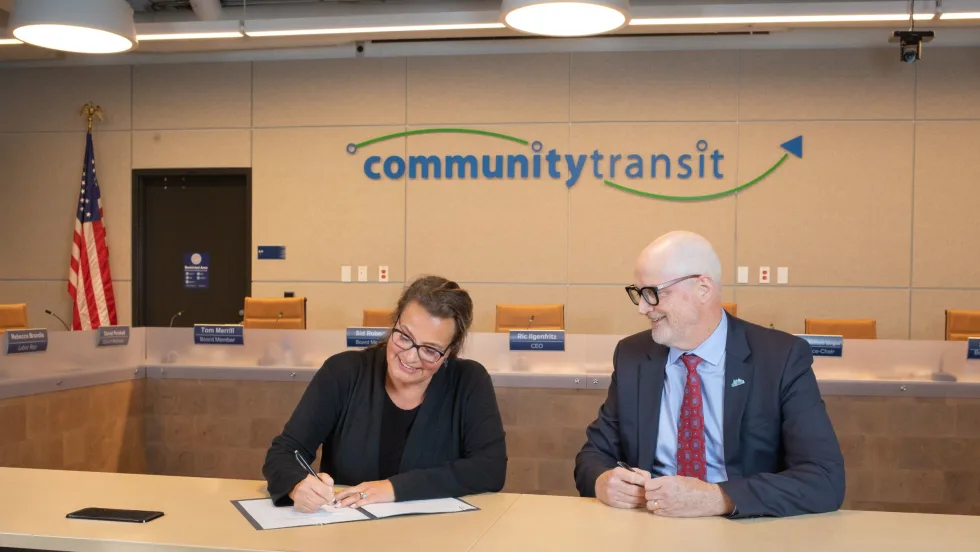
Everett Transit, Community Transit Approve Consolidation of Services
The agreement will bring Everett Transit into Community Transit’s network in April 2027, with plans to increase bus service by 50% by 2031 and expand regional connections.
Read More →
NITA Proposes $5B Operating Budget, $9.7B Capital Program for 2027
The proposed budget includes funding for expanded transit service, safety initiatives, fleet upgrades, and infrastructure improvements across CTA, Metra, and Pace.
Read More →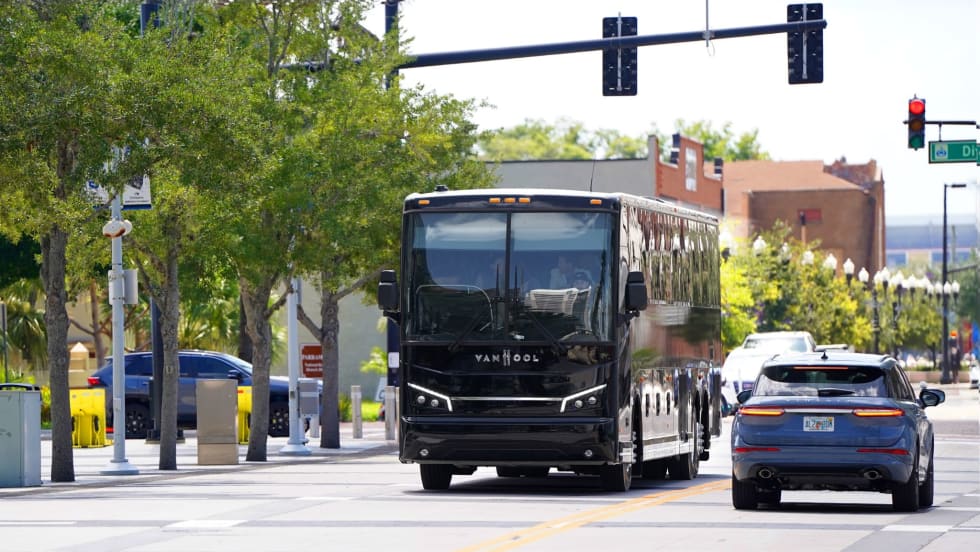
Financing, Fleet Replacement Requires a More Strategic Approach
Executives from ABC Companies and MCI discuss how rising costs, changing market conditions, and post-pandemic challenges are prompting motorcoach operators to rethink financing strategies, fleet replacement cycles, and long-term planning.
Read More →
Bringing Austin’s First Light Rail System to Life
Austin Transit Partnership CEO Greg Canally discusses the city's nearly 10-mile light rail project, its collaborative approach to project delivery, the importance of community engagement, and the milestones ahead as construction approaches in 2027.
Read More →
ETA CEO John Maglio on Transit Technology, Innovation, and Building Agency Trust
ETA founder and CEO John Maglio explores the evolution of transit technology, the importance of reliable systems, and how stronger partnerships can help agencies improve operations and the passenger experience.
Read More →
Metra Draft Plan Outlines Costs, Service Improvements for Regional Rail
The Systemwide Network Plan identifies infrastructure needs and potential investments to expand all-day, bidirectional rail service across the Chicago region.
Read More →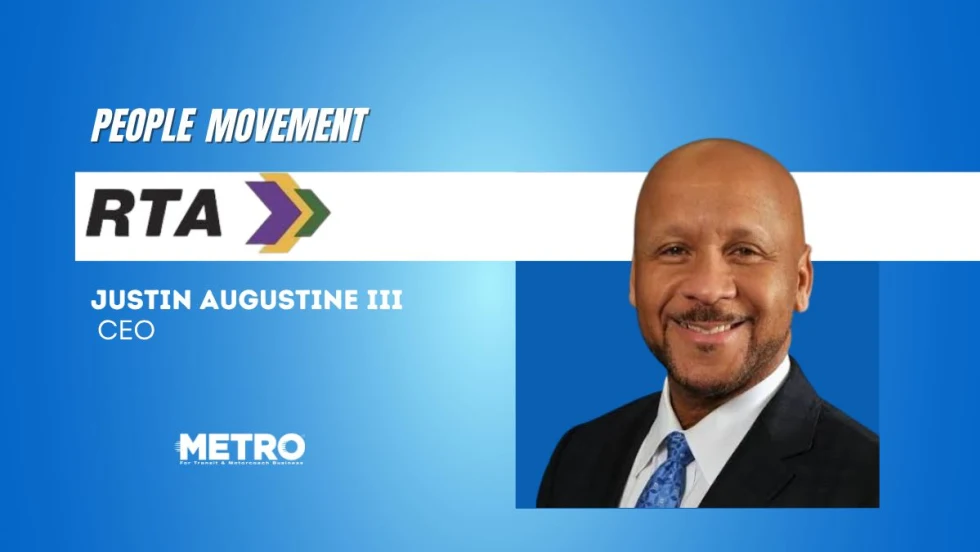
New Orleans RTA Names Augustine III as New CEO
In this edition, we also spotlight recent personnel moves at HDR, PATH, STV, and more, highlighting the people taking on new roles across the transportation industry.
Read More →
How Transit Agencies Are Using Free Rides to Improve Voting Access
Transit agencies are using fare-free service, trip-planning tools, and targeted rides to improve voting access. See what other agencies can learn from these efforts.
Read More →
Caltrain’s Electrification Drives a New Era of Ridership Growth
The railroad’s shift to electric service has brought more frequent trains, stronger customer satisfaction, and increased ridership, earning it APTA’s Outstanding Public Transportation System award.
Read More →