



LA Metro Ridership Continues Growth as Rail Gains Accelerate
New rail connections and major events help drive continued ridership gains, with Metro recording its eighth consecutive month of year-over-year rail growth.

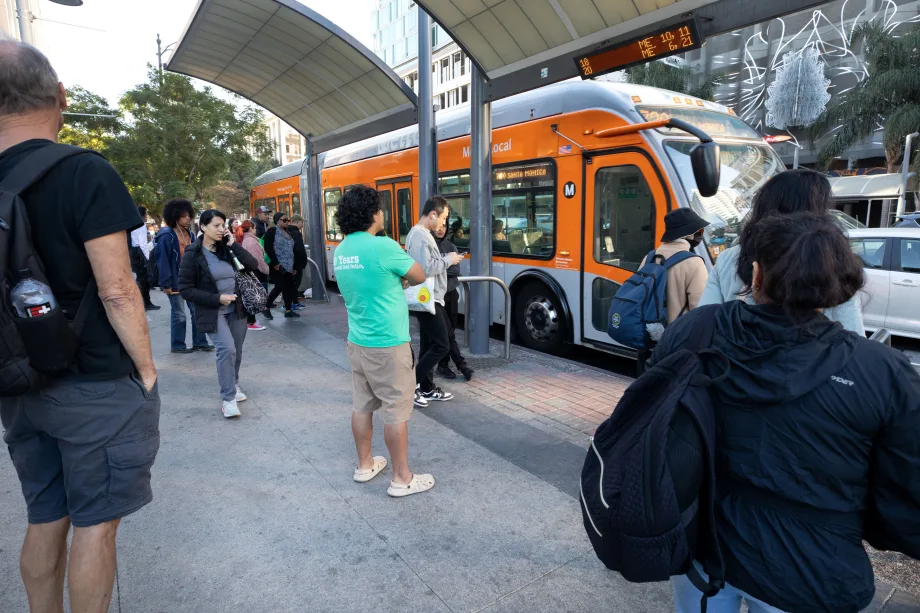
LA Metro bus ridership also increased 6.3% year over year in July to 19,255,341 boardings.
LA Metro
- LA Metro saw a 8.79% increase in boardings in July 2026 compared to July 2025, with strong rail usage contributing significantly to this growth.
- Weekend ridership showed substantial improvement, with Saturday and Sunday boardings increasing by 10.63% and 8.77%, respectively.
- The ridership boost was influenced by numerous events in July, including World Cup activities and Fourth of July celebrations, driving demand for public transit across Los Angeles County.
*Summarized by AI
LA Metro recorded 25,847,617 boardings in July, an increase of nearly two million, or 8.79%, from July 2025. The gains continued a broader ridership recovery in 2026, with rail usage showing particularly strong growth as new and expanded service connects more communities and destinations across Los Angeles County.
Metro’s own ridership data describes the system’s 2026 growth as a steady rebound driven largely by increased rail usage. Weekend ridership posted some of the strongest gains in July, with Saturday boardings increasing 10.63% year over year to an average of 694,263. Sunday ridership grew 8.77% to an average of 597,114. Weekday ridership also increased, reaching an average of 903,446 boardings, up 7.41% from July 2025.
July was a particularly active month across Los Angeles County, with World Cup matches, fan zones, and viewing parties, Fourth of July celebrations, sporting events, concerts, and other activities contributing to demand for transit.
The July results follow strong ridership gains earlier in the year. In June, Metro recorded 26,265,480 boardings, about two million more than June 2025, with total ridership increasing 9%. Rail ridership increased 21.8% in June, while weekend system ridership posted particularly strong gains.
Rail Ridership Up
Rail ridership was a major contributor to July's overall growth. Metro recorded 6,592,276 rail boardings, a 16.84% year-over-year increase and the eighth consecutive month of rail ridership growth.
Growth was strong across weekdays and weekends, with Saturday ridership increasing 19.3% from July 2025 to an average of 191,365.
The gains come as LA Metro continues to expand and improve its rail network.
The opening of the LAX/Metro Transit Center in 2025 improved connections to Los Angeles International Airport and surrounding communities, while the A Line extension to Pomona and the first section of the D Line extension have expanded access to additional destinations.
The agency has linked recent ridership gains to the expanded connectivity provided by these projects. The D Line extension, which opened three new stations in May, has been particularly significant; LA Metro reported a 62% year-over-year increase in D Line ridership in May and said rail ridership reached its highest level in more than six years.
The July rail results included:
- A Line: Ridership increased nearly 20% to 2,176,946 boardings. Sunday ridership grew more than 25% to an average of 56,531.
- B/D Lines: Combined ridership increased 18% to 2,034,822, with Saturday ridership up 33.9% to an average of 59,147. D Line growth was particularly notable, with Saturday ridership up 52% and weekday ridership up 46% compared with July 2024. The D Line was closed in July 2025 for construction, making the 2024 comparison more useful for those measures.
- C Line: Ridership totaled 549,846, a 6.7% increase, with growth across weekdays and Sundays. Construction associated with the adjacent I-105 Express Lanes project has required bus transfers near portions of the line.
- E Line: Ridership increased 16% to 1,577,868, with Sunday ridership posting the strongest gain at nearly 27%, reaching an average of 44,386.
- K Line: Ridership increased nearly 11% to 252,794. Weekday ridership posted the strongest gain, increasing 12% to an average of 8,791.
The growth in rail ridership follows a sustained upward trend. LA Metro reported a 21.8% year-over-year increase in rail ridership in June and a 9.5% increase in May, marking the sixth consecutive month of year-over-year rail growth at that time.
Bus Ridership Also Growing
Bus ridership also increased 6.3% year over year in July to 19,255,341 boardings. Weekend gains outpaced weekday growth, with Saturday ridership increasing 7.7% to an average of 502,898 and Sunday ridership rising 6% to 427,383.
The J Line, a bus rapid transit route used by many riders traveling to World Cup-related activities, recorded a 7.6% year-over-year increase.
The July bus totals do not include the 212,865 rides provided on LA Metro’s enhanced World Cup service to Los Angeles Stadium, which the agency reported separately.
LA Metro has also continued making service adjustments aimed at improving reliability and aligning service with ridership demand. Changes implemented in June included timetable revisions on dozens of bus routes, along with adjustments to rail schedules intended to improve on-time performance and transfers.
The continued ridership growth comes as Metro prepares for additional major events, including the 2028 Olympic and Paralympic Games.
Quick Answers
LA Metro ridership increased by nearly two million boardings in July, an 8.79% increase from July 2025.
*Summarized by AI
More Management

Bus Tech Talk: Keeping Transit Technicians Ahead of the Technology Curve
In this episode of Bus Tech Talk, Complete Coach Works’ Business Development Manager Mark Hollenbeck and METRO’s Executive Editor Alex Roman sit down with Obed Mejia, Senior Technical Trainer for Bus Maintenance, at LA Metro to discuss how rapidly evolving bus technology is changing the maintenance shop — and the skills technicians need to keep pace.
Read More →
Michael Schneider Joins Paslay Group to Expand Transportation Practice
The longtime transportation executive will help Paslay Group grow its advisory and program management work across transit, highway, and other infrastructure sectors.
Read More →
People Movement: Connectpoint Expands Leadership Team, Stadler Names New Group CEO, and More
In this edition, we also spotlight recent personnel moves at Burns, UZURV, and more, highlighting the people taking on new roles across the transportation industry.
Read More →
More Than a Summer Job: Building the Next Generation of Transit Talent
The Delaware River Port Authority and PATCO have transformed their internship program into a hands-on professional development experience that introduces students to the breadth of transportation careers — and creates a pipeline for future employees.
Read More →
LA Metro Board Awards 220 Battery-Electric Bus Contract to ENC
The contract, which is the largest base award of battery-electric buses by a U.S. transit agency, will be built in Southern California, sustaining good jobs as LA prepares to welcome the world in 2028
Read More →
What’s Behind San Diego MTS’s Award-Winning Transit Strategy
Named one of APTA’s 2026 Outstanding Public Transportation Systems with 50 million or more annual passenger trips, California’s San Diego Metropolitan Transit System points to gains in ridership, safety, technology, and reliability as foundations of its success.
Read More →
Public Transit Conference Returning to GFX in 2027, Call for Papers Now Open
The Call for Papers is now open, allowing transit agency professionals and industry experts to help shape the PTC educational program by submitting session ideas for consideration.
Read More →
Indian River Transit’s Community-Focused Approach Earns National Recognition
Named APTA’s 2026 Outstanding Public Transportation System in its size category, Florida’s Indian River County transit system continues to grow ridership through fare-free service and a focus on evolving community needs.
Read More →
ENC Lands MATA Contract and More in Biz Briefs
In this edition of Biz Briefs, we spotlight the latest developments shaping the future of mobility.
Read More →From Surviving to Thriving: Building Stronger Transportation Organizations
Bus Business Consultants founder Brian Dickson shares lessons on leadership, organizational health, and creating options for long-term success in a changing transportation industry.
Read More →