



New Financing Tools Make Electric Bus Buying Easier
With so many agencies looking to at least test electrification of their bus fleets, new financing tools could potentially help agencies do more with less.
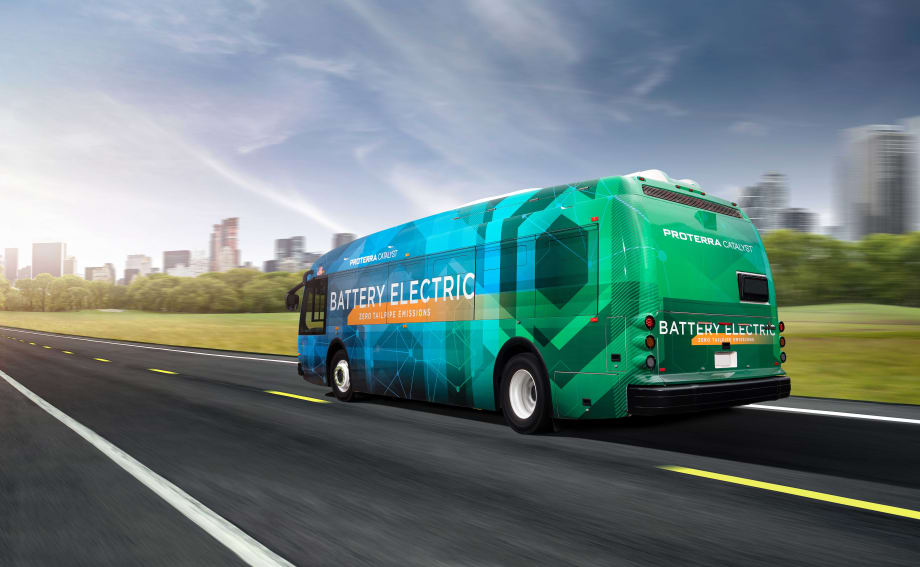
Proterra offers multiple leasing options,
including the ability to lease the batteries, which could help transit agencies better manage risk.
Proterra offers multiple leasing options,
including the ability to lease the batteries, which could help transit agencies better manage risk.
As more and more transit agencies look to electrification of their fleets, the real issue has become finding ways to fund the actual purchase of the vehicles for those who want to go completely electric.
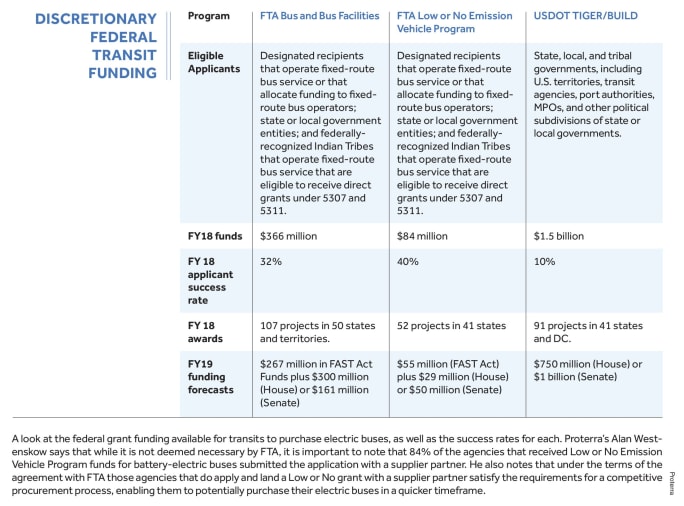
The good news is that there are currently three federal grant programs — FTA’s Bus and Bus Facilities, FTA’s Low or No Emission Vehicle Program, and the USDOT Tiger/BUILD — available for transit agencies to apply for, in addition to Volkswagen diesel emissions settlement funds and local state grant and voucher programs, particularly in states like California.
“It’s really a perfect storm of funding opportunities right now,” says Alan Westenskow, director, business development, at Proterra. “There have never been more opportunities to find funding for electric buses, charging equipment, and infrastructure than there is right now.”
When purchasing an electric bus, vehicle suppliers will consult with a transit agency to help them understand what monies could be available to them.
“We have experts that monitor the types of grants, rebates, and incentives that are available state to state to help the customer achieve the lowest possible cost,” says David Clamage, leasing consultant for BYD.
“In transit, it always seems like there’s never enough capital dollars to go around, so when we have a customer that we know wants to get electric buses, but doesn’t necessarily have the funds, we feel it is our duty to help guide them to where the opportunities are,” Westenskow adds. “The agencies themselves have to be the ones that apply for the funding, but we can definitely point them in the right direction.”
Financing Programs
To further help transit agencies purchase electric buses, some suppliers are now offering financing programs that enable them to lease the buses, or even just the batteries themselves.
“Buses are not inexpensive assets, so to make sure their buses are being deployed cost effectively to their many different customers, BYD wanted the ability to offer financing solutions that addressed the different types of customers we serve, including airports, public transit, and private bus operators,” explains Clamage. “Each customer has different kinds of finance solutions they can access based upon how they’re structured legally and our job is to make sure that we have the best possible access to finance.”
“It’s a tool that has been used all over the country for police cars, school buses, and fire engines,” adds Westenskow. “The federal government is not going to be able to keep up with the high levels of capital funding that transit agencies need, so agencies have to look for new models that will help them deploy electric buses, even if that includes bringing in additional outside funding to make it work.”
Westenskow adds that there are two types of leasing options — capital and operating — with the former often used by transit agencies who plan on operating the vehicle for at least 12 years and the latter used by airports and commercial customers, who plan to lease the vehicles for five to seven years, before trading them in for newer vehicles.
“Our experience has been that most non-FTA recipients are already leasing their vehicles in some form or fashion and so there’s a really good business scenario for them to go to electric buses,” he says. “On the other side, it makes a lot of sense from an FTA perspective to do a capital lease if you don’t necessarily have the money today, but would like to get a fleet going immediately.”
“We have quite a number of customers that are leasing buses from us that represent many different types of transportation providers,” says Clamage. “We are really offering the full menu of financial solutions to those customers and it’s been well received because that way the customer doesn’t have to go out and find their own financing just like when you make a personal automobile purchase.”
BYD began offering lease programs around the summer of 2018 when it formed a joint venture with Generate Capital Inc., which finances, owns, and operates distributed infrastructure. Because of that, Clamage says that BYD currently has the ability to not only finance the buses themselves, but also the necessary infrastructure to charge them and more.
“We can handle charging infrastructure, batteries, and can even take care of second life batteries after they come out of buses, if customers want to use them in behind the meter solutions for peak shaving and standby power,” he says. “We have a pretty deep toolbox, which allows us to address all kinds of sustainable and green infrastructure.”
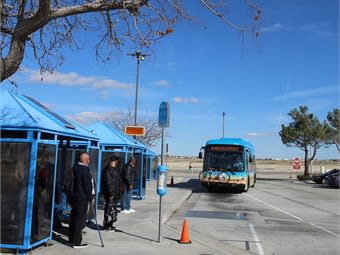
An Antelope Valley Transit Authority bus approaching the transfer center equipped with a WAVE charging pad embedded in the asphalt.
Buy bus, lease batteries
One option that Westenskow says could really be a benefit for transit agencies is the ability to purchase the vehicle and lease the batteries.
“The cost of an electric bus is about $250,000 more than a diesel bus, with the majority of the cost difference being attributed to the cost of the batteries,” he explains. “So if the difference in the vehicle cost is the batteries, a battery lease enables transit agencies to pull the batteries off and pay for them over time using the savings they achieve from reduced fuel and maintenance costs.”
Westenskow adds that Proterra has seen a demand for this option because it lowers the price of the bus and manages the risk associated with the batteries, which he says is still a sticking point for transit agencies.
“Through this option Proterra manages the risk for the transit agency of making sure those batteries work optimally for the life of the lease, including mid-life replacement of the batteries.”
Clamage adds that the benefit of leasing an electric bus is really giving bus operations the ability to manage their cash flow to fulfill their goal of going green.
“These transit agencies, colleges and universities, and private shuttle operators know how many people they need to move and what their route profile looks like, so that dictates the size and number of buses they need, as well as the economic reality they live in,” he says. “So for instance, if it’s a college or university, they are paying for transportation with tuition and grants, so we need to live within that budget and that’s what financing does.”
Westenskow adds that financing could also help expand an operation’s dollars, if they wish to add more than the two or three buses they have funding for.
“Using these financing tools in combination with some of the grant monies an agency receives can help them build a real electric bus program, instead of starting with just a couple of vehicles,” he says. “From a mathematical perspective, you can manage your risk and get more buses deployed with less grant money and be more attractive [to the communities they serve.]”
When asked what advice he would give to agencies interested in purchasing an electric bus, Clamage says customers should bring with them as much info as they can about how the bus will be used. “The more information they can share with their provider, the better we can help them select the right bus and charging profile while hitting their economic targets,” he says. “There is a lot of telemetry onboard these buses, so it’s easier now to really gather and share information that will help us help them make the best decision possible.”
More Technology

From Hardware to Digital Partner: Luminator Charts Its Next Chapter
CEO Magnus Friberg discusses Luminator’s shift toward becoming a digital partner, the growing importance of software and interoperability, and how AI can help agencies improve operations and passenger experience.
Read More →
Beyond the Checklist: A Structured Approach to Transit Maintenance
Reliability-Centered Maintenance helps transit agencies move beyond routine checklists to focus limited resources on the assets and failures that have the greatest impact on safety, reliability, and service.
Read More →
NJ TRANSIT Advances Bus Technology Upgrades Across Statewide Fleet
More than 1,500 buses now feature upgraded technology designed to improve arrival predictions and provide free Wi-Fi, with deployment expected to reach nearly 2,000 buses by the end of 2026.
Read More →

Building a Flexible Path to Transit Electrification
John Hroncich discusses BAE Systems’ modular and scalable approach, lessons learned from decades of real-world operations, and how agencies can identify electrification strategies that fit their fleets.
Read More →
Biz Briefs: Alstom Lands Canadian Contract, LYT to Supply California TSP, and More
In METRO's latest installment, we take a look at recent news from Complete Coach Works, Beep, FlixBus, and more partnerships making headlines across the transportation sector.
Read More →
From Legacy Silos to Conversational Intelligence
What if transit leaders could ask any operational question and get a trusted answer in seconds? Conversational AI is transforming how agencies use their data.
Read More →
USDOT Announces Rail Vehicle Replacement Grants, Chattanooga AV Shuttle Funding
More than $191 million in federal funding will help three transit agencies replace aging rail vehicles and support a new autonomous shuttle service in Chattanooga.
Read More →
Bus Tech Talk: Keeping Transit Technicians Ahead of the Technology Curve
LA Metro’s Obed Mejia discusses technician training, evolving maintenance technology, fleet replacement, and strategies for getting the most out of today’s transit fleets.
Read More →
Biz Briefs: RIPTA Unveils New Frontrunners, Clevland RTA Adds New Siemens, and More
In METRO's latest installment, we take a look at recent news from Siemens, Prevost, Dodge, and more partnerships making headlines across the transportation sector.
Read More →
Why Simulating Pedestrian Movement Has Become Essential for Modern Rail Stations
Pedestrian microsimulation is helping rail planners identify bottlenecks, test station designs, and prepare complex transit hubs for growing passenger volumes.
Read More →