In the Saudi Arabian capital of Riyadh, a population and growth boom means the need for a new rapid transit system to move people more quickly and efficiently.
by Thomas Renner
June 10, 2021
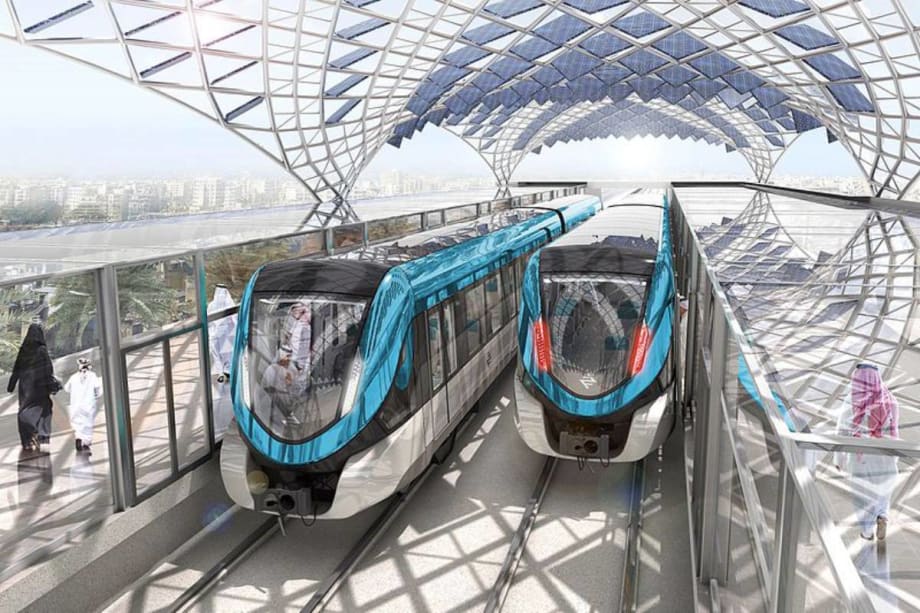
A new metro line in Riyadh, Saudi Arabia will span 109 miles and include 85 stations and six rail lines.
A new rapid transit system will help the exploding population of Riyadh move more quickly and efficiently in the Saudi Arabian capital.
The system will extend across approximately 110 miles and includes 85 stations and six rail lines. It is the centerpiece of a public transportation system that will be integrated with an 85-mile bus line. The metro line is expected to serve 3.6 million passengers per day when it becomes fully operational and will reduce the number of car trips by 250,000 per day. Construction on the $22.5 billion project, which is just the second metro line in Saudi Arabia, started in 2014.
Ad Loading...
“The sky is the limit for our ambition in Riyadh, and we anticipate doubling of the city’s population as well as doubling the size of the economy with the implementation of more than 18 giant projects,” Fahd Al-Rasheed, CEO of the Royal Commission for Riyadh said in remarks reported by the Saudi Gazette.
Growing City
Riyadh has watched its population grow in the past 50 years. In 1970, its population stood at approximately 408,000, according to estimates provided by the United Nations. That is approximately the current of population of Minneapolis.
Now, however, Riyadh rivals New York City. Its population of seven million is ranked 52nd in the world, only about one million less than NYC, and it is expected to surpass New York within the next decade. By 2030, Riyadh’s population could surpass 10 million. As its population soars, the nation has had to grapple with familiar problems, such as the infrastructure to move around the congested city. The new metro line will play a critical role in alleviating the city’s massive traffic issues.
“Riyadh is already the epicenter of economic development in the country and the region,” Al-Rasheed said. “We have now the ambitious plan under Vision 2030 for doubling both our economy and population over the next 10 years.”
Riyadh’s government leaders are ambitious for growth and having the infrastructure in place to support that is crucial. “All of Riyadh’s features set the groundwork for job creation, economic growth, investment, and many more opportunities,’’ Crown Prince Mohammed bin Salman said at the Future Investment Initiative in January. “We are, therefore, aiming to make Riyadh one of the 10 largest city economies in the world.”
Ad Loading...
Network Details
The metro network consists of six color-coded lines. The longest is the 25.3-mile Orange Line, which includes 20 stations and two interchange stations. More than six miles of the line is underground, and it will include 94 cars manufactured by Bombardier Transportation.
A consortium of Bechtel, Almaban General Contractors, Consolidated Contractors Company, and Siemens — called BACS — designed and built the Blue and Red Lines of the project, accounting for 36% of the lines and 40% of the stations.
BACS constructed the approximate 23.5-mile Blue Line, which has 22 stations and four interchanges, and the approximate 15.7-mile Red Line, which has 13 stations and three interchanges. The Blue Line runs in a North-South direction, while the Red Line travels from East to West.
Siemens Mobility built 238 cars to be used on the lines. The cars from the Siemens Inspiro fleet have a capacity of 1,450 passengers per train with 256 seats and have a maximum speed of about 50 miles per hour. The driverless trains are fully automated and include an integrated automation system. The trains are also equipped with safety systems, such as obstruction sensors and a fire detection system. Auxiliary driver control desks at both end of the train enable manual operation in emergency cases and in the depot. They also include touchscreen displays.
The trains meet NFPA 130/EN 45545 fire protection requirements and are designed with low maintenance costs, optimized energy consumption, and high recyclability at the end of their service life.
Ad Loading...
The Red Line stretches across 15.7 miles, with the eight-mile Green Line running underground. The Purple Line extends across 18.6 miles and is mostly elevated and connects to the city’s financial district.
The stations and interchanges are monitored by cameras, early warning systems, and communication systems. Many of the stations have shops and restaurants. They are also equipped with solar cells that contribute to generating 20% of the station’s electrical needs. The stations are also energy efficient, meet passenger needs, and architecturally appropriate for the region.
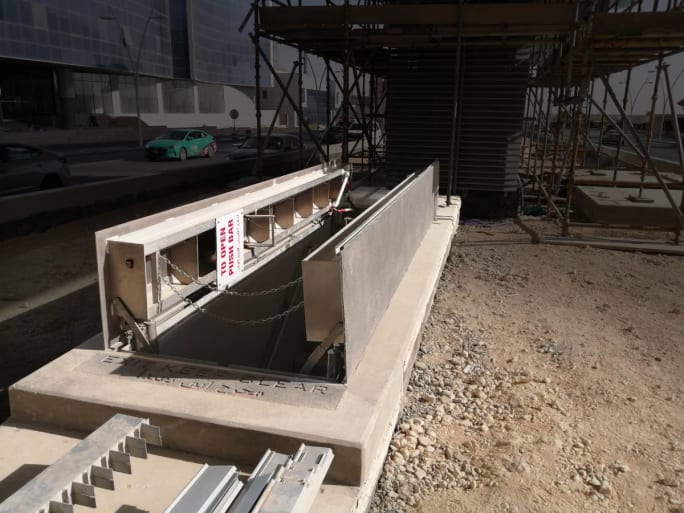
BILCO, the U.S. manufacturer of specialty access products, made 73 floor doors for the project. It is one of the largest orders in the 94-year history of the company.
Credit:
Courtesy of BILCO
American Connection
BILCO, a U.S.-based manufacturer of specialty access products, provided an important safety measure for the project. The company manufactured 73 floor doors that are installed along the various metro lines. The order was one of the largest in the 94-year-old history of BILCO, which secured the order from BACS with support from SchlegelGiesse of Dubai, a sister company of BILCO in the Tyman PLC portfolio of businesses.
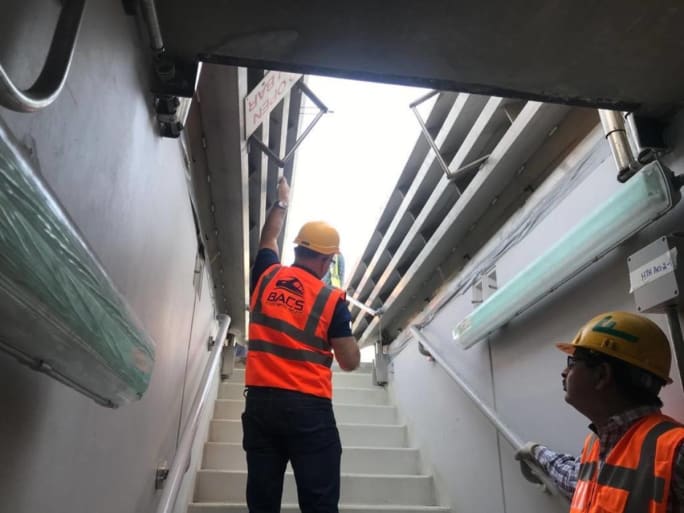
The BILCO doors provide access to equipment stored underground or below/between building floors. They also are used for emergency egress from underground platforms. They have been installed in high-profile transportation projects in the U.S., including Los Angeles, New York, and other large metropolitan cities.
“BILCO uses spring-loaded pistons to operate the doors, which require less maintenance and provide more durability,’’ said Shabeer Parambil of SchlegelGiesse. “The chance of failure will be nearly zero compared to hydraulic or pneumatic piston operated doors.”
Transforming Riyadh
Saudi Arabia in a transformative stage. There are numerous goals, with one of the major ones being to reduce the nation’s dependence on oil and diversify its economy. It also wants to develop public service sectors such as infrastructure, health, education, recreation, and tourism.
The nation’s objectives are outlined in Vision 2030, a comprehensive mission statement that defines the strategies the nation will employ to meet its goals.
“Our ambition is for the long term,’’ it says on the Vision 2030 website. “It goes beyond replenishing sources of income that have weakened or preserving what we have already achieved. We are determined to build a thriving country in which all citizens can fulfill their dreams, hopes, and ambitions. Therefore, we will not rest until our nation is a leader in providing opportunities for all through education and training, and high-quality services such as employment initiatives, health, housing, and entertainment.”
Ad Loading...
Construction on the $22.5 billion project began in 2014, and is designed to help alleviate congestion in the fast-growing capital of Saudi Arabia.
Credit:
Courtesy of BILCO
Project at a Glance
Where: Riyadh, Saudi Arabia.
What: A new 109-mile metro line.
Project details: The project includes 85 stations and six color-coded lines. The system is expected to eventually accommodate 3.6 million passengers every day. The line will reduce the number of car trips to the city by nearly 250,000 per day.
Safe access: 73 floor doors manufactured by BILCO were installed along the line. The order was one of the largest in the 94-year history of the company. The BILCO doors provide access to equipment stored underground of below/between building floors. They also are used for emergency egress from underground platforms.
Did you know? Riyadh is one of the fastest-growing cities in the world. It has a population of more than 7 million people, and is expected to surpass New York City in population within the next decade.
Thomas Renner writes on building, construction, engineering, and other trade industry topics for publications throughout the U.S.
Contract Four is the largest in the Second Avenue Subway Phase 2 project and includes construction of station infrastructure, tracks, and signals for the subway expansion, MTA officials said. Work on Contract Four will begin in 2027.
The Garden State Initiative analysis examines the roles of Amtrak infrastructure, fleet management, and agency operations while recommending a more performance-based approach to improving reliability.
Beginning in 2027, Stadler will provide on-site technical expertise, spare parts support, training, and obsolescence management to help extend the reliability and longevity of CapMetro’s GTW fleet.
In METRO's latest installment, we take a look at recent news from Complete Coach Works, Beep, FlixBus, and more partnerships making headlines across the transportation sector.
Pedestrian microsimulation is helping rail planners identify bottlenecks, test station designs, and prepare complex transit hubs for growing passenger volumes.
The privately developed project would offer a 15-minute trip between downtown and O’Hare’s Terminal 2, with trains operating every 15 minutes on a dedicated track. The service would use battery-electric trains and three existing freight rail rights-of-way.
The draft feasibility report identifies strategies to protect the coastal rail line for decades as the agency continues near-term stabilization and sand placement efforts.