



New Mobility Concepts Have Implications for Transit
Publisher James Blue discusses the changing face of mobility.

"Mobility as a Service” (MaaS), a term coined first in Helsinki, Finland, features a suite of new services, technologies, and legal framework to enable this integration.
Sohjoa

"Mobility as a Service” (MaaS), a term coined first in Helsinki, Finland, features a suite of new services, technologies, and legal framework to enable this integration.
Sohjoa
A number of articles in this issue address a variety of transit topics that reflect how the public transportation industry's agenda has shifted to a more mobility focused one. Taken together, these changes will likely alter how our industry plans, designs, and delivers services for the public. It is up to us to ensure that those changes benefit the public we serve.
What is the ‘new mobility’ anyway?
Before we go further, though, let’s define terms. The New Mobility Program at University of California Los Angeles’ Institute of Transportation Studies defines it as the intersection of travel behavior, economics, engineering, regulation, and infrastructure, which has enabled technology and business forces to produce new travel options, including ride-hailing services, automated and connected vehicles, and new “micromobility” modes, such as bike- and car-sharing.
The management consulting firm McKinsey and Company defines it as a real-time combination of travel modes, all door-to-door, supported by real-time information technologies such as smartphone apps and integrated cloud-based electronic fare-payment options. This is also increasingly called “Mobility as a Service” (MaaS), a term coined first in Helsinki, Finland, with its suite of new services, technologies, and legal framework to enable this integration.
Many of these concepts have been around for decades; even the integration of them is not really new. In fact, in the U.S. in the 1990s, the Transit Cooperative Research Program had a study track called "New Paradigms." It noticed how agencies, such as Transport for London, became less service provider and more service broker, and along the way, added real-time internet services and common fare media (Oyster card) to help facilitate more seamless use and efficient delivery. Then, Uber, Lyft, and related services, as well as Lime and other bike-share and car-share companies with their smartphone apps and ability to pay in their technologies showed us the next level of integration.
Effects on industry are profound
So yes, these changes are already happening. There are opportunities, as well as threats, to these disruptive forces. New mobility can strain existing infrastructure and undermine longstanding regulations, but they also present exciting opportunities for new transit partnerships. From Los Angeles to Orlando and Detroit to New Orleans to Kansas City.
“The future is not a promise, but an achievement,” wrote Bertrand Russell many decades ago, in a simpler time. The industry's move to mobility management presents a great opportunity for us to share ideas and shape our futures together.
More New Mobility

From Hardware to Digital Partner: Luminator Charts Its Next Chapter
CEO Magnus Friberg discusses Luminator’s shift toward becoming a digital partner, the growing importance of software and interoperability, and how AI can help agencies improve operations and passenger experience.
Read More →
Biz Briefs: Alstom Lands Canadian Contract, LYT to Supply California TSP, and More
In METRO's latest installment, we take a look at recent news from Complete Coach Works, Beep, FlixBus, and more partnerships making headlines across the transportation sector.
Read More →
CharterUP’s Armir Harris on Technology, AI, and the Future of Group Mobility
In a recent episode of METROspectives, CharterUP Founder/CEO Armir Harris discussed the company’s evolution from an online charter bus marketplace into a technology platform supporting public- and private-sector mobility and much more.
Read More →
Jacksonville’s NAVI Project Charts a New Course for Autonomous Public Transportation
Through its NAVI program, JTA is showing how autonomous vehicles, intelligent infrastructure, and coordinated operations can work together to deliver everyday public transportation.
Read More →
Biz Briefs: Luminator Marks Milestone and More
From manufacturers and suppliers to transit agencies and motorcoach operators, these updates offer a snapshot of the projects, partnerships and business moves driving the industry forward.
Read More →
New Tricks for Old Bureaucracies: Joshua Schank on Making Transit Innovation Stick
Former LA Metro Chief Innovation Officer Joshua Schank discusses why good ideas aren't enough, how transit agencies can overcome resistance to change, and why today's challenges demand more innovation.
Read More →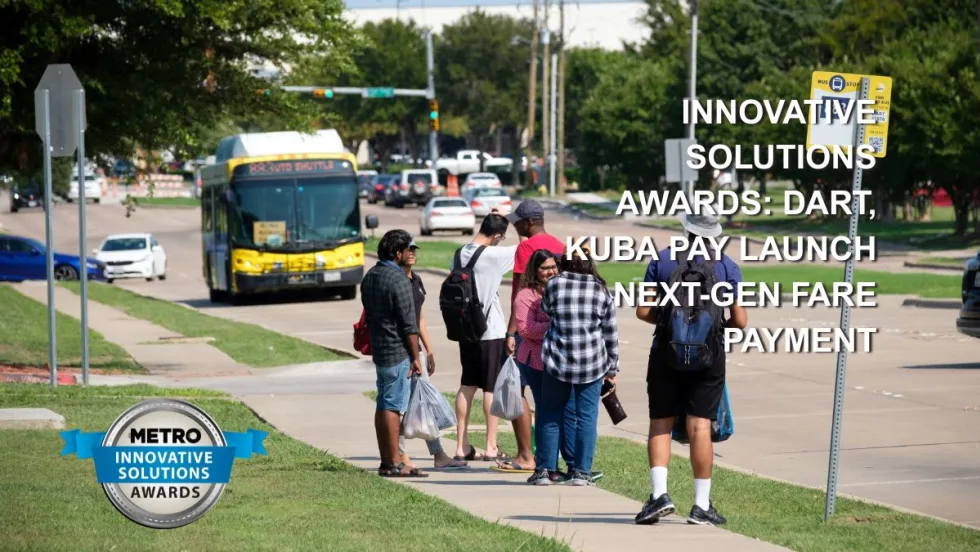
How DART's GoPass Is Redefining Regional Mobility
Serving 14 transit agencies, GoPass simplifies multimodal travel by allowing riders to plan, pay for, and manage an entire trip through one app.
Read More →
Biz Briefs: OCTA Taps Clean Energy for Hydrogen Station, Stadler to Supply Via Rail Vehicles, and More
From manufacturers and suppliers to transit agencies and motorcoach operators, these updates offer a snapshot of the projects, partnerships and business moves driving the industry forward.
Read More →CharterUP Expands Into New Mobility and Autonomous Transportation
Vice President of New Mobility Stephen Joos discusses how CharterUP is leveraging its nationwide transportation network, technology platform, and autonomous vehicle partnerships to expand into workforce mobility, campus shuttles, and transit solutions.
Read More →
METRO Magazine Announces 2026 Innovative Solutions Awards Winners
Projects Recognized for Advancing Mobility Through Technology, Accessibility, Workforce Innovation, and Operational Excellence
Read More →