



New World Tours Proves There Really Is a Silver Lining
The ability to learn from mistakes and use the lessons learned to teach others is just one of many qualities that make Dave Bolen and New World Tours METRO's 2005 Motorcoach Operator of the Year.
When Dave Bolen began operating New World Tours in 1985, he couldn’t have imagined that 17 years later he would face the biggest challenge of his career. Charged with illegally dumping bus lavatory waste into a storm sewer, Bolen feared his Bristow, Va.-based motorcoach business was on the verge of collapse.
“Three years ago, I thought the industry was going to treat me like a pariah; I thought my employees were going to walk out on me,” Bolen says. “All because we didn’t train one employee properly.”
What a relief it must be to know that such a negative experience would become one of the best things that has ever happened to New World Tours, and a lesson for the private bus industry as a whole.
Through the experience, Bolen and his employees have maintained a bright outlook on business and company growth. What began with a 10-year-old, rusted coach has become a reliable source for charter and commuter transport in the mid-Atlantic region.
From rust to rewards
Like most businesses, it wasn’t an easy climb to success for New World Tours. Bolen and his most senior employee, Clarence Kenney, started in an unorthodox fashion.
“We had a driver before we had a manager,” Bolen says. What got them to where they are today is a combination of hard work, visionary thinking and lessons learned from hard times.
The ability to learn from mistakes and use those lessons to teach others is what prompted METRO to award Bolen and New World Tours the 2005 Motorcoach Operator of the Year Award.
It’s also this ability to learn and teach that won’t allow Bolen to selfishly accept the award. When told of the honor, he made sure to express that New World Tours is a team-oriented operation. All the employees, he says, feel the need to excel in the industry by setting an example for how to act when something terrible happens. Bolen puts it best: “Whatever I can do with this award and in the magazine article, if it helps other people, then that is the biggest thing that can come out of it.”
Always improving
For New World, the status quo has never been acceptable. That decade-old rusty bus was more of a source of inspiration than an obstacle for the young company. “We were like, ‘Man, wouldn’t it be nice to one day have a new bus?’” Bolen jokes. “Then we got our first new bus and were like, ‘Man, wouldn’t it be nice to have a bunch of new buses?’” Eventually, this line of thinking helped New World build a modern fleet of 33 coaches, with vehicles replaced every three years. “So yeah, we got there,” he says.
This attitude is what made the problem in 2002 such a positive experience for New World Tours. Bolen recounts how the charges made him realize why he remains in an industry that almost cost him everything. “It reinforced my belief in a lot of things. First of all, I have a great deal of respect and belief in my employees because when we were getting slammed, they could have just said, ‘I’m out of here,’ but instead they rallied around and said ‘We can fix that,’ and we did.”
A focus on training
Bolen and his employees understood the root of their legal problem as being mainly a training issue. “We didn’t make an adequate investment in employee training of all types, not just driver training but all the employees,” he says.
All that has changed dramatically since 2002. Major investments have been made into training employees at New World Tours, as well as placing all requirements and standards of practice and service in writing.
Bolen saw the money he had saved to build the facility of his dreams being utilized to train his employees and invest in one of the most technologically advanced computerized training centers in the industry.
Despite diverting the funds into training, Bolen is happy with his investment, as it makes for a stronger company and happier employees. “Let’s put it this way, I will never go back to not making that kind of investment,” he says. “Once you put that kind of investment into an employee, they pay you back for it.”
Faith in the industry
Bolen does not believe that his company is the one to teach the industry a lesson. Bolen is the first to admit that his situation should be looked at as a cautionary tale.
What happened to New World Tours changed the company’s operation for the better and also taught him many valuable lessons.
Bolen feels his experience created in him a deeper faith in the other companies in the coach industry. At the outset of his problems, Bolen says he felt the motorcoach industry would ostracize him for embarrassing them.
But when Bolen was going through the process of dealing with the charges, he realized that instead of feeling embarrassed and betrayed, his peers were standing beside him.
Bolen believes that how he was treated during and after his problems showed him the good of the motorcoach industry’s members.
“I can go to California, I can go to Texas, I can go to Florida, and in every place I meet with motorcoach operators that treat me extremely well,” he says. “It really makes you want to get back to work and do a good job and not let anyone down.”
Reinforcing a vision
Not only does New World Tours’ experience shed light on the good of the motorcoach industry, but it also reinforces the vision that Bolen had in 1985 when staring at that rusted-out bus.
It took 20 years to prove to Bolen that he was in the right place. It is the drive to realize this vision and the resilience the whole company has exhibited that earned it the Operator of the Year Award.
“It’s hard to explain,” he says. “The clarity of purpose is there for us now. Maybe it wasn’t before but it is now, and that’s a nice edge to have.”
More Management
People Movement: ABC Names John Walsh as Chief Commercial Officer
In this edition, METRO also covers recent appointments and announcements at the DART, STV, and more, showcasing the individuals helping to shape the future of transportation.
Read More →
From Surviving to Thriving: Building Stronger Transportation Organizations
Bus Business Consultants founder Brian Dickson shares lessons on leadership, organizational health, and creating options for long-term success in a changing transportation industry.
Read More →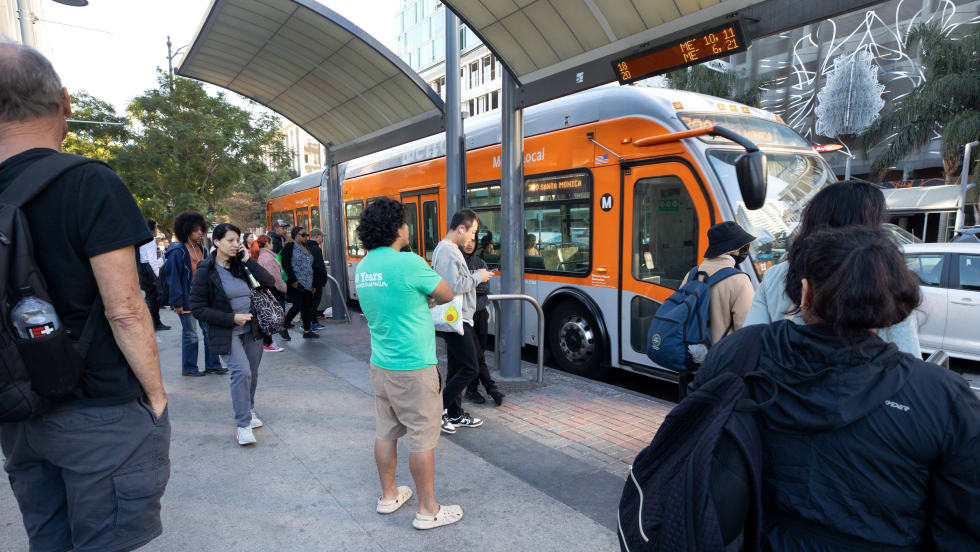
LA Metro Ridership Continues Growth as Rail Gains Accelerate
New rail connections and major events help drive continued ridership gains, with Metro recording its eighth consecutive month of year-over-year rail growth.
Read More →
TransDASH Summit Focuses on Measuring What Matters in Transit
Transit agencies unveil a national performance platform designed to benchmark customer experience, safety, community value, and other outcomes.
Read More →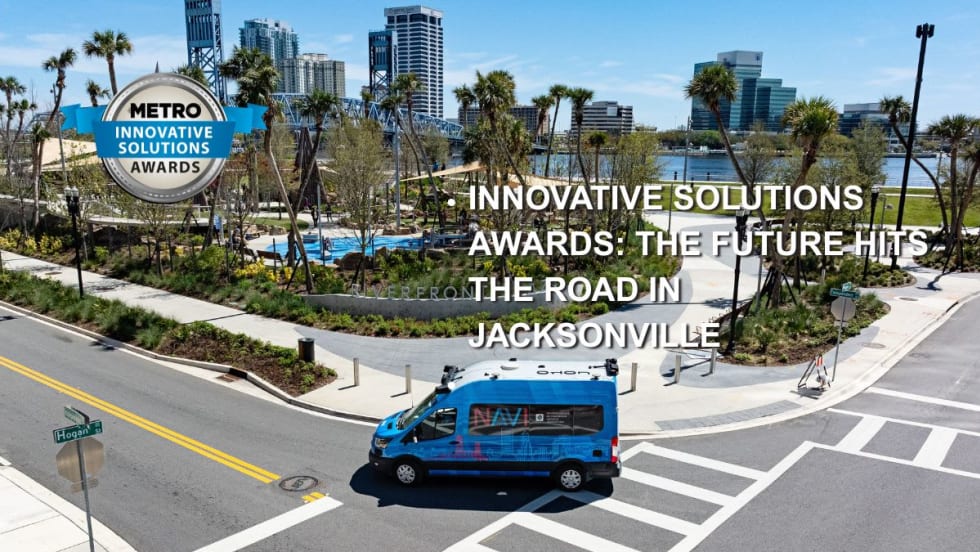
Jacksonville’s NAVI Project Charts a New Course for Autonomous Public Transportation
Through its NAVI program, JTA is showing how autonomous vehicles, intelligent infrastructure, and coordinated operations can work together to deliver everyday public transportation.
Read More →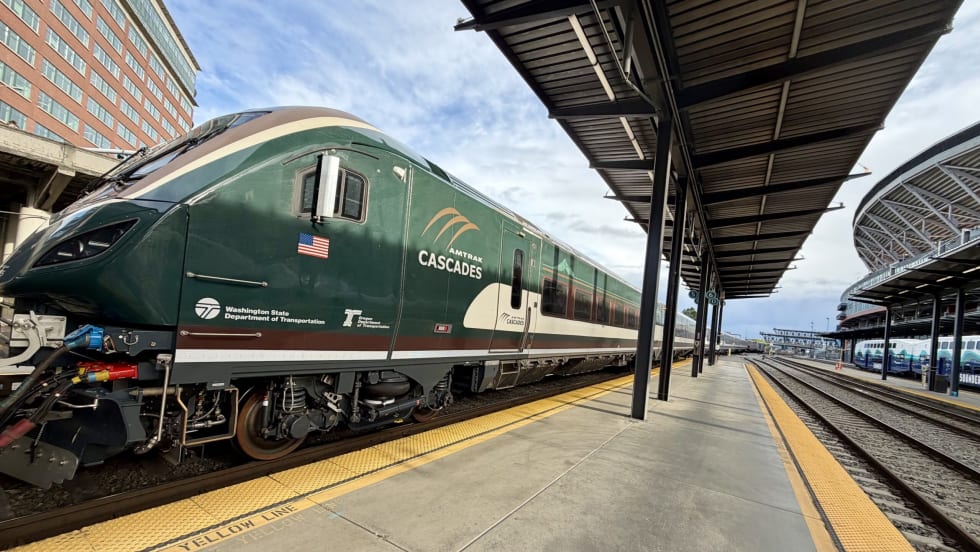
FRA Announces $5.3B in Rail Investments, Including $2B for Amtrak
Funding will support grade-crossing improvements, infrastructure upgrades, and new Amtrak equipment in 23 states.
Read More →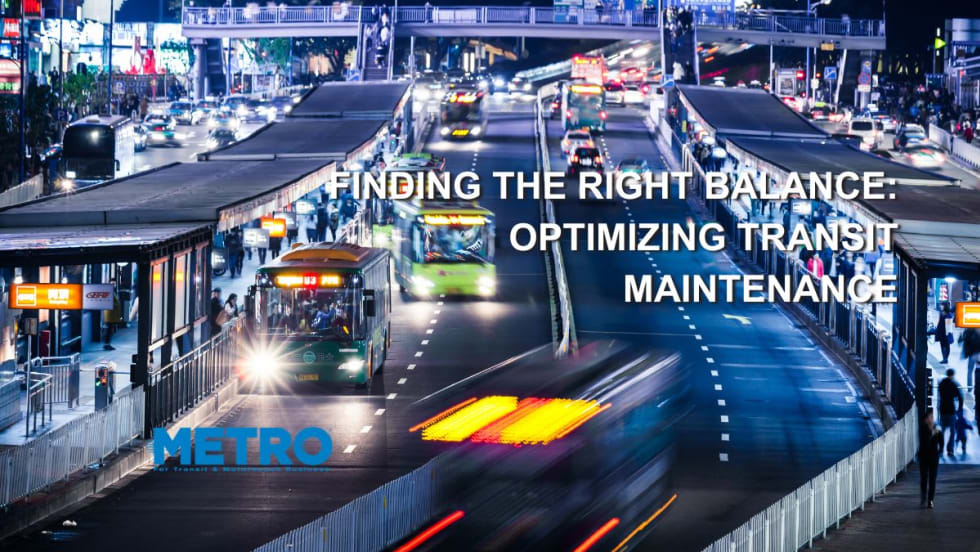
Finding the ‘Happy Medium’: Optimizing Maintenance Without Sacrificing Reliability
The key to maintenance optimization isn’t doing less work—it’s doing the right work at the right time on the right assets.
Read More →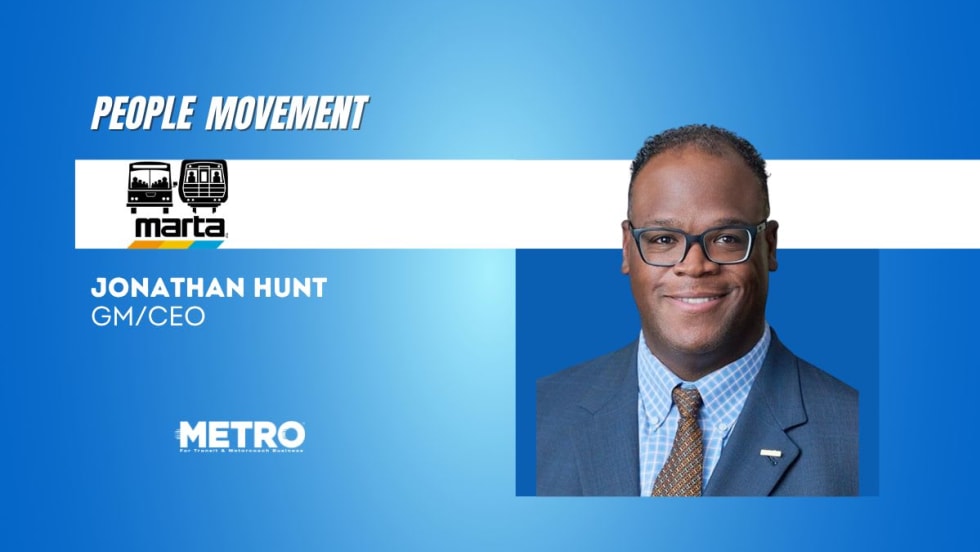
People Movement: MARTA Drops Interim Tag on GM/CEO Hunt and More
In this edition, METRO covers recent appointments and announcements at the FMCSA, HDR, SilverRide, and more, showcasing the individuals helping to shape the future of transportation.
Read More →
VIA Metropolitan Transit Reports 2 Million More Passenger Trips as Better Bus Plan Gains Momentum
San Antonio's transit agency said accelerated service improvements are driving ridership growth, offering another example of how increased frequency and workforce investments can translate into stronger transit performance.
Read More →
ABAF Study Reveals Growing Insurance Crisis for Motorcoach Operators
Preliminary findings show 98% of operators faced premium increases over the past five years, while shrinking insurer participation is putting added pressure on businesses and customers.
Read More →