



New York City Bringing Rail Into the 21st Century
New technology helps agency's subway system change its negative image of the 1970s, while increasing ridership and customer participation.
The New York City subway system had collapsed into a sorry state of disrepair by the late 1970s. Long the envy of cities across the globe, political apathy and a profound lack of capital investment effectively transformed North America’s largest rapid transit system into a rolling metaphor for a city besieged by crime, drowning in garbage and nearly flat broke.
While daily ridership on the subway today stands at 4.9 million, it barely topped 3.3 million in 1977, with those passengers riding a subway fleet suffering both aesthetic and mechanical ills. Many car doors were inoperable, some interiors were dark and, on average, trains were barely able to limp 8,000 miles between mechanical failures. Though recently purchased, the newest cars were beginning to show early signs of neglect and the oldest were ill-maintained relics dating as far back as the late 1930s. As budgets continued to shrink, the practice of preventive maintenance was discarded in favor of letting them roll until they broke.
Finally, driven by bad press and a shattered image, a sea change in the political climate ushered in a reevaluation of the subway’s importance to the region’s economy. New York City Transit’s (NYCT) parent agency, the Metropolitan Transportation Authority (MTA), created a multi-term financial investment plan to rejuvenate the aging system. The fresh availability of city, state and federal funding allowed the crafting of an ambitious rebuilding plan aimed at bringing the system back to a state-of-good repair, while also setting the foundation for growth and improvements.
Aside from the start of infrastructure renewal, the MTA’s initial five-year capital program financed the purchase of 1,775 new subway cars and the overhaul of nearly 4,300 older cars. It was rightly believed this would be the quickest way to inject new vitality into a system few believed could be turned around. Due to NYCT’s poor experiences with new-technology cars a decade earlier, it was decided that the design and propulsion template for the latest cars would be drawn from the mechanically simple yet successful workhorses that had entered service in the 1960s.
Sourced from Kawasaki and Bombardier, subway car classes R62 and R62A were placed into service on the IRT (numbered lines), replacing cars in service as early as 1948. The stainless-steel cars, a first for the IRT, allowed the retirement of hundreds of obsolete cars. The new imports proved to be durable and reliable performers and their entry into service gave the MTA time to create a viable state-of-the-art subway car.
“The use of older, proven technology for new cars coupled with the remanufacture of hundreds of subway cars gave us some breathing room to develop from the rails up a new-technology rapid transit car. They would be easier to maintain and more efficient to operate, while providing riders with brighter, more attractive interiors and advanced climate-control technology,” says Lawrence G. Reuter, president of NYCT. “Our goal was to completely revolutionize the New York City subway car. But in doing so, we had to revolutionize the way we design our cars.”
Taking the big plunge
NYCT’s new technology car program began in 1988. The agency’s technical group was charged with creating an ambitious new subway car design that would employ several new systems and features, which had never before been incorporated into one subway car.
Seeking to create a car that consumed less energy and offered customers a more comfortable environment that provided them with more information, the group looked at technologies already in use at other rapid transit systems around the world.
The group’s immediate goal, however, was to design a pair of rolling test beds — two trains that would be used to demonstrate the latest in rapid transit car technology under actual operating conditions. In June 1993, two new-technology subway trains were introduced.
The R110A, manufactured by Kawasaki, was placed into service on the IRT, and the Bombardier-built R110B was placed into service on IND-BMT routes. The trains remained in service for nearly two years and, at the end of that period, the outline for New York City’s great subway car class was complete.
Since late 2000, NYCT has placed into service more than 1,800 new- technology subway cars based upon lessons learned during the R110 test train program. The new cars have enhanced the commuting experience for hundreds of thousands of subway customers each day. The latest examples of the breed — a pair of 10-car test trains manufactured by Alstom and Kawasaki Rail Car — are currently being delivered as part of the R160/160A contracts.
“The initial testing of the new R160s in customer service represents another step forward in the MTA’s effort to modernize the city’s subway car fleet,” says MTA Chairman Peter S. Kalikow. “New rolling stock gives us the opportunity to incorporate new technology into the system, while significantly improving service for the 4.9 million people who use our subways every day.”
The initial order is valued at $952 million. There are options for the purchase of up to 912 additional cars in the 2005-09 MTA Capital Program. The base order of 660 cars will replace cars that have seen more than 40 years of service and are scheduled to be in full operation by May 2008.
A new era begins
Like the R142/142A and R143, the R160s have bright interiors, digitized voice announcements, airbag suspensions and advanced climate-control systems. While all of the new-technology cars have fully automated digitized voice-announcement systems and LED annunciators, the R160s take customer service a step further with the new Flexible Information and Display (FIND) system. This innovative solution, which includes a video screen, scrolls through station names as the train passes and has a map display that can be changed to show a different line if the train changes routes mid-run.
These features make the new-technology cars hallmarks of the 21st century. They are also the products of a nearly decade-long process that saw NYCT make major changes in the way subway cars are designed. For the first time in its 100-year history, NYCT’s car design was accomplished with significant input from customers, maintenance workers and operating personnel.
“There is no doubt that managing the project in this manner produced a safe, reliable subway car that will be more efficient, more comfortable and easier to maintain than any car we have ever run,” says Michael A. Lombardi, senior vice president of subways for NYCT. Lombardi also notes that the testing program was a major component in making the cars a success.
The last time new-technology cars were purchased was in 1972 when NYCT introduced the R44. As they originally entered service, the cars were far less reliable than older models. “The R44 was an overly complicated high-speed subway car that was not a proper fit for our system,” says Gene Sansone, assistant chief mechanical officer for the Division of Car Equipment. “It was like driving a Ferrari on the Cross-Bronx Expressway. It is important to note that at that time there was no testing program in place.”
The fruits of labor
The reliability of the new-technology cars has exceeded expectations, coming in at three times the contracted mean distance between failures and a failure rate 100% better than the agency’s conventional car fleet.
In addition to their unparalleled record of reliability, the cars also set new benchmarks in crashworthiness. Using the latest technology in stainless-steel fabrication, the car ends are designed with a “crush” zone that absorbs energy in case of a collision, reducing the risk of injury to those onboard.
NYCT’s new-technology cars were also designed and manufactured with a substantial number of so-called “green” elements. The combination of alternating current (AC) motors and regenerative braking has brought an energy savings of approximately 10% when compared to conventional subway cars. As designed, the cars are capable of an energy savings approaching 25%. Energy-reduction technology has taken a step further with the introduction of the R160, which includes an additional energy conservation mode that limits the draw on the third rail during acceleration.
The modular, roof-mounted HVAC systems are designed to use less energy and contain less freon than older cars with “split” air conditioning systems. The systems also boast variable speed compressors capable of matching the cooling capacity with the required load. Simply put, this means system power consumption can be reduced during periods of light ridership. Just how smart are these new cars? The HVAC system and the lights shut off automatically when the train is taken out of service.
All new cars also employ scroll-type HVAC compressors rather than the piston compressors found in conventional subway cars. This design is more efficient, particularly during the hot summer months when power shortages are possible.
Additionally, several materials have been prohibited in the manufacture of NYCT’s new-technology cars, including PVC, asbestos, lead, PCBs, any carcinogenic materials and cadmium (except batteries).
The art of designing cars for the New York City subway requires the ability to look forward in time. The durability of stainless steel and modern components, along with advanced maintenance techniques, virtually guarantee that cars placed into service today will still be serving customers nearly a half century from now.
More Rail

First Full MetroLink Rail Expansion Completed in 20 Years with $192M Airport Project
The project links two St. Louis-area airports by light rail while adding roadway and bike trail connections to improve regional access and mobility.
Read More →
Utilimarc Launches SmartReplace to Optimize Fleet Replacement Decisions
AI-powered SmartReplace helps fleets prioritize vehicle replacements, model budget scenarios, and build more defensible long-term strategies.
Read More →
Scenes from APTA TRANSform & EXPO 2026
Transit leaders, manufacturers, and industry professionals gathered in Chicago to explore new technologies, share ideas, and discuss the future of public transportation.
Read More →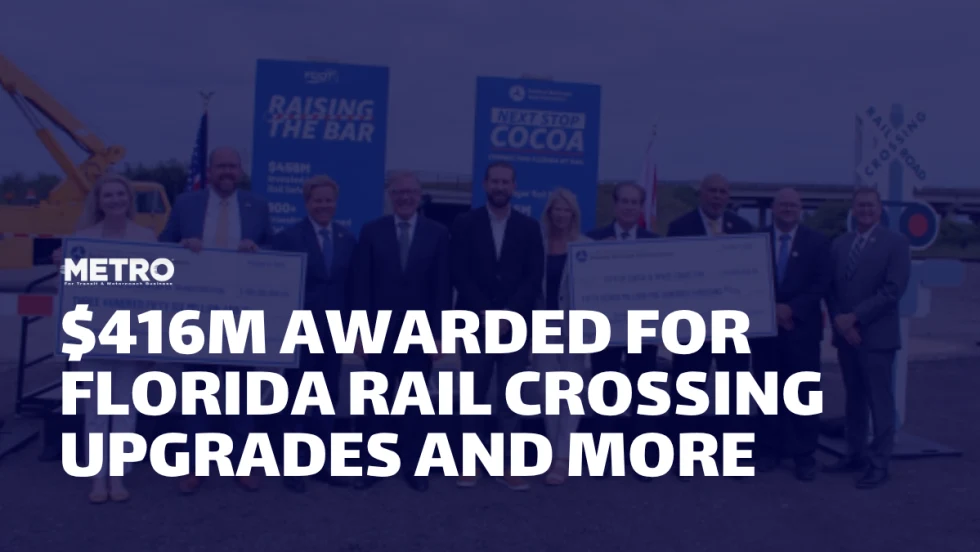
USDOT Awards $416 Million for Florida Rail Crossing Safety Upgrades, New Brightline Station
The projects aim to reduce risks for motorists and pedestrians at rail crossings while expanding passenger rail access along Florida’s Space Coast.
Read More →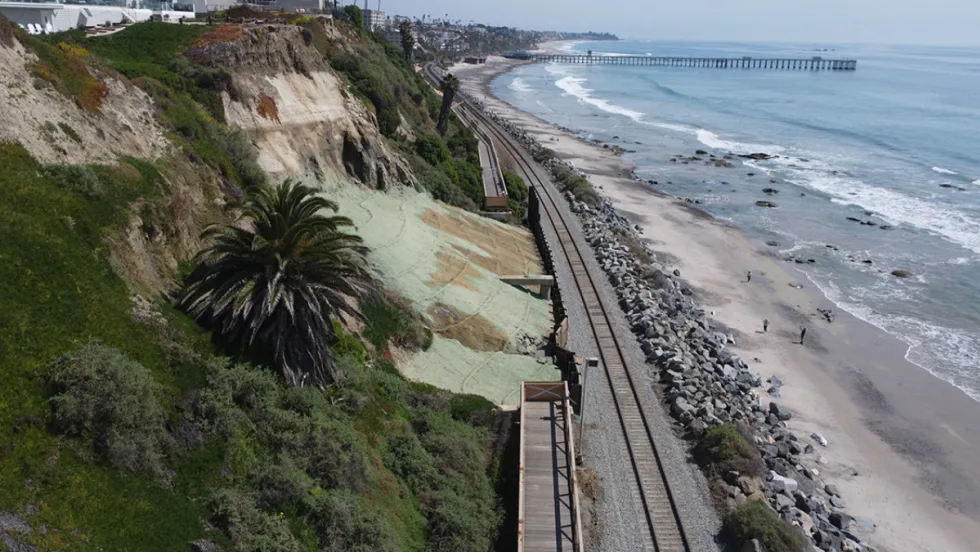
OCTA Declares Emergency to Protect Rail Corridor From Coastal Erosion
The California agency is accelerating shoreline protection and plans to place approximately 690,000 cubic yards of sand along the San Clemente coast to protect a key passenger and freight rail link.
Read More →
More Than a Summer Job: Building the Next Generation of Transit Talent
The Delaware River Port Authority and PATCO have transformed their internship program into a hands-on professional development experience that introduces students to the breadth of transportation careers — and creates a pipeline for future employees.
Read More →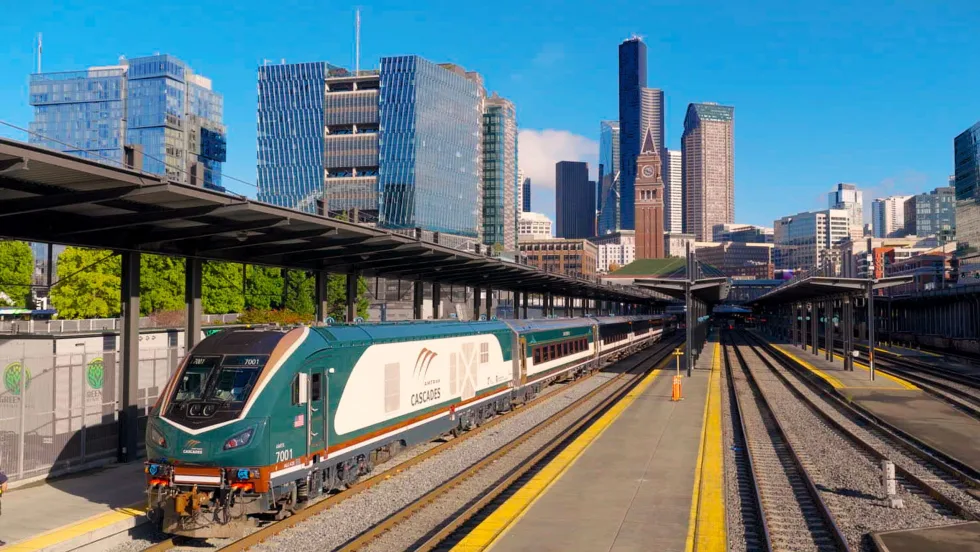
Airo Trains Make Their Amtrak Cascades Debut in the Pacific Northwest
Effective immediately, two cutting-edge Airo trainsets will join the Amtrak Cascades route, operating four daily trips between Vancouver, B.C., Seattle, Portland, and Eugene, Oregon, marking the first introduction of Airo trains into passenger service anywhere in the country.
Read More →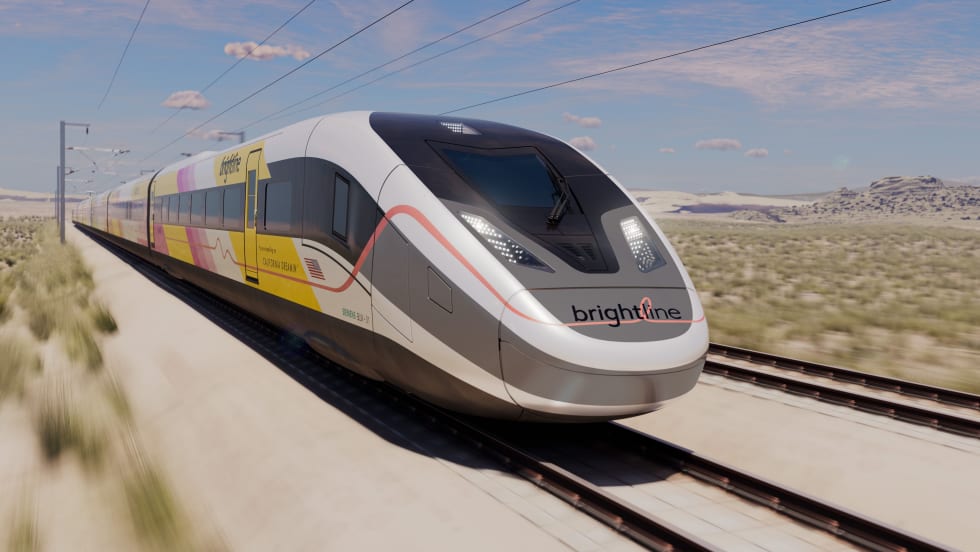
Florida's Brightline Announces Financial Restructuring
Brightline Florida says train operations will continue as normal as certain parent entities enter Chapter 11 and financial stakeholders provide $490 million in new long-term capital.
Read More →
ENC Lands MATA Contract and More in Biz Briefs
In this edition of Biz Briefs, we spotlight the latest developments shaping the future of mobility.
Read More →
Strada360’s Steve Lassey on Turning Transit Data Into Better Decisions
From breaking down data silos to preparing for AI, Strada360 CEO Steve Lassey discusses how transit agencies can use technology to improve operations, customer information, and long-term decision-making.
Read More →