




Keep Reading: The Role of AI in Public Safety for Smart Transit Systems
Amtrak Finalizes Pre-Development Agreement for Penn Station Overhaul
The agreement advances plans for a $7 billion to $8 billion transformation of New York's busiest transit hub, with construction expected to begin by the end of 2027.
June 23, 2026
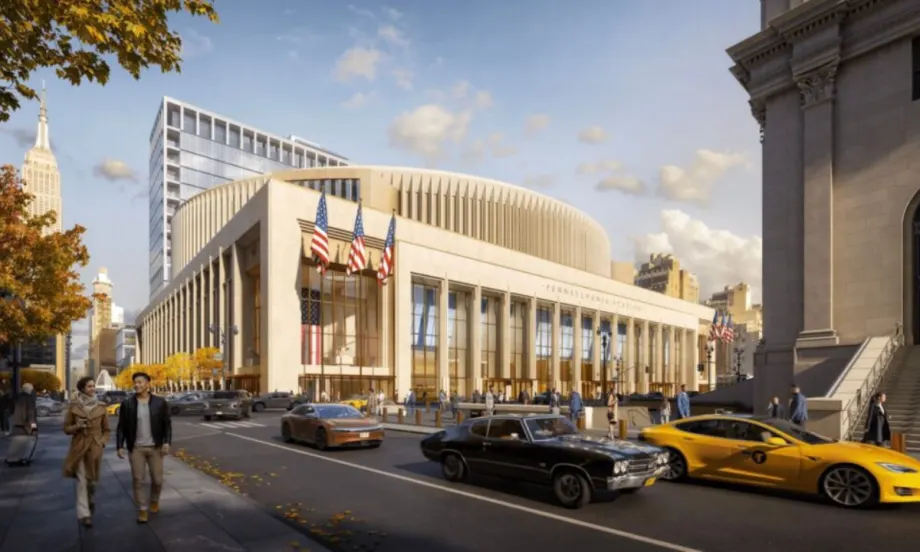
The new Penn Station will feature a single-level concourse of stone and bronze with soaring ceilings, and all public activity will be consolidated on one floor.
Credit:
Amtrak
4 min to read
Amtrak and Penn Transformation Partners (PTP) finalized a Pre-Development Agreement (PDA) for the historic overhaul of New York Penn Station.
During the PDA phase, Amtrak, led by Special Advisor Andy Byford, and PTP, a joint venture led by Halmar and Skanska, will finalize the project’s design and gather stakeholder input, which will then inform and establish a firm, fixed price to deliver the work.
Amtrak’s New York Penn Station Overhaul
The PDA marks a major milestone in transforming the busiest transit hub in the Western Hemisphere into a new world-class station, officials said. The project is moving ahead on schedule and will break ground by the end of 2027.
Amtrak and PTP are advancing a comprehensive transformation that will create a modern, spacious, and fully accessible Penn Station, dramatically improving the visitor and customer experience.
Since 2024, the Penn Station Working Advisory Group (SWAG) — comprising more than 50 organizations representing local stakeholders, community groups, transit riders, elected officials, and partner commuter agencies — has provided ongoing guidance to ensure the new Penn Station reflects the needs and priorities of the 600,000 daily commuters and millions of visitors.
The PDA phase will run from summer 2026 through 2027 and will include Amtrak and PTP conducting community engagement and providing ample opportunities for public comment.
“The momentum continues to transform New York Penn Station, and having a renowned partner in PTP officially onboard ensures the project will progress even further and faster while maintaining our record of meeting all deadlines on schedule,” Byford said. “New Yorkers just experienced a Knicks championship right above the station, and we are committed to giving them something to be equally proud of within the same building where a banner will be raised.”
Funding the Project
The transformation of Penn Station is estimated to cost between $7 billion and $8 billion, with the final costs determined during the PDA phase. B
Byford has stated there will be no fare hikes or surcharges passed on to NJ TRANSIT, MTA, or Amtrak riders to pay for this project. The project will be funded primarily through federal funding, private financing, and equity raised by PTP.
Although the final cost has not been determined, cost-control measures are already in place.
The PDA phase costs are strictly capped before the final construction price is locked in. This is why bidders were asked to submit specific financial metrics during the procurement process to ensure the project will deliver the best use of taxpayer investments, said officials.
To date, USDOT has invested $243 million to support the early stages of the project. In addition, the U.S. Department of Transportation is investing nearly $5 billion into Amtrak’s Northeast Rail Corridor to revitalize the nation’s major rail hubs, including Penn Station.
The New Penn Station
The new Penn Station will feature a single-level concourse of stone and bronze with soaring ceilings, and all public activity, including amenities, bars, restaurants, shops, and customer services, will be consolidated on one floor. Madison Square Garden will remain in place, and throughout construction, the arena and all railroads will continue to operate.
The plan also includes new entry points and passenger pick-up and drop-off locations, the elimination of loading and unloading at 31st Street and 8th Avenue, and the beautification of the surrounding streets and sidewalks to improve the pedestrian experience.
Specifically, the project will:
- Construct a grand entrance on 8th Avenue to the new train hall by removing the Infosys Theater and building a classic New York art deco façade dedicated exclusively to the station.
- Transform cramped, decrepit walkways with open, beautiful concourses.
- Expand track capacity, including the introduction of at least limited through-running on the regional rail network.
- Enable new retail, make it easier for visitors to move around, and deliver other passenger experience improvements, all while maintaining the iconic Madison Square Garden with new cladding that preserves its classic look.
- Upgrade the station’s existing subterranean structure by removing scores of columns at the track and platform level and improving lighting, signage, and passenger circulation.
Halmar and Skanska are 50/50 development partners and 45/55 construction partners on the project. The project will be 100% union-built.
More Rail

FTA Ends Direct Oversight of MBTA Safety Actions
The federal agency closed its remaining special directive to the Massachusetts Department of Public Utilities following a safety review that began in 2022.
Read More →
Amtrak, CN Reach Agreements to Strengthen Passenger Rail Service, Safety
The agreement resolves a more than decade-long proceeding before the Surface Transportation Board concerning the terms and conditions for Amtrak services, such as the City of New Orleans, Illini/Saluki, and Wolverine.
Read More →
New York MTA Advances Final Contract for Second Avenue Subway Expansion
Contract Four is the largest in the Second Avenue Subway Phase 2 project and includes construction of station infrastructure, tracks, and signals for the subway expansion, MTA officials said. Work on Contract Four will begin in 2027.
Read More →
San Diego MTS Breaks Monthly Trolley Ridership Record
Agency officials said July’s ridership indicates MTS’s continued recovery from the pandemic.
Read More →
Report Examines NJ TRANSIT Reliability, Funding Challenges
The Garden State Initiative analysis examines the roles of Amtrak infrastructure, fleet management, and agency operations while recommending a more performance-based approach to improving reliability.
Read More →
Stadler, CapMetro Sign Long-Term Rail Fleet Support Agreement
Beginning in 2027, Stadler will provide on-site technical expertise, spare parts support, training, and obsolescence management to help extend the reliability and longevity of CapMetro’s GTW fleet.
Read More →
Biz Briefs: Alstom Lands Canadian Contract, LYT to Supply California TSP, and More
In METRO's latest installment, we take a look at recent news from Complete Coach Works, Beep, FlixBus, and more partnerships making headlines across the transportation sector.
Read More →
CATS Gold Line Marks 5 Years of Service, 2.8M Passenger Trips
With a six-mile expansion planned, the Charlotte streetcar is positioned to connect more neighborhoods and major transit hubs across the region.
Read More →
Why Simulating Pedestrian Movement Has Become Essential for Modern Rail Stations
Pedestrian microsimulation is helping rail planners identify bottlenecks, test station designs, and prepare complex transit hubs for growing passenger volumes.
Read More →
Amtrak Begins Major Construction at New York’s Sunnyside Yard
The new maintenance facility will support Amtrak’s Airo trainsets while improving maintenance efficiency and turnaround times in New York.
Read More →