



Way of the World: Fare Capping Is Ushering in the Future of Commuting
One Year, One Billion Tap-to-Pay Transactions: A Turning Point for Public Transit
Contactless transactions are taking off as more transit operators around the world go digital.
by By Visa
September 21, 2022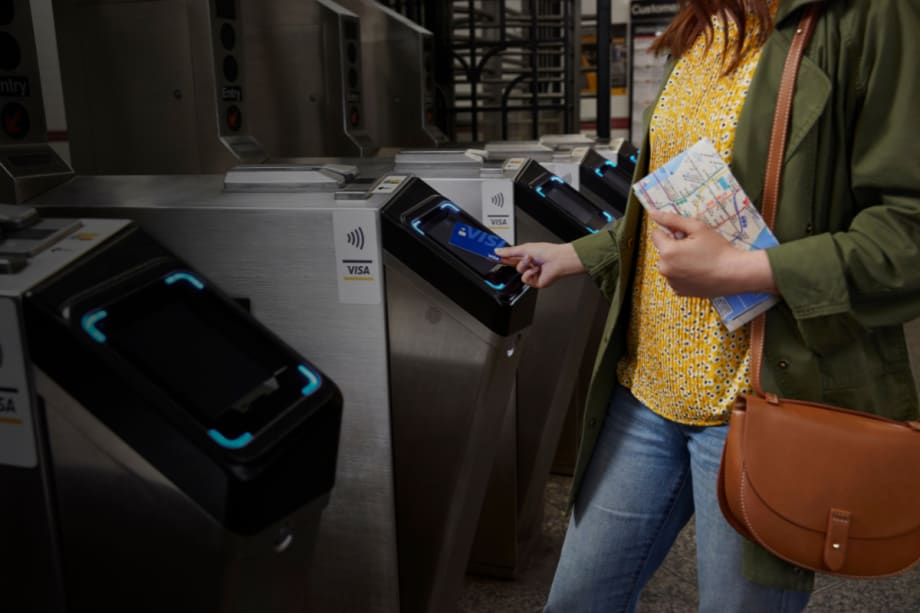
Visa has helped enable contactless transit payments in cities worldwide.
Photo: Visa
3 min to read
More and more, commuters expect convenience when taking public transport. Visa’s recent Future of Urban Mobility Survey found that 91% of riders expect public transit to offer contactless payments, and nearly a third cited contactless payments as a top feature that would entice them to use public transit.
According to the same study, most public transit riders (88%) say sustainability and the environment factor into how often they use public transit, with most employed commuters (62%) using public transit at least three days per week.
Tap-to-ride technology, which allows riders to tap their existing card or mobile wallet to pay for their fare, is far more convenient than having to carry exact change or worry about keeping a metro card topped up. Visa has helped enable contactless transit payments in cities worldwide, from Bangkok to Mexico City to Rio and beyond, while supporting more than 550 urban mobility initiatives since launching tap-to-pay technology on transit in 2011.
The rapid growth in digital payments serves as proof of just how attractive this option has become for consumers. For the first time ever, Visa’s network has processed over one billion tap-to-ride transactions on global transit systems in just 10 months. Europe accounts for the largest share of those transactions, including over four million a day on Transport for London’s (TfL) system alone, but every single region is growing; with North America already accounting for approximately one in five contactless taps on transit. Contactless payment technology has proven to offer positive ROI for transit agencies, on top of giving customers convenience and flexibility.
The same underlying contactless technology also supports Visa Prepaid and Private Label cards, which extend digital ticketing to all transit users, regardless of their financial standing or whether they have access to a bank account, playing an important role in driving financial inclusion around the world.
Visa is working with cities, urban planners, transportation authorities, operators, and solution providers to reimagine the urban travel experience with a focus on inclusive, sustainable, and interconnected multi-modal transportation. Through the Resilient Cities Network, Visa has partnered with a number of Latin American and Caribbean cities to co-develop digital solutions to address their unique challenges.
Visa is also working alongside the World Economic Forum’s Global New Mobility Coalition initiative, which is striving to better understand challenges and solutions to create a shared, connected, and decarbonized mobility ecosystem. The team recently looked at the impact innovation in fare payment can have on sustainability: Innovation in mobility payments is keeping people moving while protecting the planet.
For the past 60 years, Visa has partnered with government agencies to transform the way people transact, commute, and grow to advance economies and uplift communities everywhere. Revolutionizing the way everyone, everywhere can pay their transit fares every day is the latest way to get it done.
Subscribe to Our Newsletter
More New Mobility

From Hardware to Digital Partner: Luminator Charts Its Next Chapter
CEO Magnus Friberg discusses Luminator’s shift toward becoming a digital partner, the growing importance of software and interoperability, and how AI can help agencies improve operations and passenger experience.
Read More →
Biz Briefs: Alstom Lands Canadian Contract, LYT to Supply California TSP, and More
In METRO's latest installment, we take a look at recent news from Complete Coach Works, Beep, FlixBus, and more partnerships making headlines across the transportation sector.
Read More →
CharterUP’s Armir Harris on Technology, AI, and the Future of Group Mobility
In a recent episode of METROspectives, CharterUP Founder/CEO Armir Harris discussed the company’s evolution from an online charter bus marketplace into a technology platform supporting public- and private-sector mobility and much more.
Read More →
Jacksonville’s NAVI Project Charts a New Course for Autonomous Public Transportation
Through its NAVI program, JTA is showing how autonomous vehicles, intelligent infrastructure, and coordinated operations can work together to deliver everyday public transportation.
Read More →
Biz Briefs: Luminator Marks Milestone and More
From manufacturers and suppliers to transit agencies and motorcoach operators, these updates offer a snapshot of the projects, partnerships and business moves driving the industry forward.
Read More →
New Tricks for Old Bureaucracies: Joshua Schank on Making Transit Innovation Stick
Former LA Metro Chief Innovation Officer Joshua Schank discusses why good ideas aren't enough, how transit agencies can overcome resistance to change, and why today's challenges demand more innovation.
Read More →
How DART's GoPass Is Redefining Regional Mobility
Serving 14 transit agencies, GoPass simplifies multimodal travel by allowing riders to plan, pay for, and manage an entire trip through one app.
Read More →
Biz Briefs: OCTA Taps Clean Energy for Hydrogen Station, Stadler to Supply Via Rail Vehicles, and More
From manufacturers and suppliers to transit agencies and motorcoach operators, these updates offer a snapshot of the projects, partnerships and business moves driving the industry forward.
Read More →CharterUP Expands Into New Mobility and Autonomous Transportation
Vice President of New Mobility Stephen Joos discusses how CharterUP is leveraging its nationwide transportation network, technology platform, and autonomous vehicle partnerships to expand into workforce mobility, campus shuttles, and transit solutions.
Read More →
METRO Magazine Announces 2026 Innovative Solutions Awards Winners
Projects Recognized for Advancing Mobility Through Technology, Accessibility, Workforce Innovation, and Operational Excellence
Read More →