



Phoenix: Consultants Play Key Role in Transit Boom
Parsons Brinckerhoff, Gannett Fleming and URS form the general engineering team for the coordination of the region's light rail project, but more than 60 consultants are involved.
Arizona uses consultants to a large degree in all aspects of business, especially in public transportation — as evidenced by the number of projects sprouting up in the Phoenix metropolitan area.
“Phoenix is one of the largest contract bus operations in North America, so the private sector has been a major player in the design, construction and, ultimately, the operation of transit,” says Gannett Fleming’s Larry Miller.
Parsons Brinckerhoff’s (PB) Patrick Fuller, project manager for the Valley Metro Rail (VMR) program, agrees. “Consultants are very active in the Phoenix valley in terms of transportation issues and infrastructure, in not only light rail, but also other modes of transportation,” he says.
The consultant community was instrumental in getting Proposition 400 passed last November. This 20-year extension of a half-cent sales tax not only helped fund light rail, but freeways and bus rapid transit, Fuller says.
Coordination is key
While the VMR project distinguishes itself as the largest at-grade, in-street light rail system in the U.S., it is also notable for the sheer number of consultants on staff. It makes use of no less than 64 consultant firms, not including the three major companies forming the GEC (general engineering consultant) team. PB is the prime consultant, taking on 50% of the work, with Gannett Fleming and URS Corp. each taking a 25% share, after DBE goals are met. The 20-mile light rail system, called METRO, travels through Phoenix, Mesa and Tempe, and includes 27 stations. Total cost of the project is $1.3 billion, with an opening date slated for December 2008.
In January 2005, PB completed final design of the project, and is currently in the design-services-during-construction phase.
PB divided the 20-mile system into five four-mile line sections and hired prime design consultants for each section. It is not standard practice to have so many consultants working on one project, Fuller says. “We were directed to subcontract out by the agency, to spread the work around. Most of them are national firms with offices in Phoenix.” The benefit of having numerous subcontractors in the mix is the diversity it brings to the region’s economy.
Having multiple consultants also proved to be a coordination challenge. “We wanted continuity between all the line sections. Line section five is in Tempe and Mesa, and line section one is in north Phoenix,” Fuller says. To combat this challenge, PB hired project unit managers for each of the contracts within the GEC. These managers were tasked with providing the continuity and standards for which their design had to live up to.
Signaling, stations and railcars
While PB is primarily the management consultant on the project, the firm is also handling the traffic signaling, electrification and train systems in-house. Traffic signals are proving to be a major project on their own, as the line runs through nearly 150 intersections.
“We were passing through 148 traffic signals along the 20 miles, and our task was to find a strategy that had a priority or an emphasis on safety that could possibly allow the train to pass through the signalized intersections without a whole lot of delay but also allow regular vehicle traffic to flow,” Fuller says. By building the light rail line in the roadway, two lanes of traffic were essentially lost, which reduced roadway capacity, making it crucial to have a very efficient traffic signal strategy.
PB’s team studied preemption-, coordination- and priority-signaling strategies before selecting the latter. Preemption was ruled out because it gave too much time to the light rail, causing gridlock that would affect ridership. “With cars backed up, you wouldn’t be able to get to the stations to get onto the light rail,” Fuller says.
Coordination was a hit-or-miss situation, giving bus-priority technology, which is the green extension, or early green or red truncation, the leg up. PB took it one step further and used a system similar to those in Salt Lake City and Houston, refined it and called it predictive priority.
With this new technology, signals are not only sent down to the next intersection, but also four, five or six intersections downstream. “The further downstream that we can let that traffic signal controller know that we are coming, the higher probability that we can assure him that he will have a green light when he gets there because we have more time,” Fuller says.
In addition to developing the traffic signal system, PB designed the concept of the vehicles being built by Japanese manufacturer Kinkisharyo. Valley Metro will take delivery of the first of two railcars, at a cost of $2.92 million apiece, by year’s end. The fleet will comprise 50 vehicles in total. Each vehicle is approximately 90 feet long and will hold 150 passengers. Vehicles can be linked into three-car trains that will span the length of a downtown city block. Passenger amenities include entry floors level with the station platforms, four spaces for wheelchair-assisted passengers and four hanging bicycle racks inside each vehicle.
Other design considerations implemented by PB included a special impact bumper, Fuller says. The vehicles will also be equipped with high-powered air conditioning to mitigate the area’s extreme heat, which can reach or exceed 100 degrees three months a year. Because of the air-conditioning systems, the traction electrification substations were sized accordingly to facilitate the draw.
The heat also played a major role in station design. Design criteria specified that 80% of the station be shaded throughout the day. “We worked with Arizona State University and developed a shade screen that’s at all stations based upon the angle of the sun any given day,” Fuller says.
Moving more people
In addition to the light rail project, consultants are bringing an automated people mover (APM) into the mix, with Gannett Fleming helming the design of the tracks, tunnels and station for the Sky Harbor International Airport project.
The 5-mile system will ultimately connect a consolidated rental car facility at one end of the airport and connect to the light rail system on the other, with connections to three terminals and parking garages in between. The price tag for the project, which is expected to be built in two phases, is estimated at $1 billion, with the opening set for 2012.
“It brings connectivity,” says Gannett Fleming’s Miller of the project’s significance. “It’s like an elevator in a building. There are all these different floors that are the airport. On one floor there is the connection to LRT, on the other end of it is the rental car facility and in between are all these generators of people, such as the parking garages and airline terminals. This becomes the spine that connects them all.”
As with other transportation projects, the challenge will be to build in a way that doesn’t interrupt any of the business of the airport and doesn’t interfere too much with the passenger flows. Traffic management is a top priority, as is developing a traffic plan that is going to minimize the impact on the traveler getting to the airport, Miller says. The second means of facing this challenge is scheduling the work so the contractor is working at night, for example, or at times when there are fewer people using the airport.
More Management
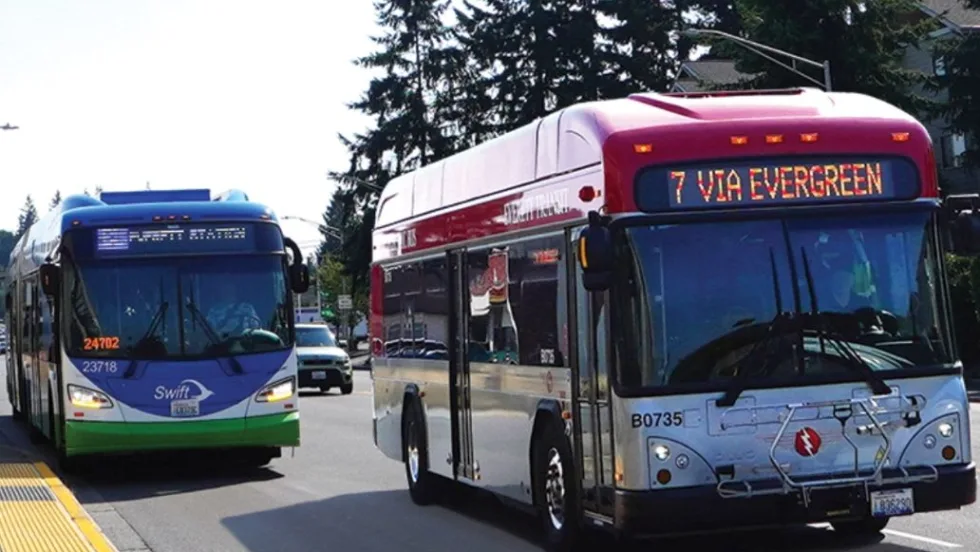
Everett Transit, Community Transit Outline Consolidation Agreement
The proposed agreement calls for a 50% increase in bus service in Everett, a new microtransit zone, continued paratransit service, and the transfer of Everett Transit operations to Community Transit.
Read More →
Strada360’s Steve Lassey on Turning Transit Data Into Better Decisions
From breaking down data silos to preparing for AI, Strada360 CEO Steve Lassey discusses how transit agencies can use technology to improve operations, customer information, and long-term decision-making.
Read More →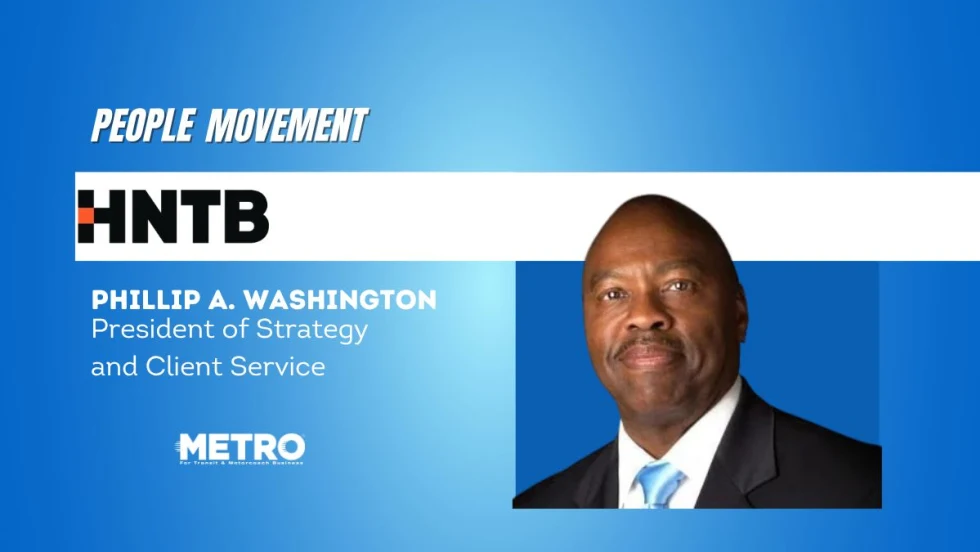
People Movement: Phil Washington Joins HNTB, Denver RTD Launches CEO Search, and More
In this edition, we also spotlight recent personnel moves at STV, the Eno Center for Transportation, and more, highlighting the people taking on new roles across the transportation industry.
Read More →
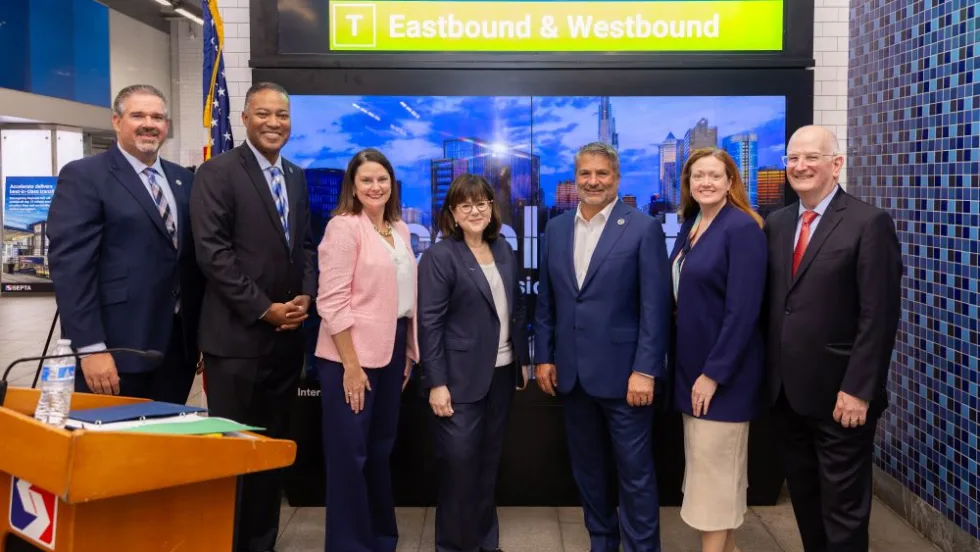
SEPTA Details Accelerate Vision for Transit System
The plan outlines investments in trolley modernization, new Metro and Regional Rail vehicles, accessible stations, and more frequent bus and rail service.
Read More →
FTA Ends Direct Oversight of MBTA Safety Actions
The federal agency closed its remaining special directive to the Massachusetts Department of Public Utilities following a safety review that began in 2022.
Read More →
Report: Transit Bus Manufacturing Supports 34,100 Jobs, $5.1B in GDP
The “Buses Mean Business” report examines the transit bus manufacturing industry’s economic footprint, supply chain, and rising demand for vehicle replacements.
Read More →
LIT Marks 10-Year Milestone at Annual Summit
Hosted by the COTA from September 10 to 13, the Summit carried the theme “Celebrating 10 Years of Excellence, Leadership, and Impact,” with every part of the program honoring the people, agencies, and partners who built LIT over its first decade.
Read More →
People Movement: Dan Dipert Coaches Adds Third-Generation Leader, Keolis Names New Valley Metro VP/GM, and More
In this edition, we also cover recent appointments and announcements at the Wabtec, SilverRide, HNTB, and more, showcasing the individuals helping to shape the future of transportation.
Read More →
METRO Opens Submissions for 2026 Motorcoach Awards
Nominations are now being accepted for METRO Magazine’s Operator of the Year and Innovative Operator of the Year awards.
Read More →
New York MTA Advances Final Contract for Second Avenue Subway Expansion
Contract Four is the largest in the Second Avenue Subway Phase 2 project and includes construction of station infrastructure, tracks, and signals for the subway expansion, MTA officials said. Work on Contract Four will begin in 2027.
Read More →