



Plugging every security gap is an impossible mission
I’m generally not an anxious traveler, which is a good thing since I log so many business miles each year, but I couldn’t fail to notice that Amtrak didn’t check my baggage or my person before letting me get on the train.
At press time, the war in Iraq was in full throttle. By the time you read this, I hope it’s over. Even if the war has been successfully concluded, however, the threat of terrorism will remain. Which brings me to a recent train trip I made from Philadelphia to Washington, D.C., and back. I’m generally not an anxious traveler, which is a good thing since I log so many business miles each year, but I couldn’t fail to notice that Amtrak didn’t check my baggage or my person before letting me get on the train. And it wasn’t just me. Amtrak wasn’t checking any of my fellow passengers either. Like I said, I don’t scare easily. But the thought occurred to me that a terrorist could rather easily check a bag filled with explosives on an Amtrak train. Or he could simply carry it aboard in a briefcase. I’m mentioning Amtrak not because it’s more vulnerable than other rail systems, but simply because I’m familiar with it. In addition, it’s a high-profile system, making it a more likely terrorist target than a light rail or commuter rail system. Straight to the source To find out more about Amtrak’s security system, I called its Washington headquarters and spoke with a knowledgeable media relations officer who assured me that Amtrak security is as tight as funding and other imperatives will allow. She told me that Amtrak stations will never be as buttoned down as airports, with their array of metal detectors, bomb-detecting baggage inspections and the like. “To close the entire system would be nearly impossible,“ she said. “We have 500 stations in 46 states. Some are large, and some are very small.” Increasing security at larger stations is being considered, but she couldn’t discuss the details. “We’re looking at a lot of alternatives,” she said. “We’re also in constant contact with the FBI and the Transportation Security Administration.” As you might expect, Amtrak has enhanced its security since the attacks of Sept. 11 and the start of the war in Iraq. It has bolstered its police presence at stations and on trains, both with uniformed and plainclothes officers. It also has instituted random baggage screens and uses bomb-sniffing canines. Currently, Amtrak’s police officers are working 12- hour days systemwide. The canine units, I understand, are also pulling overtime. Thousands of other Amtrak employees have been conscripted into the fight against terrorism. These conductors and other customer-contact employees have been briefed on identifying suspicious people and baggage. “They are our eyes and ears,” the spokeswoman said. “If they see anything suspicious, they report it immediately to Amtrak police.” The FBI is watching Don’t think that you can ride Amtrak without Big Brother looking over your shoulder. Identification, such as a photo ID, is required for passage, and the check-in system is linked to the FBI’s security watch list. It’s doubtful, however, that a terrorist would use his real name if he’s being watched by the FBI, but you never know. After speaking with the Amtrak representative, I felt more comfortable with the security of the system. The fact that the gentleman sitting next to me might actually be a plainclothes Amtrak policeman rather than a dog-shampoo sales rep traveling to a veterinary convention in Baltimore is somehow comforting. These days, security cannot be taken for granted. The people at Amtrak are doing the best they can with limited resources. “We’re doing everything in our power,” the spokeswoman assured me. I hope the transit and motorcoach operators around the country are following suit.
More Management
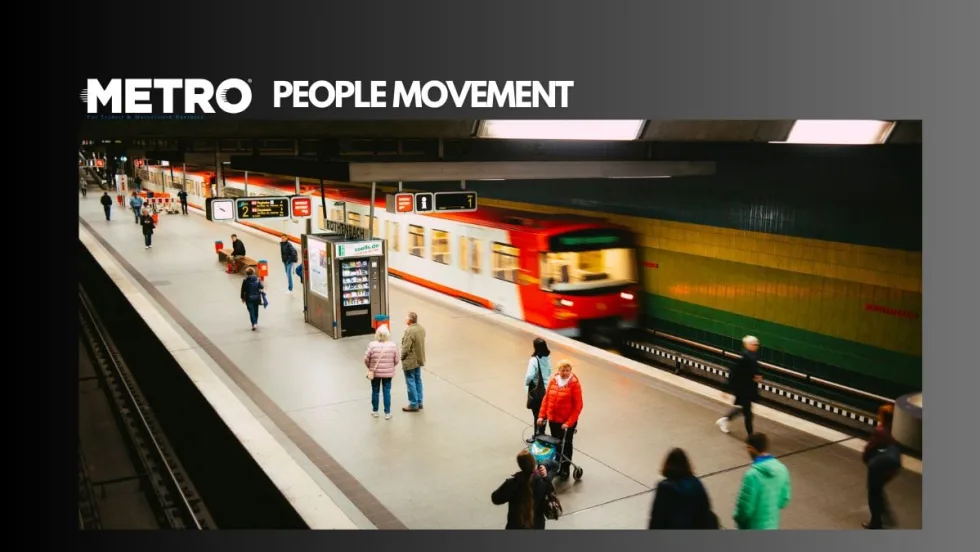
People Movement: Connectpoint Expands Leadership Team, Stadler Names New Group CEO, and More
In this edition, we also spotlight recent personnel moves at Burns, UZURV, and more, highlighting the people taking on new roles across the transportation industry.
Read More →
More Than a Summer Job: Building the Next Generation of Transit Talent
The Delaware River Port Authority and PATCO have transformed their internship program into a hands-on professional development experience that introduces students to the breadth of transportation careers — and creates a pipeline for future employees.
Read More →
LA Metro Board Awards 220 Battery-Electric Bus Contract to ENC
The contract, which is the largest base award of battery-electric buses by a U.S. transit agency, will be built in Southern California, sustaining good jobs as LA prepares to welcome the world in 2028
Read More →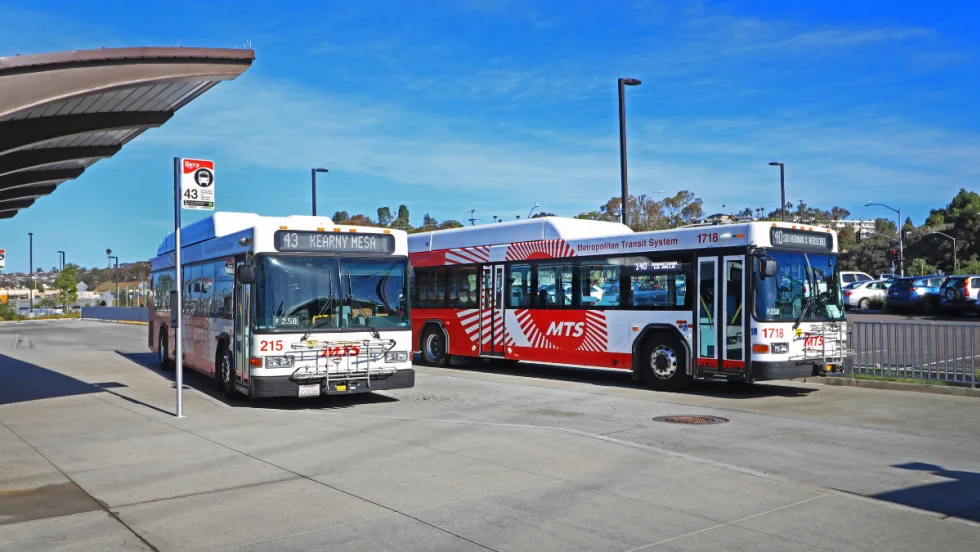
What’s Behind San Diego MTS’s Award-Winning Transit Strategy
Named one of APTA’s 2026 Outstanding Public Transportation Systems with 50 million or more annual passenger trips, California’s San Diego Metropolitan Transit System points to gains in ridership, safety, technology, and reliability as foundations of its success.
Read More →
Public Transit Conference Returning to GFX in 2027, Call for Papers Now Open
The Call for Papers is now open, allowing transit agency professionals and industry experts to help shape the PTC educational program by submitting session ideas for consideration.
Read More →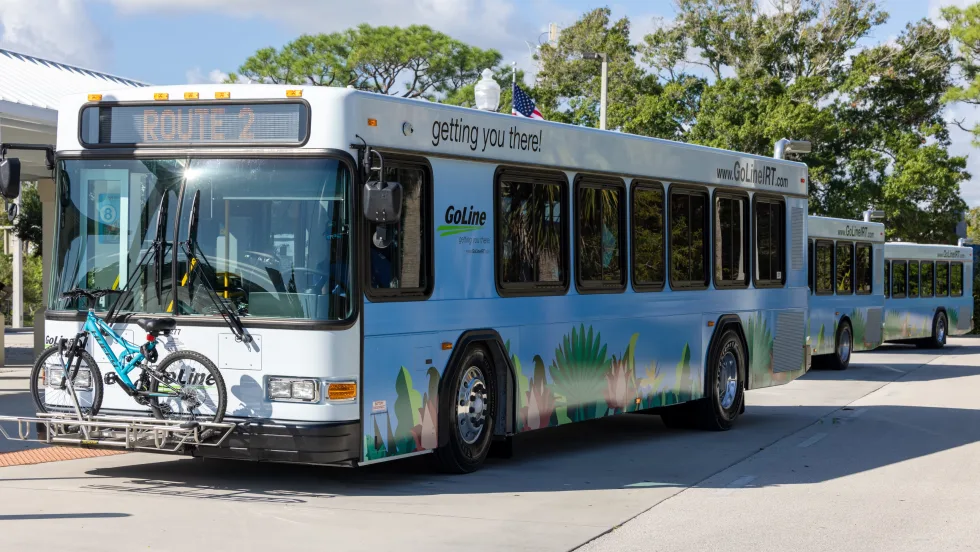
Indian River Transit’s Community-Focused Approach Earns National Recognition
Named APTA’s 2026 Outstanding Public Transportation System in its size category, Florida’s Indian River County transit system continues to grow ridership through fare-free service and a focus on evolving community needs.
Read More →
ENC Lands MATA Contract and More in Biz Briefs
In this edition of Biz Briefs, we spotlight the latest developments shaping the future of mobility.
Read More →
From Surviving to Thriving: Building Stronger Transportation Organizations
Bus Business Consultants founder Brian Dickson shares lessons on leadership, organizational health, and creating options for long-term success in a changing transportation industry.
Read More →
Everett Transit, Community Transit Outline Consolidation Agreement
The proposed agreement calls for a 50% increase in bus service in Everett, a new microtransit zone, continued paratransit service, and the transfer of Everett Transit operations to Community Transit.
Read More →
Strada360’s Steve Lassey on Turning Transit Data Into Better Decisions
From breaking down data silos to preparing for AI, Strada360 CEO Steve Lassey discusses how transit agencies can use technology to improve operations, customer information, and long-term decision-making.
Read More →