




Under New Leadership: Richard Davey Tapped to Lead NYCT
Preteckting Buses: AI Company Uses Tech to Help NYCT Buses
METRO spoke with Preteckt to get an inside look on the company’s AI technology that NYCT is using to prevent breakdowns.
January 11, 2023
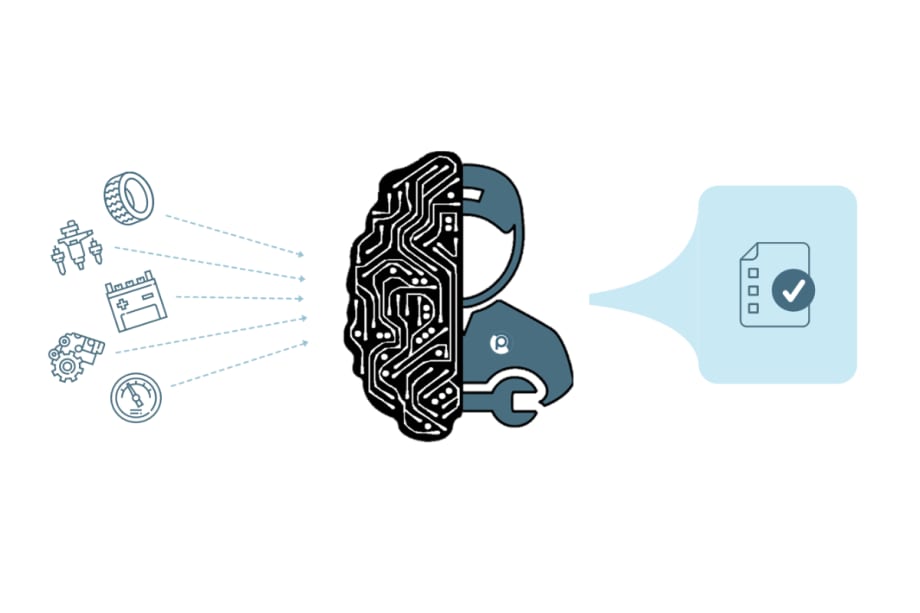
Preteckt is an AI focused on providing a maintenance tool that increases vehicle availability, improves safety, reduces costs, and supports maintenance teams.
Photo: Preteckt
4 min to read
It was recently announced that the New York City Transit Bus Maintenance (NYCT) tested artificial intelligence technology from Preteckt and will use it to help prevent bus breakdowns.
Sasha Kucharczyk, co-founder and COO at Preteckt, spoke with METRO about this latest partnership, how the technology works, and more.
Preteckt is an AI startup focused on providing a maintenance tool that increases vehicle availability, improves safety, reduces costs, and supports maintenance teams.
AI Origins
The partnership between Preteckt and NYCT began when the company applied to an innovation challenge posed by Transit Tech Lab in New York.
Over the last two years, NYCT has tested Preteckt’s technology, and the company's founder Ken Sills said the technology is "a souped-up version of the check engine light in your car."
Kucharczyk breaks down the goal of this AI technology.
“The premise of what we’re doing is focused on helping technicians better understand the maintenance of their vehicles,” said Kucharczyk.
Preteckt accomplishes this goal by using AI technology to analyze the data generated by a vehicle and point the technicians to what they should be focusing on. Preteckt technology was developed for heavy-duty trucks and has adapted that technology for transit.
Diving into Data
The data the company leverages is millions of sensor data from each bus per day of operation. While NYCT had a system in place to collect this specific data, Preteckt developed algorithms and tools to interact with that data and identify maintenance implications.
“We provide high-precision repair plans,” Kucharczyk adds. “These repair plans identify upcoming maintenance issues, or even current maintenance issues that are minor but will progress to something more significant.”
Preteckt demonstrated its technology on 326 buses. These buses sent hundreds of millions of pieces of information from sensors to the company’s servers, where the data was then analyzed.
During the last six months of the demonstration, there were about 50 buses sent to depots with repair plans from Preteckt.
Recently, the NYCT Maintenance team presented to the MTA Board, and some of the findings were highlighted, including a 75% increase in maintenance productivity and material costs lowered by 24%.
Before working with New York City, Preteckt worked with the Memphis Area Transit Authority (MATA) and several other agencies across North America. Kucharczyk pointed out the differences between these operations.
“With other agencies, we had third-party hardware installed to collect the millions of sensor data we require,” Kucharczyk said. “With NYCT, they were already collecting the data we needed and our AI technology was added to the NYCT software stack.”
This meant Preteckt had to repurpose the total product to use a different data strategy to provide a certain result. Preteckt localizes its algorithms to ensure differences in bus or truck technology, as well as city-to-city variations, are taken into consideration. A truck operating in NYC has similar operating characteristics compared to buses or trucks operating in Seattle, for example.
Facing the Challenges
There were challenges on the technical side as the company began working with NYCT, but there were also challenges on the operational end.
Preteckt had a cellular connection with MATA that provided the company with constant data feeds coming off of the bus. In New York City, they did not have data coming off of the bus when they turned to the depot. This led to Preteckt taking a look at the data at the end of the day.
Due to this data difference, Preteckt had to think ahead.
“We were looking at data a day back, and so one of the big differences with NYCT was to create a useful prediction for them,” Kucharczyk said. “It had to be a minimum of 48 hours before they had to take action. Anything less than that, and they were unable to take action on it. So we had to change our predictions in how it was done to accommodate that, and we really only need to look about 24 hours out. As long as they can make that prediction before the bus is in service, you can avoid any service or maintenance issue.”
Preteckt knows that understanding the customer is the most important aspect as they worked with truck OEMs, truck fleets, and different cities and agencies.
“The technical aspects of the technology might be the same across customers but you have to spend time understanding their operations. How we provide our predictions might need to change in order to make it valuable to the customer based on how they and their teams do their jobs,” Kucharczyk said.
As it stands, it is a one-year agreement between Preteckt and NYCT.
“We hope that the relationship will turn into a multiyear relationship with NYCT. We hope to work with more of their feet and help them with the maintenance of more subsystems of their buses. We have learned so much from the NYCT and appreciate the opportunity to introduce this AI innovation to the largest bus fleet in North America,” Kucharczyk said.
Subscribe to Our Newsletter
More Technology

From Hardware to Digital Partner: Luminator Charts Its Next Chapter
CEO Magnus Friberg discusses Luminator’s shift toward becoming a digital partner, the growing importance of software and interoperability, and how AI can help agencies improve operations and passenger experience.
Read More →
Beyond the Checklist: A Structured Approach to Transit Maintenance
Reliability-Centered Maintenance helps transit agencies move beyond routine checklists to focus limited resources on the assets and failures that have the greatest impact on safety, reliability, and service.
Read More →
NJ TRANSIT Advances Bus Technology Upgrades Across Statewide Fleet
More than 1,500 buses now feature upgraded technology designed to improve arrival predictions and provide free Wi-Fi, with deployment expected to reach nearly 2,000 buses by the end of 2026.
Read More →

Building a Flexible Path to Transit Electrification
John Hroncich discusses BAE Systems’ modular and scalable approach, lessons learned from decades of real-world operations, and how agencies can identify electrification strategies that fit their fleets.
Read More →
Biz Briefs: Alstom Lands Canadian Contract, LYT to Supply California TSP, and More
In METRO's latest installment, we take a look at recent news from Complete Coach Works, Beep, FlixBus, and more partnerships making headlines across the transportation sector.
Read More →
Sponsored•September 8, 2026
From Legacy Silos to Conversational Intelligence
What if transit leaders could ask any operational question and get a trusted answer in seconds? Conversational AI is transforming how agencies use their data.
Read More →
USDOT Announces Rail Vehicle Replacement Grants, Chattanooga AV Shuttle Funding
More than $191 million in federal funding will help three transit agencies replace aging rail vehicles and support a new autonomous shuttle service in Chattanooga.
Read More →
Bus Tech Talk: Keeping Transit Technicians Ahead of the Technology Curve
LA Metro’s Obed Mejia discusses technician training, evolving maintenance technology, fleet replacement, and strategies for getting the most out of today’s transit fleets.
Read More →
Biz Briefs: RIPTA Unveils New Frontrunners, Clevland RTA Adds New Siemens, and More
In METRO's latest installment, we take a look at recent news from Siemens, Prevost, Dodge, and more partnerships making headlines across the transportation sector.
Read More →
Why Simulating Pedestrian Movement Has Become Essential for Modern Rail Stations
Pedestrian microsimulation is helping rail planners identify bottlenecks, test station designs, and prepare complex transit hubs for growing passenger volumes.
Read More →