



Q&A with MBTA's Chief Customer Officer Danny Levy
Prior to joining the MBTA last year, Levy served as chief marking officer for the Massachusetts Port Authority, where she headed up a 10-person department at the $800 million agency.
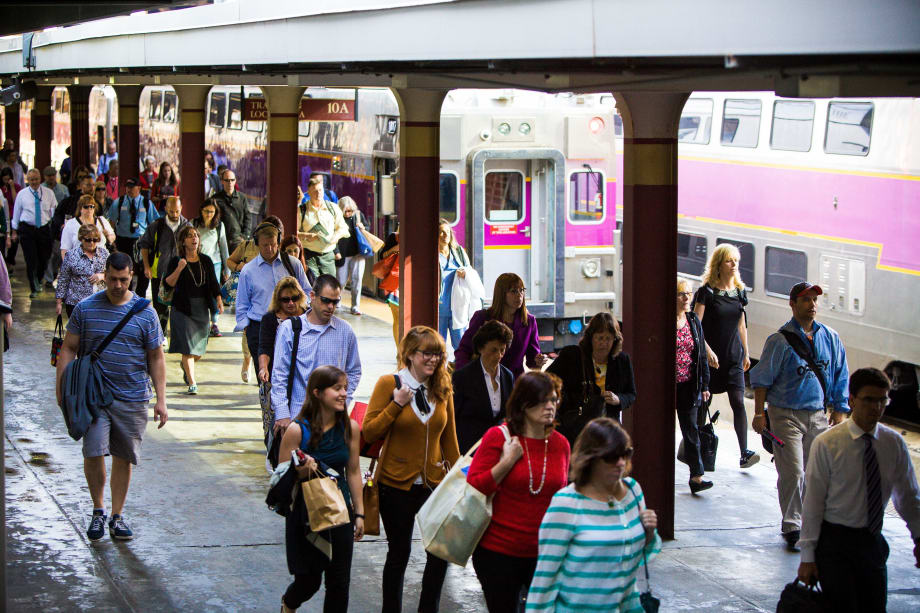
The MBTA is in the midst of an ambitious program to accelerate its $8 billion modernization of the system, which includes subway upgrades and a reinvented bus system.
Keolis

Danny Levy
As chief customer officer, Danny Levy, a regular user of the MBTA, is responsible for improving the daily experience of riders. Prior to joining the MBTA last year, Levy served as chief marking officer for the Massachusetts Port Authority, where she headed up a 10-person department at the $800 million agency. METRO Executive Editor Janna Starcic spoke to Levy about her role, how she is helping the MBTA become more customer-centric, and lessons to learn from the private sector.
Discuss your role at the MBTA and what it entails? My role is to be a strong customer advocate — to place riders at the center of the T, to focus on their needs first. My team does this through proactive customer communications, whether that’s through social media and communicating the customer journey in real-time; in-station, with our customer ambassadors and digital signage keeping riders in the know; or our call center and issues resolution team responding directly to customer concerns.
My responsibilities also include working with all MBTA departments that interact with the public to provide a comprehensive, consistent approach to customer service and develop a customer-focused approach to daily MBTA operations. This is especially critical as the MBTA launches its 'Building a Better T' accelerated construction program to modernize the transit system. While we look forward to a modernized MBTA, my responsibility is to put in place a unifying strategy to improve the daily experience of MBTA riders.
Discuss any projects related to this focus you’ve been involved in the past year. This year, it’s all hands on deck for our ambitious Building a Better T program to accelerate our $8 billion modernization of the MBTA. The program includes replacing subway fleets, upgrading tracks, signals, and switches; reinventing the bus system to reflect changing demographics; and improving the accessibility of the entire system.
What does this mean for our riders? Weekend service shutdowns and diversions throughout the core system so construction crews can stage vehicles and equipment in the central subway tunnels to accelerate the work and minimize inconveniences in the long-term.
For the Customer Experience Department, we are communicating across platforms, in near real-time, to advise riders of shutdowns, diversions, and most importantly communicating the benefits of the shutdown. What we’ve learned through customer focus groups is that too often riders are not aware why their service is being disrupted or how today’s disruption will ultimately result in a more efficient and reliable service in the not too distant future.
With Building a Better T, we are holding ourselves to a higher customer communications standard, offering regular overnight and over-the-weekend updates and reports to our rider communiques that provide a progress report of the work we have achieved and to explain how what you’ve experienced as a rider is creating a better system.
The MBTA is in the midst of an ambitious program to accelerate its $8 billion modernization of the system, which includes subway upgrades and a reinvented bus system.
Keolis
What does your agenda look like for helping the MBTA become a more customer-centric organization? Transparency: Our riders are our priority and we want them to be informed before, during, and after their transit experience. As such, we strive to keep riders apprised of relevant information whether it be insight into behind-the-scenes operations or alerts affecting their current trip.
Customer service: Our riders rely on social media. What makes social media different from traditional media is that it gives us the opportunity to directly interact with our riders and provide near-immediate responses to their questions and concerns. Our riders provide us with a unique window into their own personal experiences on our system, and from that knowledge we can learn how best to improve as an organization.
Value: A large following is nice, but what really matters is the content you share with it. We strive to deliver up-to-the-minute, pertinent information about everything from service interruptions to why train doors beep prior to closing.
Data: We are constantly monitoring the experiences of our riders via social media in real-time and using that data to inform decisions not only for content but authority-wide policy.
What are some takeaways from your previous roles that are helping you advance your agenda? To be proactive. In my role at the MBTA and elsewhere, I’ve learned the importance of being proactive, bringing divergent views to the table, and looking around corners. When it comes to our riders, I want to provide transparency on operational initiatives that may affect service, but also to explain the T’s overarching goals, all to provide our customers with a better public transit experience.
I've also learned the importance of diverse opinions and approaches. Just because it has always been done this way, doesn’t mean we can’t try something new and different.
Which private and/or public sector companies do a good job providing customers with an enhanced experience that others could learn from? I recently had the opportunity to spend a day at Eversource [a New England-based energy provider] where they shared with us their four guiding customer experience principals:
Do what we do best: Care for our customers.
Eliminate institutional thinking and innovate.
Continuously fix and standardize processes and procedures.
Develop a consistent, repeatable, and impactful communications and engagement strategy.
What I found impactful is that the MBTA is not unlike a utility such as Eversource and there are lessons and best practices for us to learn and share. What I found very interesting is their emphasis on strategic engagement both internally to shape the culture of the institution, as well as externally in how they interact along the customer experience spectrum.
More Management

METRO Opens Submissions for 2026 Motorcoach Awards
Nominations are now being accepted for METRO Magazine’s Operator of the Year and Innovative Operator of the Year awards.
Read More →
New York MTA Advances Final Contract for Second Avenue Subway Expansion
Contract Four is the largest in the Second Avenue Subway Phase 2 project and includes construction of station infrastructure, tracks, and signals for the subway expansion, MTA officials said. Work on Contract Four will begin in 2027.
Read More →
Transit Agencies Highlight Safety Gains at National Summit
Leaders from 15 major transit systems shared crime-reduction results and safety initiatives while discussing the role of continued federal support.
Read More →

NITA Names New Leadership, Expands Reduced-Fare Program at First Board Meeting
The new regional transit authority appointed its first board chair and interim executive director while extending reduced fares across CTA, Metra, and Pace for eligible riders.
Read More →
Beyond the Checklist: A Structured Approach to Transit Maintenance
Reliability-Centered Maintenance helps transit agencies move beyond routine checklists to focus limited resources on the assets and failures that have the greatest impact on safety, reliability, and service.
Read More →
APTA 2026 Nominating Committee Selects Leadership Slate, Names Chair and Vice Chair Nominees
Leadership changes will help shape the association’s priorities and its representation of the transportation industry during the 2026–2027 term.
Read More →
DART Launches Major Security, Fare Enforcement Initiative
The 90-day demonstration will deploy coordinated security teams at five light rail stations while testing controlled access and gathering data to guide future investments.
Read More →
Advancing Fare Collection Through Technology and Innovation
Learn about delivering 1300 gates at 91 stations while managing fare evasion. Explore the large scale deployment, solution customization and real-world results that affect the region. Prepare for deployment in your region now.
Read More →
Game Day in Motion: Moving Millions During the 2026 World Cup
Between packed transit stations and team motorcoaches, see how agencies and operators across North America tackled the transportation demands of the 2026 FIFA World Cup.
Read More →
Surface Transportation Extension Averts Shutdown, Leaves Transit Funding Gap
The stopgap keeps federal transportation programs moving, but missing advance funding could complicate the transit and rail projects agencies are planning next.
Read More →