



Strike Pushes Big Blue Bus Into High Gear
How the Santa Monica, Calif., operation modified routes and bolstered communications to pick up the slack during the Los Angeles MTA mechanic's strike.
The song says “Nobody Walks in L.A.,“ but on the day the Los Angeles County Metropolitan Transportation Authority (MTA) stopped operating due to a strike, people were doing everything possible to get to their destinations, including walking. The MTA carries close to 1.4 million people every day through the palm tree-lined streets of this huge city, making it one of the largest transit agencies in the country. So when the MTA mechanics went on strike last October, shutting down everything from the Red and Gold lines that make up 60 miles of rail service to the more than 1,900 buses that move people across one of the largest, most populated counties in the country, it had a huge impact. The shock waves of such a massive transportation system shutting down hit just about everyone in the city in some way. Transit alternatives Non-transit riders were surprised to find their commutes more difficult than usual as more cars squeezed onto the already famously crowded freeways. One local radio station joked before each traffic report, saying, “This traffic brought to you by the MTA strike.” Dubbed one of the top 10 worst traffic cities, L.A. saw its traffic actually increase by 10% during the strike. Of course, it was the transit riders who were the most greatly affected, and those who are transit dependent really felt the pinch. Commuters found they had no way to get to work, children were left without transportation to schools, and for many, trips to the doctor, grocery store and other destinations had to be postponed. Many L.A. entrepreneurs took their ingenuity to the streets, or at least their mini-vans. Drivers of cars, trucks and vans charged rates as high as $10 to $15 to stranded transit riders for rides around town. Fortunately, many people turned to local agencies that were not on strike as an alternative. Picking up the slack Santa Monica‘s Big Blue Bus was one of the transit agencies that felt the ripples of the strike. “We saw the writing on the wall and felt fairly certain that the strike was going to happen,” says Stephanie Negriff, director of transit services. “We held several meetings before the actual strike to discuss what we could do to help stranded riders while still continuing to provide the excellent service our regular customers expect.” The Big Blue Bus service area covers 51 square miles of some of the most densely populated areas of Los Angeles County and is home to some of L.A.’s most famous neighborhoods such as Brentwood, Westwood and UCLA, Venice (think Muscle Beach) and, of course, Santa Monica. Moving more than 80,000 people daily, the Big Blue Bus operates near capacity every day during regular service. “We have a lean operation,” says Negriff. “The number of buses and drivers we have is just enough to provide regular service.” So when the strike hit, additional resources were scarce. The MTA showed great concern for the displaced passengers and offered financial help to agencies that could help pick up the slack. This gave municipal operators like the Big Blue Bus the financial resources to pay drivers and cover fuel costs and other expenses. On the first day of the strike, road supervisors and the dispatch office monitored each line and major stops carefully. Supervisors were sent out to major stops and coach operators called in regularly to report buses with standing room only and passengers left behind at stops due to full buses. “When loads were great, we put out every extra bus and driver we had to pick up the surge of passengers,” says George Reynoso, transit operations manager. “On the first day we sent out three extra buses after the time of the last bus to pick up all the people still waiting at stops.” A few Big Blue Bus lines that normally pick up large numbers of transferring passengers from MTA lines had lower-than- normal ridership, and buses were moved from these lines to the busier ones. Overall, Big Blue Bus experienced a huge surge in riders during the strike and continued to see higher numbers even after. It was not uncommon to see crowds of 30 or more people at bus stops or buses that were filled to capacity. Through the duration of the strike, the Big Blue Bus carried more than 370,000 additional passengers, a 17% increase from the week before the strike. Line 7 and Line 10, the L.A. Express, connecting downtown L.A. with downtown Santa Monica and the Westside, saw the greatest increase in passengers. Several trips were added to each end of the regular schedule and “wildcats” (buses added into the regular schedule that are not published runs) were added throughout the day. Communication is key But, the ripples of the strike did not stop out in the streets. Back in the Big Blue Bus administration building, things were anything but normal. Communication was vital on the first few days of the strike. “Are your buses still operating?,” “Do you go to Century City?,” “How do I get from Hollywood to Studio City?” and thousands of other questions flooded in to Big Blue Bus customer service representatives (CSRs) who answer the phones and e-mails. The first week of the strike, CSRs answered nearly 5,000 calls, up from the average weekly volume of 1,250 calls. “Many people were angry and frustrated and we felt bad that there were so many people we couldn’t help,” says Jose Barba, customer service manager. “But, those we could help were really grateful, even if it meant a long walk for them to get to where they needed to go.” Barba also reports that complaints fell off considerably during the strike. “People were so happy to have an alternative to the MTA that the crowds and waits didn’t seem to upset them in the least,” he says. The Big Blue Bus Website (www.bigbluebus.com) was overwhelmed by an increase in traffic volume. On the second day of the strike, the site registered 20,000 hits, up from the average of 5,000 daily hits. Unfortunately, this newfound popularity froze the city’s server, which required the site to be taken down for an hour as technicians rebooted. Boost in ridership Now that the strike has ended, Big Blue Bus continues to experience activity that is higher than usual. While ridership dropped after the strike, it did not drop back to pre-strike levels. During the first week after the strike, ridership remained high at a 6% increase over normal levels. Likewise, the hits to the Website have decreased, but still remain at levels about 25% greater than before. This story was repeated at transit agencies all across Los Angeles County. From Montebello to Long Beach, the public transportation that was operating was pushed to its limits. Transit agencies moved more people and worked hard to communicate with a population lost without its major public transportation agency. Now that the strike is over, many people in Los Angeles have a new appreciation for public transportation, whether they ride it or not. Although no one may be walking in L.A., plenty are now riding buses and trains. Dan Dawson is the marketing and public relations coordinator for the city of Santa Monica’s Big Blue Bus transit system in Southern California.
More Management

LA Metro Board Awards 220 Battery-Electric Bus Contract to ENC
The contract, which is the largest base award of battery-electric buses by a U.S. transit agency, will be built in Southern California, sustaining good jobs as LA prepares to welcome the world in 2028
Read More →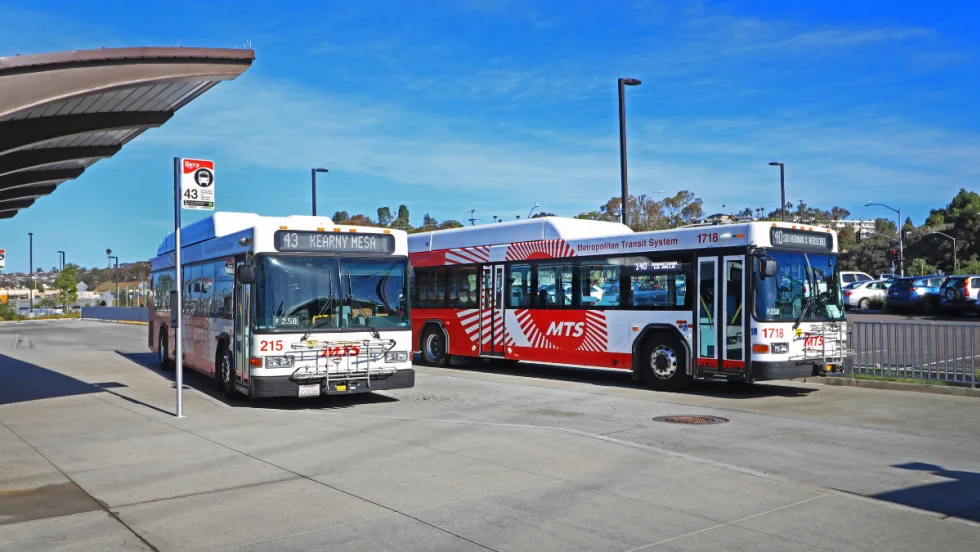
What’s Behind San Diego MTS’s Award-Winning Transit Strategy
Named one of APTA’s 2026 Outstanding Public Transportation Systems with 50 million or more annual passenger trips, California’s San Diego Metropolitan Transit System points to gains in ridership, safety, technology, and reliability as foundations of its success.
Read More →
Public Transit Conference Returning to GFX in 2027, Call for Papers Now Open
The Call for Papers is now open, allowing transit agency professionals and industry experts to help shape the PTC educational program by submitting session ideas for consideration.
Read More →
Indian River Transit’s Community-Focused Approach Earns National Recognition
Named APTA’s 2026 Outstanding Public Transportation System in its size category, Florida’s Indian River County transit system continues to grow ridership through fare-free service and a focus on evolving community needs.
Read More →
ENC Lands MATA Contract and More in Biz Briefs
In this edition of Biz Briefs, we spotlight the latest developments shaping the future of mobility.
Read More →
From Surviving to Thriving: Building Stronger Transportation Organizations
Bus Business Consultants founder Brian Dickson shares lessons on leadership, organizational health, and creating options for long-term success in a changing transportation industry.
Read More →
Everett Transit, Community Transit Outline Consolidation Agreement
The proposed agreement calls for a 50% increase in bus service in Everett, a new microtransit zone, continued paratransit service, and the transfer of Everett Transit operations to Community Transit.
Read More →
Strada360’s Steve Lassey on Turning Transit Data Into Better Decisions
From breaking down data silos to preparing for AI, Strada360 CEO Steve Lassey discusses how transit agencies can use technology to improve operations, customer information, and long-term decision-making.
Read More →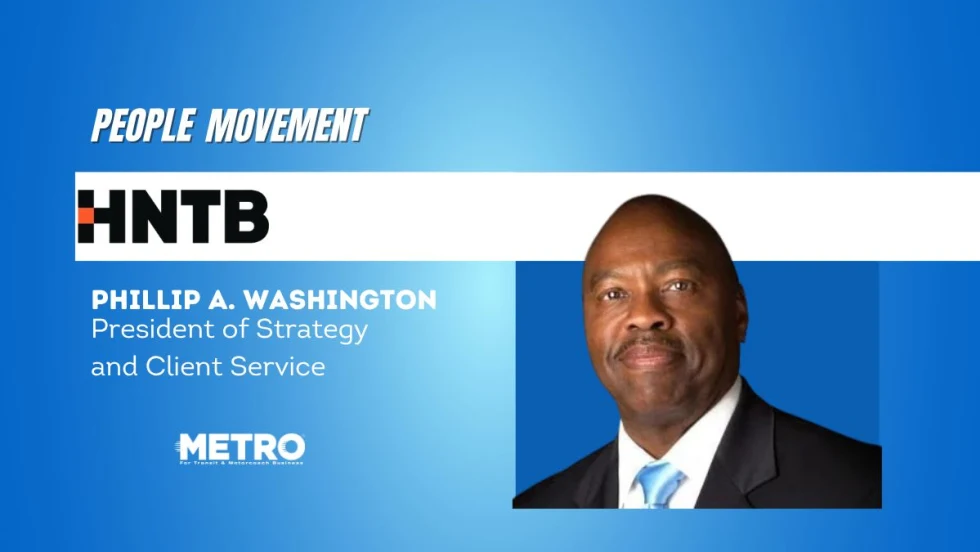
People Movement: Phil Washington Joins HNTB, Denver RTD Launches CEO Search, and More
In this edition, we also spotlight recent personnel moves at STV, the Eno Center for Transportation, and more, highlighting the people taking on new roles across the transportation industry.
Read More →
SEPTA Details Accelerate Vision for Transit System
The plan outlines investments in trolley modernization, new Metro and Regional Rail vehicles, accessible stations, and more frequent bus and rail service.
Read More →