



TARTA, ETA Transit Redefine Dispatch Communications
For its modernization and results, the ETA/TARTA project has earned a 2025 Innovative Solutions Award for Operational Efficiency.

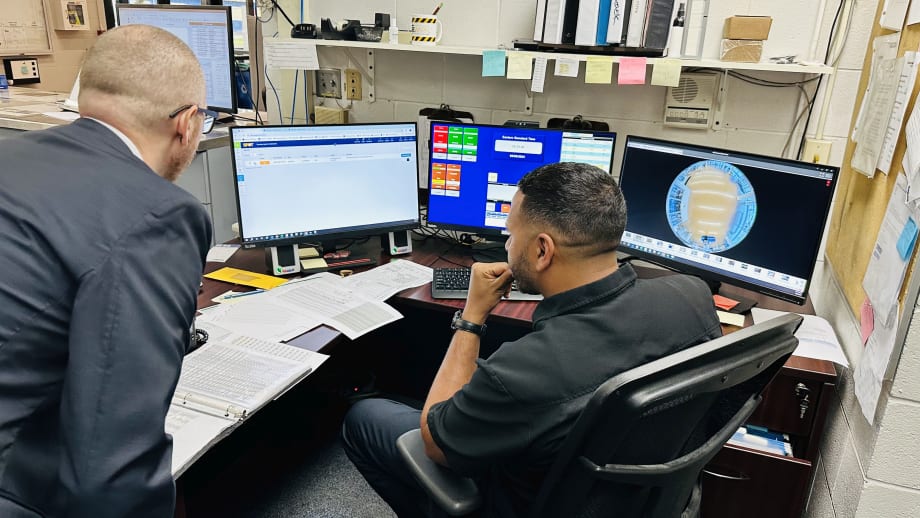
Previously, TARTA’s dispatchers and operators were limited by a legacy radio system that broadcast every message, regardless of urgency or relevance, to every vehicle in the fleet.
Photo: TARTA
- The ETA/TARTA project has been recognized for modernizing and improving dispatch communications.
- The project has achieved a significant milestone by enhancing operational efficiency in transit systems.
- In 2025, the project was awarded the Innovative Solutions Award for its achievements in operational improvements.
*Summarized by AI
Ohio’s Toledo Area Regional Transit Authority (TARTA) found a new radio integration solution that has redefined "real-time.”
Developed in close partnership with ETA Transit, the innovative system replaces an outdated, one-size-fits-all solution with precise, private, and scalable communications between dispatchers and drivers, delivering significant gains in safety, efficiency, and service quality.
For this modernization and its results, the ETA/TARTA project has earned a 2025 Innovative Solutions Award for Operational Efficiency.
“We're thrilled to receive this recognition from METRO Magazine,” said John Maglio, CEO at ETA Transit. “This award validates the power of true partnership between ETA Transit and TARTA. Working together throughout the comprehensive system implementation, including TARTA providing us with a radio to use in our lab for testing and refinement, we created an integrated solution that delivers real results.”
From Bottlenecks to Breakthroughs
Previously, TARTA’s dispatchers and operators were limited by a legacy radio system that broadcast every message, regardless of urgency or relevance, to every vehicle in the fleet, creating cluttered airwaves, slowing emergency responses, and limiting the ability to communicate sensitive or urgent information without confusion.
TARTA’s shift to the Lucas County Motorola radio system was the agency’s first step toward modernization. However, it still needed a partner to integrate that system into a more innovative, operationally holistic platform.
Enter ETA Transit, which TARTA selected because the company could connect its radio system via an advanced interface within ETA's broader architecture for the SPOT Console. The dashboard manages everything from real-time tracking to passenger data.
The new system also empowers dispatchers to communicate instantly and securely with individual drivers or groups of drivers.
Using ETA Transit’s Request to Talk and Priority Request to Talk features, TARTA dispatchers can now respond in under two seconds, dramatically improving from previous delays that could stretch to minutes.
“Seeing it reduce response times to under two seconds proves that when agencies and technology providers work as true partners, we can transform daily operations,” said Maglio.
Post-implementation surveys revealed that bus operators and dispatchers reported higher satisfaction with the clarity of communication and ease of use.
The console’s selective messaging ensures only drivers hear the right messages, minimizing distractions and maintaining focus behind the wheel.
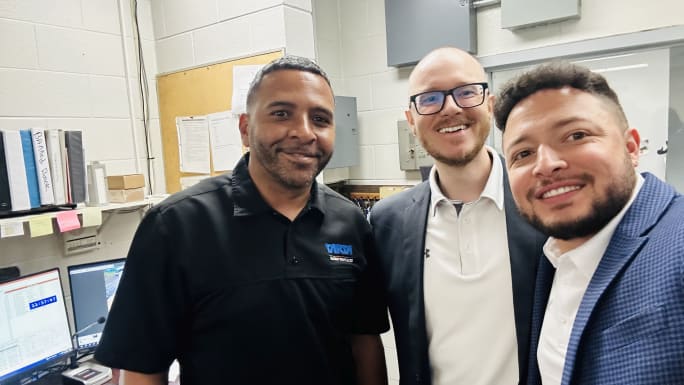
Using ETA Transit’s Request to Talk and Priority Request to Talk features, TARTA dispatchers can now respond in under two seconds, dramatically improving from previous delays that could stretch to minutes.
Photo: TARTA
Smooth Deployment, Seamless Integration
ETA Transit took a collaborative approach to deployment.
TARTA provided lab equipment, including radio hardware, for real-world testing, allowing engineers to simulate field conditions and refine the system before launch.
When obstacles arose, the teams worked side by side to implement fixes and train staff quickly, with minimal disruption.
“We customized the SPOT Console interface through multiple iterations, integrating radio controls with TARTA's broader operational dashboard,” said Levi McCollum, director, operations, at ETA Transit. “This partnership approach helped staff successfully adapt to the new integrated system with minimal disruption to daily operations. The system’s architecture is adaptable and designed with the future in mind.”
Already integrated with TARTA’s CAD/AVL, real-time bus tracking, passenger counting, and route management tools, the platform also supports additional layers like incident reporting, mobile communication, and analytics dashboards, all accessible through a single, cloud-based console.
While the impact on TARTA — a mid-sized agency serving 1.5 million annual riders with a fleet of 70 fixed-route buses — is significant, the real story is its scalability.
The project demonstrates that even smaller and medium-sized transit systems can undergo operational modernization without incurring costly overhauls or relying on multiple vendors, said McCollum.
“This project proves that comprehensive modernization is achievable regardless of agency scale,” he explained.
Added TARTA’s IT Director Lucas Boehm: “I am super happy so far, as we have accomplished something that we were told was impossible.”
By solving a long-standing communication challenge with minimal cost, disruption, or complexity, ETA Transit and TARTA have built more than a communications tool; they’ve created a blueprint for the future of connected transit.
The result is a smarter, safer, and more resilient service that strengthens the bond between operators, dispatchers, and the public they serve.
“The radio integration was a critical component of TARTA’s larger modernization effort,” explained McCollum. “It’s now the foundation for faster responses, better service, and scalable innovation, and we’re honored to be recognized for it.”
To learn more about this partnership from Lucas Boehm, TARTA's IT Director, who was a guest on ETA Transit's podcast Stop Requested. The episode is available at stoprequested.com.
Quick Answers
The ETA/TARTA project aims to modernize and improve dispatch communications within TARTA's operational framework.
*Summarized by AI
More Technology

From Hardware to Digital Partner: Luminator Charts Its Next Chapter
CEO Magnus Friberg discusses Luminator’s shift toward becoming a digital partner, the growing importance of software and interoperability, and how AI can help agencies improve operations and passenger experience.
Read More →
Beyond the Checklist: A Structured Approach to Transit Maintenance
Reliability-Centered Maintenance helps transit agencies move beyond routine checklists to focus limited resources on the assets and failures that have the greatest impact on safety, reliability, and service.
Read More →
NJ TRANSIT Advances Bus Technology Upgrades Across Statewide Fleet
More than 1,500 buses now feature upgraded technology designed to improve arrival predictions and provide free Wi-Fi, with deployment expected to reach nearly 2,000 buses by the end of 2026.
Read More →

Building a Flexible Path to Transit Electrification
John Hroncich discusses BAE Systems’ modular and scalable approach, lessons learned from decades of real-world operations, and how agencies can identify electrification strategies that fit their fleets.
Read More →
Biz Briefs: Alstom Lands Canadian Contract, LYT to Supply California TSP, and More
In METRO's latest installment, we take a look at recent news from Complete Coach Works, Beep, FlixBus, and more partnerships making headlines across the transportation sector.
Read More →
From Legacy Silos to Conversational Intelligence
What if transit leaders could ask any operational question and get a trusted answer in seconds? Conversational AI is transforming how agencies use their data.
Read More →
USDOT Announces Rail Vehicle Replacement Grants, Chattanooga AV Shuttle Funding
More than $191 million in federal funding will help three transit agencies replace aging rail vehicles and support a new autonomous shuttle service in Chattanooga.
Read More →
Bus Tech Talk: Keeping Transit Technicians Ahead of the Technology Curve
LA Metro’s Obed Mejia discusses technician training, evolving maintenance technology, fleet replacement, and strategies for getting the most out of today’s transit fleets.
Read More →
Biz Briefs: RIPTA Unveils New Frontrunners, Clevland RTA Adds New Siemens, and More
In METRO's latest installment, we take a look at recent news from Siemens, Prevost, Dodge, and more partnerships making headlines across the transportation sector.
Read More →
Why Simulating Pedestrian Movement Has Become Essential for Modern Rail Stations
Pedestrian microsimulation is helping rail planners identify bottlenecks, test station designs, and prepare complex transit hubs for growing passenger volumes.
Read More →