



The anti-transit disinformation campaign ramps up
Much attention was given to a recent New York Times article that detailed how organized anti-transit forces came together to defeat May’s ballot initiative in Nashville, Tenn.
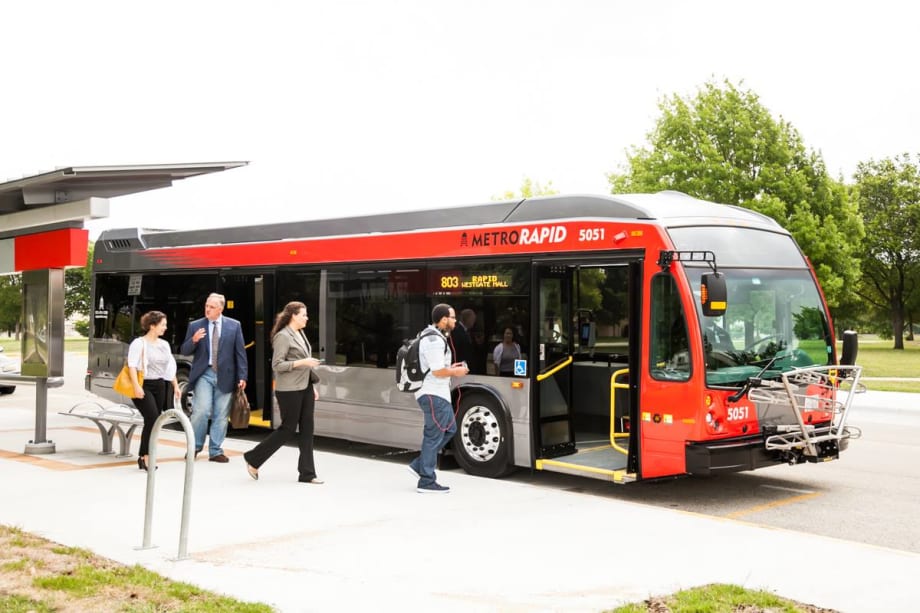
The real arguments that these anti-transit forces make, however, is against government generally — except when used to promote highways and auto usage.
Capital Metro
The real arguments that these anti-transit forces make, however, is against government generally — except when used to promote highways and auto usage.
Capital Metro
Much attention was given to a recent New York Times article that detailed how organized anti-transit forces came together to defeat May’s ballot initiative in Nashville, Tenn. While this has alarmed pro-transit forces across the political spectrum — yes, there are conservatives who also strongly support public transportation investments — it is not new. What is new is that this faction is much better financed and much more ideological, and proponents must be more prepared than ever for what will surely come to your city.
Anti-transit positions are not new
To be sure, the Nashville situation, like the Cincinnati streetcar referenda contests, was much more complicated than outside money influencing the campaign. The troubles of the last mayors factored in both examples, in fact. As the New York Times article points out, however, this may be just the beginning.
Moreover, some of the opposition is not new. The Cato Institute’s Randall O’Toole, for example, has been a thorn in pro-transit campaigners’ sides for decades, and much of his and his allies’ rhetoric at best uses dated evidence, and worse, employs radicalized arguments about crime supported by cherry-picked data. Even their latest hits, which suggest that automated and connected vehicles as well as ride-sharing services will obviate the need for transit services, have little evidentiary support and may, in fact, be contradicted by the most recent studies. And, put aside (at least for now) the decades of public transportation law that must be grappled with, such as Buy America, labor protections, employee drug and alcohol testing, and even vehicle-testing regulations that haven’t really found court cases yet, but are likely to come if these trends were ever to grow significantly.
The real arguments that these anti-transit forces make, however, is against government generally — except when used to promote highways and auto usage. For the money behind these groups is rooted in organizations like Americans for Prosperity, a group largely funded by oil, gas, and coal interests, and which deny links of climate change to human activity.
Get ready for the backlash
Public transportation has enjoyed constant success at all levels of government in the U.S. for more than two decades now, and many of those contests are hard-fought on legitimate, reasoned issues. What is coming are much more organized and well-funded attempts to undo all of this progress. The next major challenge may come in California in November, as a ballot initiative to undo recent legislation has qualified for the ballot. Pro-transit forces must be equally well-organized and up to the task.
More Management

LIT Marks 10-Year Milestone at Annual Summit
Hosted by the COTA from September 10 to 13, the Summit carried the theme “Celebrating 10 Years of Excellence, Leadership, and Impact,” with every part of the program honoring the people, agencies, and partners who built LIT over its first decade.
Read More →
People Movement: Dan Dipert Coaches Adds Third-Generation Leader, Keolis Names New Valley Metro VP/GM, and More
In this edition, we also cover recent appointments and announcements at the Wabtec, SilverRide, HNTB, and more, showcasing the individuals helping to shape the future of transportation.
Read More →
METRO Opens Submissions for 2026 Motorcoach Awards
Nominations are now being accepted for METRO Magazine’s Operator of the Year and Innovative Operator of the Year awards.
Read More →

New York MTA Advances Final Contract for Second Avenue Subway Expansion
Contract Four is the largest in the Second Avenue Subway Phase 2 project and includes construction of station infrastructure, tracks, and signals for the subway expansion, MTA officials said. Work on Contract Four will begin in 2027.
Read More →
Transit Agencies Highlight Safety Gains at National Summit
Leaders from 15 major transit systems shared crime-reduction results and safety initiatives while discussing the role of continued federal support.
Read More →
NITA Names New Leadership, Expands Reduced-Fare Program at First Board Meeting
The new regional transit authority appointed its first board chair and interim executive director while extending reduced fares across CTA, Metra, and Pace for eligible riders.
Read More →
Beyond the Checklist: A Structured Approach to Transit Maintenance
Reliability-Centered Maintenance helps transit agencies move beyond routine checklists to focus limited resources on the assets and failures that have the greatest impact on safety, reliability, and service.
Read More →
APTA 2026 Nominating Committee Selects Leadership Slate, Names Chair and Vice Chair Nominees
Leadership changes will help shape the association’s priorities and its representation of the transportation industry during the 2026–2027 term.
Read More →
DART Launches Major Security, Fare Enforcement Initiative
The 90-day demonstration will deploy coordinated security teams at five light rail stations while testing controlled access and gathering data to guide future investments.
Read More →
Advancing Fare Collection Through Technology and Innovation
Learn about delivering 1300 gates at 91 stations while managing fare evasion. Explore the large scale deployment, solution customization and real-world results that affect the region. Prepare for deployment in your region now.
Read More →