



Tools for Hiring the Right Driver for Your Fleet
Suggestions include providing a job description detailing what the position entails and creating a referral program, which rewards current employees for bringing in new recruits.
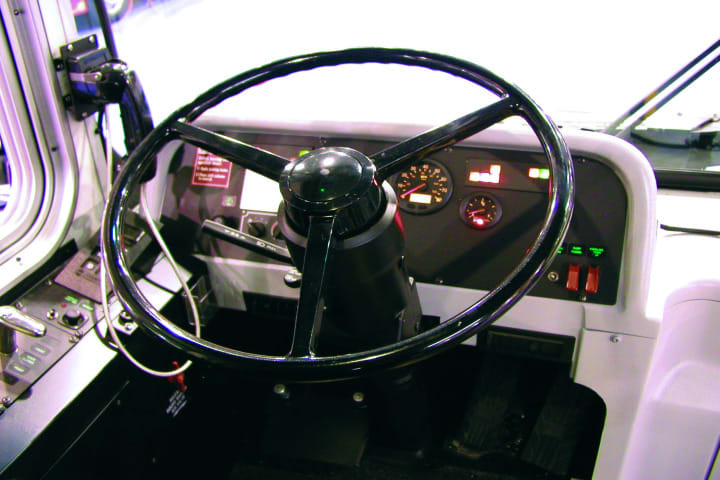
[IMAGE]MET1supp-.jpg[/IMAGE]There is little doubt as we address the subject of hiring drivers at this moment in time, not many readers will have extensive problems to worry about. The recession has taken a toll on labor: unemployment, approaching 10 percent, has created labor availability where previously there was none. We know this downturn will surely end, as it always does, and when it does and there is a need for new employees, what direction will you and your company take? Will you use the same hiring path that has served bus and coach operators since 1930? Or, is there a path that promises a better quality, more loyal employee retained in the best, most cost-effective manner as prescribed by law? I would hope that we can find that better path, one that more closely matches needs to skills, people to systems and careers that meet applicant hopes.
In the transportation industry, the hiring process using the traditional techniques of newspaper ads, interviews and road tests, as valid as they were for the times, have simply allowed too many marginal people into industry employment. When a bad actor slips through the applicant screening system, the resulting damage can be costly, ranging from service disruptions to loss of clients to traffic collisions and every variation of failure.
Effective hiring costs money and takes time. Short-cutting the placement processes can lead to poor employee choices. It is obviously far too expensive to leave employee hiring to chance, luck or intuition. Better tools need to be employed, some as new as the 21st century, others borrowed from the past and current alternative resources.
Protect the organization
In 1930, when many of the standard techniques for hiring were evolving and federal regulations on driver qualification were being written, the world was a simpler place; there were lawyers and lawsuits, but personal reprisals or getting rich quick, via litigation, was certainly at a far lower level of public consciousness. Now in 21st century America, every step, move and action by a company can and will be examined by regulators, litigators and clients. Thus, the need to protect the company has been driven to new heights. As a part of this protective reaction, proper hiring has taken on a new imperative.
Protection of the company from destruction by litigation has demanded far more from an employer than any U.S Department of Transportation (U.S. DOT) regulation ever contemplated. Regulations demand a check of driving records, but do not define acceptability; they demand a medical evaluation, but offer the applicant the opportunity to evade or ignore potentially dangerous conditions; they define safe driving pre-employment road testing as an applicant having a CDL in the pocket, hardly a confidence-building approach and certainly inadequate for even the most lax of employers. Today's employers must be proactive about safety and act defensively to prevent litigation.
Safety managers understand that the company has hired every accident it has ever had. That being the case, someone has to guard the door, so to speak, lest unqualified or incompetent personnel be offered employment. That "guard" is the safety manager, the safety program and the standards established to assure a reasonable degree of quality in hiring. All parties must view safety factors as non-negotiable standards.
Hiring is an ongoing process. To field the best driving team for the company, constant efforts need to be made to search for and acquire top talent. Operations personnel are usually satisfied so long as they have a sufficient quantity of personnel; their demand for additional staffing often begins when personnel shortages occur.
Safety managers should always be on the lookout for applicants that meet or exceed the company's standards. With applicants always in process, on hold or even just located, the company will find it easier to remain productive, adding competent staff on a shorter time line because the safety department anticipated the inevitable need.
The tools for hiring
Building a list of recommended hiring steps is the easiest part of the hiring program; bringing them to life and having them bear fruit over time is the real challenge. But to enumerate a few specific actions, with an eye on keeping all things legal and in accordance with the regulations, here are some suggestions on both traditional and modern techniques:
Job requirements. The company should have a detailed job description available listing all of the essential tasks required by the person holding the job. All of those tasks should be directly related to job performance, i.e., if bags to be lifted weigh up to 50 pounds, it is not appropriate to demand an ability to safely lift more. Be certain there are written job descriptions in place.
Recruiting. The best recruiting programs begin with creating a referral system that rewards current employees who bring associates to the company, offer a reference for them and assist in placing them in productive employment roles. Reward is the key, with the company buying not just a name but also a known, quality personal reference for the applicant - the current employee.
Advertising. A variety of advertising mechanisms have been in use, from newspapers to billboards to signs on the rear of vehicles. Regardless of the type of advertising, it should be made clear that the company is interested in hiring in accordance with local and federal laws, but as significantly, wants to hire the best people - substance-abuse free and safety conscious.
The application. The application form is the foundation document for applicant evaluation. This form should include details of applicant's background and experience, offering specifics that can be verified through subsequent reference checking. All applications should have a "life expectancy," a date of completion after which it will be considered inactive. Equal Employment Opportunity regulations require that all applications, active or not, be maintained in a file for no less than one year.
Basic evaluation. An evaluation of basic qualifications should be completed early in the process, determining if the individual possesses whatever minimum requirements the company has established: the proper driver's license, relevant experience, meeting minimum age standards and a satisfactory motor vehicle record. Many employers require the applicant to provide a copy of his or her driving record - an official copy confirming this should be obtained before placement.
Interview. The interview is usually the next step in the recruitment process. The keys to a good interview are asking open-ended questions, asking for opinions, not allowing an applicant to recite well rehearsed "facts." The ideal guide to an interview is the application form, as are the interviewer's skills in remaining within the legal boundaries of job-related inquiries.
The road test. Confirming driving skills is a vital step, one that the company, despite legal waivers for regulatory qualification, ignores at its own peril. Road tests should begin with a vehicle inspection, move to off-road backing and turning exercises, and then into gradually more complex traffic situations on the road. A written evaluation and confirmation of corrective action, if the individual is hired, are essential.
[PAGEBREAK]
Investigate, confirm choice
Up to this point, the company has invested mostly time into the evaluation process. The next steps demand spending some money to further investigate and confirm the hiring choice.
Background evaluations. There are several background evaluations required to assure a good choice and proper placement. Motor vehicle driving records are an obvious first choice, with a comparison of the applicant's driving record to a firm, unyielding company standard. Thereafter, much more detail is available on the commercial driver's history through a recently opened Motor Carrier Management Information System (MCMIS), comprised of driver performance data, including roadside compliance review results; inspection and enforcement data; motor carrier census data; and state-reported crashes. Some situations obviously demand criminal background checks, especially where transporting children is involved. Finally, applicant background investigation through inquiries to prior employers (going back a minimum of three years) is a required and often productive step. Making deeper inquires beyond three years is often helpful.
Testing. Evaluation of applicants by comparing their personalities and traits to top performing driver incumbents is available to employers at a reasonable cost. Such tests, along with standardized honesty and personality evaluations, make sense when considering the high levels of responsibilities expected of professional drivers.
Substance abuse testing. Pre-employment and subsequent substance abuse testing is required, as are information sharing to the applicant including company policies, test procedures and mandates, and sources of personal assistance.
Medical evaluation. This must be the final step for an applicant proceeding through the hiring process, and the medical evaluation proceeds after the company has made a conditional offer of employment, in accordance with Americans with Disabilities Act standards. In a few short years, U.S. DOT regulations will modify how the "paperwork" is handled, but today, employers should carefully evaluate the performance of their medical examiners, as on their shoulders rests an important safety responsibility.
Driver hiring requires strong and direct action in the recruiting and screening process. These decisions are critical for the financial and moral health of the company, and to produce good decisions requires a clear understanding of the hiring process. Safety, operations and human resources managers absolutely must use all of the hiring tools available to them to hire the best.
Jack Burkert is the author of a new motor fleet safety textbook, "Fleet safety: Standards and Practices." For inquiries email him at BURKERT@DMV.COM.
More Motorcoach

Report: Canadian Motorcoach Industry Generates $4.4B in Economic Impact
The 2025 Motorcoach Economic Impact Report finds motorcoach travel supported nearly 25,000 jobs and generated $980 million in federal, provincial, and local taxes.
Read More →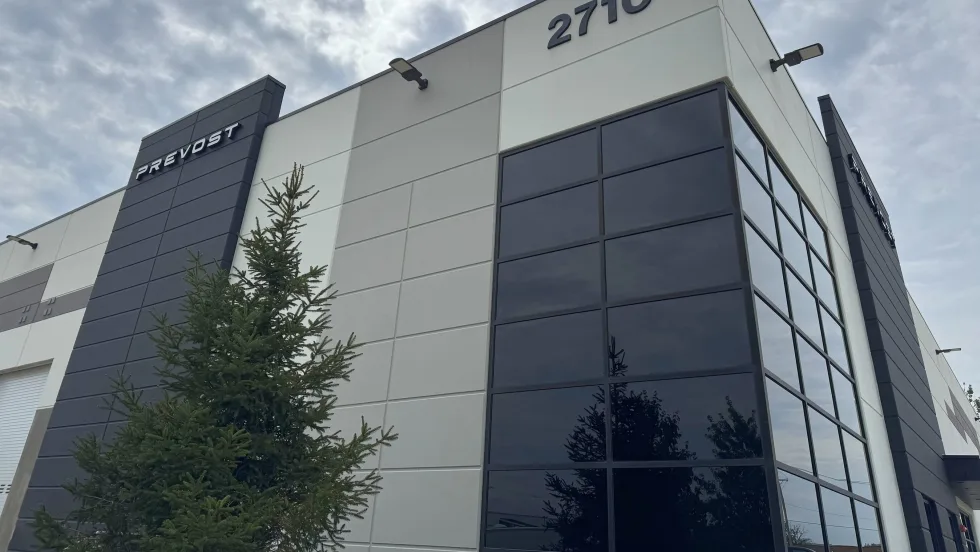
Prevost Opens Expanded Chicago-Area Service Center
The $8.1 million Elk Grove Village investment nearly triples facility space while adding service capacity, parts storage, and customer amenities.
Read More →
People Movement: Dan Dipert Coaches Adds Third-Generation Leader, Keolis Names New Valley Metro VP/GM, and More
In this edition, we also cover recent appointments and announcements at the Wabtec, SilverRide, HNTB, and more, showcasing the individuals helping to shape the future of transportation.
Read More →
METRO Opens Submissions for 2026 Motorcoach Awards
Nominations are now being accepted for METRO Magazine’s Operator of the Year and Innovative Operator of the Year awards.
Read More →
Biz Briefs: Alstom Lands Canadian Contract, LYT to Supply California TSP, and More
In METRO's latest installment, we take a look at recent news from Complete Coach Works, Beep, FlixBus, and more partnerships making headlines across the transportation sector.
Read More →
Biz Briefs: RIPTA Unveils New Frontrunners, Clevland RTA Adds New Siemens, and More
In METRO's latest installment, we take a look at recent news from Siemens, Prevost, Dodge, and more partnerships making headlines across the transportation sector.
Read More →
People Movement: Holly Arnold Joins Transdev and More
In this edition, we also cover recent appointments and announcements at Pace, CamTran, MCI, and more, showcasing the individuals helping to shape the future of transportation.
Read More →
ABA Report: Motorcoach Travel Generates $161.6B Economic Impact
The 2025 analysis finds motorcoach travel supported nearly 900,000 jobs and generated $28 billion in federal, state, and local taxes.
Read More →
CharterUP’s Armir Harris on Technology, AI, and the Future of Group Mobility
In a recent episode of METROspectives, CharterUP Founder/CEO Armir Harris discussed the company’s evolution from an online charter bus marketplace into a technology platform supporting public- and private-sector mobility and much more.
Read More →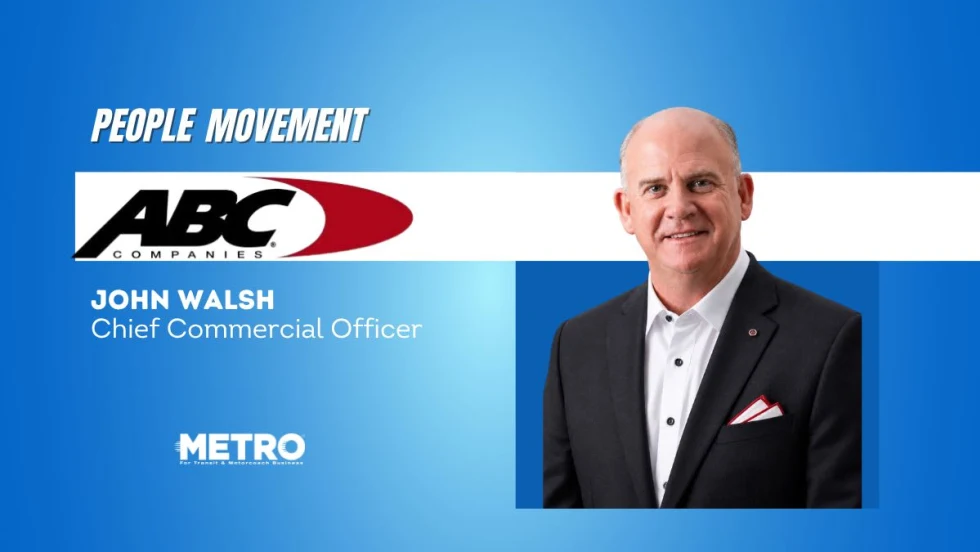
People Movement: ABC Names John Walsh as Chief Commercial Officer
In this edition, METRO also covers recent appointments and announcements at the DART, STV, and more, showcasing the individuals helping to shape the future of transportation.
Read More →