



EPA Further Addresses Diesel Exhaust Fluid Issues Affecting Motorcoach Operators, Trucking
US Environmental Protection Agency Administrator Lee Zeldin announced that the EPA is seeking information from major diesel engine manufacturers on critical data on DEF system failures.

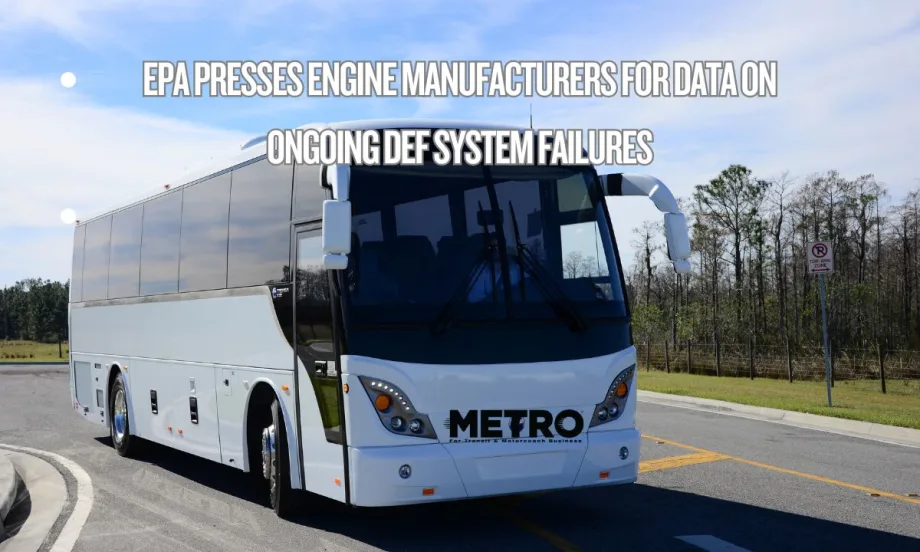
Temsa/METRO
- The EPA is actively seeking data from major diesel engine manufacturers to address issues related to Diesel Exhaust Fluid (DEF) system failures.
- This initiative is led by EPA Administrator Lee Zeldin, highlighting the agency's focus on tackling DEF-related concerns impacting motorcoach operators and the trucking industry.
- Gathering critical information on DEF system failures is aimed at improving system reliability and compliance for diesel engines.
*Summarized by AI
As a follow-up to new guidance issued in August 2025 that reversed deratements harming motorcoach operators and truckers, US Environmental Protection Agency (EPA) Administrator Lee Zeldin announced that the EPA is seeking information from major diesel engine manufacturers on critical data on Diesel Exhaust Fluid (DEF) system failures.
The data collected will allow EPA to independently evaluate ongoing system failures and inform the agency's next steps in 2026 regarding DEF.
“As I traveled to all 50 states during my first year as EPA Administrator, I heard from truck drivers, farmers, and many others rightly complaining about DEF and pleading for a fix. EPA understands this is a massive issue, which is why we have already established commonsense guidance for manufacturers to update DEF systems,” said Administrator Zeldin. “Today, we are furthering that work and demanding detailed data to hold manufacturers accountable for the continued system failures. The Trump EPA is committed to ending unnecessary frustrations and days lost on the road and in the field for American farmers and truckers.”
DEF Issues Facing Operators
The issue of motorcoach operators, truck drivers, and farmers remains clear to the agency: sudden speed loss and shutdowns caused by DEF system failures compromise safety and productivity.
The EPA’s guidance, which significantly reversed deratements, called on manufacturers to revise DEF system software in existing fleets to prevent these sudden shutdowns and give operators more time to repair faults. EPA recognizes that, to improve systems, the product designs and materials used in these systems must also be of the highest possible quality.
With this action, EPA is taking another step to address potential deficiencies in system components, advance future rulemaking, and reduce system failures.
Reasons for EPA’s Step
Under Section 208(a) of the Clean Air Act, EPA is authorized to require manufacturers to provide information needed to assess whether emission control systems are functioning properly and whether manufacturers are meeting their obligations to identify and fix defects. EPA is requesting information from the top 14 on-road and nonroad manufacturers, which account for over 80% of all products used in DEF systems.
Specifically, EPA is requiring data on warranty claims, failure rates, and repair information for Model Years (MY) 2016, 2019, and 2023 emission control products to determine whether ongoing DEF system failures are related to a specific generation of products. Manufacturers will have 30 days to provide the requested information; failure to do so may result in additional inquiries or penalties, according to the EPA.
The agency said it is committed to working with manufacturers to ensure practical, durable solutions that simultaneously support emissions reductions and reliable operations. EPA has been meeting with manufacturers to receive updates on their progress in developing improved software in response to the agency’s guidance. The agency has consistently encouraged manufacturers to provide the relief as quickly as possible.
EPA is actively working on its proposal for the reconsideration of the 2022 Heavy-Duty Engine and Vehicle NOx rule. It is being thoroughly assessed whether derates may no longer be necessary for compliance. The agency is committed to keeping the protection of air quality and human health at the forefront of every action it takes, officials said.
Adding to Past Actions
In August, the EPA issued new guidance urging diesel engine manufacturers to update DEF system software to prevent sudden speed and power losses that have disrupted motorcoach operations and raised safety concerns.
Announced by Administrator Zeldin, the guidance gave operators more time to address DEF-related faults before derating occurs and aligns with new EPA requirements taking effect in 2027.
Motorcoach operators and industry groups welcomed the move as a long-sought safety and operational improvement, the result of years of advocacy to address the real-world impacts of abrupt derates on passenger transportation.
Quick Answers
The EPA is seeking information from major diesel engine manufacturers about critical data on Diesel Exhaust Fluid (DEF) system failures.
*Summarized by AI
More Motorcoach

METRO Opens Submissions for 2026 Motorcoach Awards
Nominations are now being accepted for METRO Magazine’s Operator of the Year and Innovative Operator of the Year awards.
Read More →
Biz Briefs: Alstom Lands Canadian Contract, LYT to Supply California TSP, and More
In METRO's latest installment, we take a look at recent news from Complete Coach Works, Beep, FlixBus, and more partnerships making headlines across the transportation sector.
Read More →
Biz Briefs: RIPTA Unveils New Frontrunners, Clevland RTA Adds New Siemens, and More
In METRO's latest installment, we take a look at recent news from Siemens, Prevost, Dodge, and more partnerships making headlines across the transportation sector.
Read More →
People Movement: Holly Arnold Joins Transdev and More
In this edition, we also cover recent appointments and announcements at Pace, CamTran, MCI, and more, showcasing the individuals helping to shape the future of transportation.
Read More →
ABA Report: Motorcoach Travel Generates $161.6B Economic Impact
The 2025 analysis finds motorcoach travel supported nearly 900,000 jobs and generated $28 billion in federal, state, and local taxes.
Read More →
CharterUP’s Armir Harris on Technology, AI, and the Future of Group Mobility
In a recent episode of METROspectives, CharterUP Founder/CEO Armir Harris discussed the company’s evolution from an online charter bus marketplace into a technology platform supporting public- and private-sector mobility and much more.
Read More →
People Movement: ABC Names John Walsh as Chief Commercial Officer
In this edition, METRO also covers recent appointments and announcements at the DART, STV, and more, showcasing the individuals helping to shape the future of transportation.
Read More →
From Surviving to Thriving: Building Stronger Transportation Organizations
Bus Business Consultants founder Brian Dickson shares lessons on leadership, organizational health, and creating options for long-term success in a changing transportation industry.
Read More →
Biz Briefs: Luminator Marks Milestone and More
From manufacturers and suppliers to transit agencies and motorcoach operators, these updates offer a snapshot of the projects, partnerships and business moves driving the industry forward.
Read More →
ABAF Study Reveals Growing Insurance Crisis for Motorcoach Operators
Preliminary findings show 98% of operators faced premium increases over the past five years, while shrinking insurer participation is putting added pressure on businesses and customers.
Read More →