TTC Enhances Rail System, Decreases Emissions in City Centers
The TTC won not one but two Innovative Solutions Awards this year, thanks to a rail partnership with Hatch and a "Green Zones" partnership with BAE Systems.
Between 2021 and 2022, the TTC worked with Hatch to develop an enhancement for Hatch’s TrainOps® rail simulation software to add a signal design roll feature in TTC’s native format.
Credit:
Hatch
6 min to read
Innovative Solutions Award Winner: Rail/Community Improvement -Toronto Transit Commission/BAE Systems/Hatch
For the first time, METRO’s Innovative Solutions Awards opened up for rail providers and their supplier partners. The inaugural winners in the rail-based category are the Toronto Transit Commission (TTC) and Hatch.
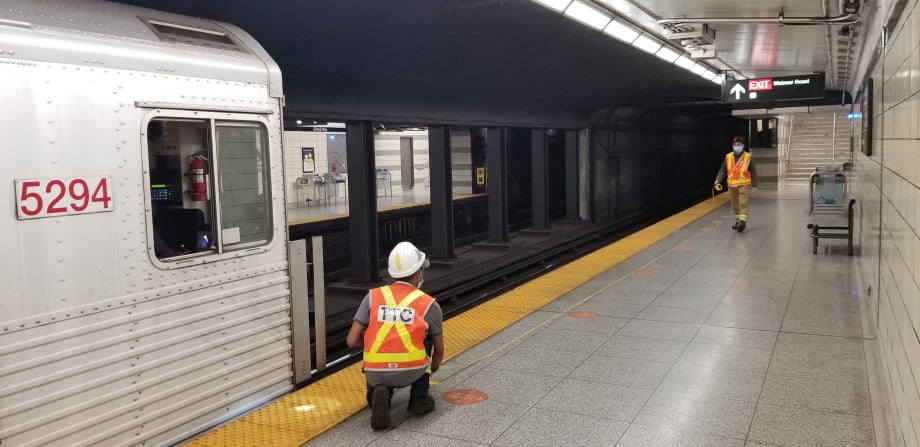
Between 2021 and 2022, the TTC worked with Hatch to develop an enhancement for Hatch’s TrainOps® rail simulation software to add a signal design roll feature in TTC’s native format. The enhancement integrates operations simulation with conceptual signaling design calculations, to allow rapid iteration of illustrative signal spacing and headway calculations for a mixed fleet of trains.
Ad Loading...
How the Project Worked
As is the case with many established rail transit systems, the TTC subway vehicles and the signaling layout were designed and optimized together when the system was first opened. However, in the intervening years, the system has been expanded and the fleet upgraded with newer vehicles, meaning the signaling layout and vehicle capabilities were no longer necessarily in step with each other.
Signal design calculations to determine the spacing between signals and the speeds that trains are permitted to run are rightly considered safety-critical, and so are subject to rigorous but potentially time-consuming verification and validation processes. TTC were seeking an analysis tool that could efficiently determine the most promising interventions to improve overall system performance — reduced travel times, better on-time performance, and higher capacity — so that a greater number of conceptual interventions could be analyzed and the most promising options prioritized for the rigorous signal design calculations.
Hatch’s TrainOps simulation software had already been shown to successfully simulate the day-to-day operations of the TTC system, so the goal of this project was to add conceptual signal design calculations to determine the allowable spacing between signals.
By integrating these calculations directly into the software, the inputs can be taken directly from the existing validated simulation model, and alternative configurations can be quickly created and tested. The results are displayed in TTC’s native signal design roll format, which brings together the data for braking distance calculations and the operational performance of the signaling layout modeled. This was successfully applied to the redesign of signals protecting yard tracks, reducing the amount of new signaling equipment required while also allowing trains entering the yard to clear the main line as quickly as possible to avoid delaying revenue trains.
Even more, the new feature directly illustrates the effects on signaling design and operational performance of the differences between acceleration and braking of different vehicles. It can therefore identify where there are opportunities to boost the train performance of new fleets on existing lines where the signaling was laid out for older fleets that are no longer in service.
Ad Loading...
Hatch’s TrainOps simulation software had already been shown to successfully simulate the day-to-day operations of the TTC system, so the goal of this project was to add conceptual signal design calculations to determine the allowable spacing between signals.
Credit:
TTC
Reimagining the Possibilities
There are plenty of real-world examples of transit systems where the performance of new trains is capped below what can be achieved with modern control systems when they are running on lines with legacy signaling. The new TrainOps feature allows rapid iteration of conceptual designs to maximize the performance of new fleets on existing infrastructure, by optimizing this cap in tandem with targeting specific interventions at the signals that would provide the greatest benefit for the lowest cost.
“We are thrilled and honored to be recognized with the Metro Magazine Innovation Solutions Award for our work with TTC using our proprietary simulation software, TrainOps®,” says Pallavi Lal, global director, vehicles and operations for transit at Hatch. “Our partnership with TTC resulted in the development of a groundbreaking enhancement, integrating operations simulation and conceptual signaling design calculations, enabling rapid iteration of illustrative signal spacing and headway calculations for a mixed fleet of trains. This award reinforces our commitment to innovate in everything we do and deliver cutting-edge solutions to the rail industry."
The TTC, BAE partnership is a positive benefit for the agency’s customers, employees, and the public who travel, work, and live in and around targeted green zones because the areas are where there is the largest number of people, where dwell times are the highest, or where buses operate in a confined area.
Credit:
BAE Systems
Green Transit Zones
The TTC wasn’t quite done being innovative, though, as they have also won an award for its Green Transit Zones project with BAE Systems.
With this application, the TTC’s hybrid-electric bus will detect when it enters a designated geofenced green-zone area and goes into zero-emission Electric Vehicle (EV) mode. While in EV mode, the hybrid bus is operating with its engine off, all power for propulsion and accessories is provided by the energy storage system (batteries) onboard.
“As the TTC works to transition its fleet to completely zero emissions by 2040, or sooner, it continues to seek and deploy proven technology to ensure service reliability for customers,” explains Haley Waldman, sr. communications specialist at the TTC. “This was a low-cost way to apply existing technology to our hybrid-electric fleet and maximize their zero-emissions benefits.”
Ad Loading...
The capacity of the batteries in the hybrid bus allows the vehicle to travel in zero-emission EV mode up to about three miles. To automate the bus entering and exiting EV mode, BAE Systems programs the GPS coordinates of the Green Transit Zones into a vehicle data logger. When the bus enters the green zone, the system does a check to make sure the batteries have a sufficient state of charge and then will go into EV mode. The bus will run in EV mode for the duration of its travels through the designated area.
After leaving the designated area, the bus will resume normal hybrid-electric operations, recharging the onboard batteries before entering the next Green Transit Zone. This is all done automatically with no driver intervention.
“At BAE Systems, our goal is to get our customers to zero emissions. This includes collaboration with transit agencies like the TTC on innovative solutions to transition to a zero-emission fleet,” says Rob Dykema, North American transit accounts director, power and propulsion solutions, at BAE Systems. “We are thrilled to work with the TTC as its long-time technology partner to advance sustainable transportation, and this geofencing technology is another great example of its efforts to introduce green initiatives and deliver reliable service.”
Bringing Cleaner Air to Key Regions
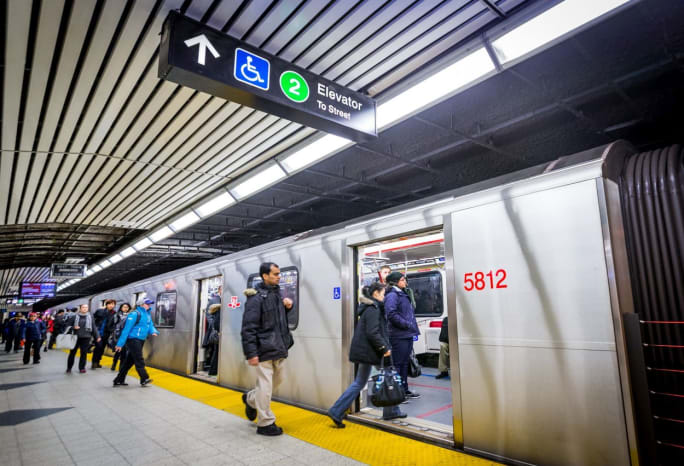
The TTC, BAE partnership is a positive benefit for the agency’s customers, employees, and the public who travel, work, and live in and around targeted green zones at TTC garages, subway stations, bus platforms, and bus loops, because the areas are where there is the largest number of people, where dwell times are the highest, or where buses operate in a confined area.
TTC believes the green zone application will significantly reduce noise pollution, improve local air quality, and thereby improve the health outcomes of millions of people — including the majority of people who live and work in equity-deserving communities.
Ad Loading...
Plans consist of expanding the Green Bus Transit Zones to include other areas of Toronto most sensitive to air and noise emissions, such as near schools and homes for the aging.
"We’re in the process of expanding our green zone map to 150 zones across Toronto. We have begun taking receipt of 336 brand new hybrid-electric buses, which will all have this capability as they are commissioned for service over the next year and a half. We are also budgeting funds to retrofit the remaining 250 hybrids in our existing fleet,” explains Waldman. “By the end of 2024, we expect to have 591 hybrids operating in EV mode through all 150 green zones — that’s nearly a third of our service. With our existing 60 battery-electric buses and the deployment of 400 new eBuses coming in over the next two years, over 50% of our fleet of approximately 2,100 buses will be either low-emissions or zero-emissions by the end of 2025.”
CEO Magnus Friberg discusses Luminator’s shift toward becoming a digital partner, the growing importance of software and interoperability, and how AI can help agencies improve operations and passenger experience.
Reliability-Centered Maintenance helps transit agencies move beyond routine checklists to focus limited resources on the assets and failures that have the greatest impact on safety, reliability, and service.
More than 1,500 buses now feature upgraded technology designed to improve arrival predictions and provide free Wi-Fi, with deployment expected to reach nearly 2,000 buses by the end of 2026.
John Hroncich discusses BAE Systems’ modular and scalable approach, lessons learned from decades of real-world operations, and how agencies can identify electrification strategies that fit their fleets.
In METRO's latest installment, we take a look at recent news from Complete Coach Works, Beep, FlixBus, and more partnerships making headlines across the transportation sector.
What if transit leaders could ask any operational question and get a trusted answer in seconds? Conversational AI is transforming how agencies use their data.
More than $191 million in federal funding will help three transit agencies replace aging rail vehicles and support a new autonomous shuttle service in Chattanooga.
LA Metro’s Obed Mejia discusses technician training, evolving maintenance technology, fleet replacement, and strategies for getting the most out of today’s transit fleets.
In METRO's latest installment, we take a look at recent news from Siemens, Prevost, Dodge, and more partnerships making headlines across the transportation sector.
Pedestrian microsimulation is helping rail planners identify bottlenecks, test station designs, and prepare complex transit hubs for growing passenger volumes.