



Video Surveillance in Public Transit: What Riders Really Think
As video surveillance gains public acceptance, new research from Axis Communications reveals what transit riders expect from agencies when it comes to safety, privacy, and AI.

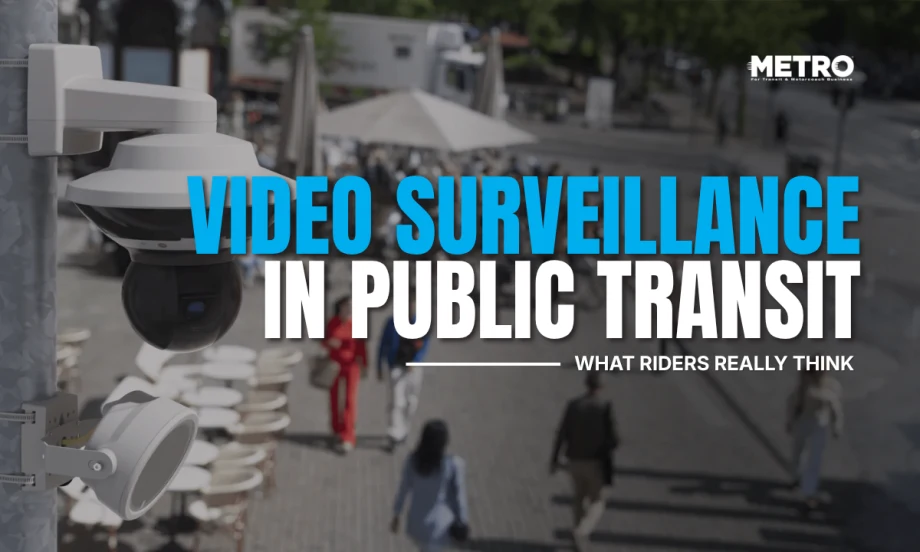
How and when video surveillance footage is used is an important topic not only in transit, but across various industries nationwide.
Axis Communications/METRO
- Research by Axis Communications highlights the public's increasing acceptance of video surveillance in transit systems.
- Transit riders have specific expectations for safety measures and privacy protocols from agencies using such technologies.
- The study delves into opinions on integrating AI with video surveillance to enhance public transit safety.
*Summarized by AI
Does your transit agency invest in video surveillance? If so, to what degree? If not, the public might be more tolerant of its implementation than you think. A recent study shows that today’s society seems more accepting, or, for lack of a better word, comfortable, knowing they are under near-constant surveillance.
Even so, Americans may still underestimate how many times they appear on camera in one day, but that doesn’t mean the technology isn’t present and doing its job. Axis Communications recently released its “Public Perception of Video Surveillance” report, which compiled survey results of more than 1,000 U.S. adults during July 2026 to understand consumer attitudes and public sentiment toward video surveillance.
The survey found that 58% of U.S. respondents are more comfortable with “video surveillance in both public and private spaces than they were five years ago, especially in transit hubs, retail centers, and educational campuses.” In transit hubs specifically, 78% of respondents said they were “very comfortable” (59%) or “somewhat comfortable” (19%) with surveillance.
However, more than half of total respondents wanted greater transparency and stronger data privacy protections, emphasizing the need for ethical stewardship of the technology.
“This research shows that while the public is becoming more comfortable with video surveillance, that acceptance cannot be taken for granted,” said Fredrik Nilsson, vice president, Americas, Axis Communications. “The public sees a clear role for video surveillance in creating safer spaces, but they also expect organizations to use the technology responsibly. That means being transparent about its purpose and putting strong privacy protections and safeguards in place.”
Why Transit Environments Stand Out
Transit hubs, stations, and platforms have undoubtedly unique security needs. Described as “porous by design,” they can move large volumes of passengers through short windows of time while remaining open access.
“Transit systems must balance a welcoming environment with the responsibility to protect passengers and employees, which sets them apart from many other settings,” said Anthony Incorvati, transportation segment leader, American Region, Axis Communications.
The potential risks in this kind of public environment allow video surveillance technology to do more than it was initially created to do. According to Incorvati, it now supports transit operations, emergency management, and other functions that make transportation environments safer, more secure, and more reliable.
“We're quickly moving from video surveillance as a forensic tool to video intelligence as an operational one,” Incorvati said.
The survey found that awareness of video surveillance is also high, with 70% of respondents indicating that they are “extremely” (34%) or “very” (36%) aware of video surveillance systems in public spaces.
While skepticism remains, some find comfort in the visibility of this technology in open community areas. Awareness of this technology can give riders a psychological sense of safety and increase trust in accountability when an investigation follows a crime. Visible video surveillance can also act as a passive crime deterrent.
Video Surveillance Comes With Expectations
It’s no secret to transit agencies that the public values privacy protection and transparency as much as they value on-time performance and consistency. In the survey, respondents identified several factors that would increase their comfort with video surveillance.
When asked what would increase their comfort with video surveillance, the top response was knowing surveillance devices are used “solely for safety purposes” (64%), with “clear signage” (59%) and “strong data privacy protections” (51%) close behind.
How and when video surveillance footage is used is an important topic not only in transit, but across various industries nationwide. According to Incorvati, while transit agencies have a “fundamental responsibility” to provide a safe environment for passengers and employees, riding public transit means entering a public space, so passengers should expect video surveillance to be present and “used to support public safety.”
However, there are limits. “Clear policies should govern who has access to video and AI systems, how footage is transferred, and how long it’s retained,” Incorvati said, laying out that the technology's primary purposes should remain its focus. Those include protecting people, using available technology to identify threats, deterring criminal activity, responding to incidents, and making public transportation safer.
Artificial Intelligence Can Create Opportunities and Concerns
In recent years, AI has become a point of contention in the technology world, and, in this survey, those who err on the side of concern voiced exactly what creates distrust in AI-powered or advanced video surveillance.
Concerns around AI-driven surveillance focus on a lack of trust in both technical precision and data security, with 66% of respondents fearing false positives or inaccurate information and another 66% citing the potential for misuse or mishandling of information.
However, when evaluating specific AI uses in surveillance, respondents showed the most comfort with real-time threat detection (including weapons, suspicious objects, and behavior) and high-stakes law enforcement uses (such as comparing facial scans against databases of known criminals). Some automated administrative functions, such as streamlining airport security through automated identity verification, were also met with broad approval.
“It is increasingly clear that responsible vendors who provide surveillance solutions with effective security and privacy safeguards in place will have a competitive advantage in today’s market,” Nilsson said. “By prioritizing ethical considerations from the earliest stages of development, security providers can lead by example and demonstrate to the public that their concerns are being taken seriously.”
Incorvati’s recommendation? Agencies should build trust on the back end by setting performance benchmarks, tracking false-positive and false-negative rates over time, and testing systems under real-world transit conditions before relying on them operationally.
For many, it’s also important to keep humans involved in AI decisions. Incorvati agrees.
“AI should support the security and operations team, with people making the final call,” he said. “An AI-generated alert should trigger human evaluation and verification before significant action is taken.”
Even though the technology can flag something that deserves attention far faster than a person monitoring hundreds or thousands of cameras could, a human still needs to be in the loop.
Generational Differences and Building More Trust
Although most respondents said they are more comfortable with video surveillance, the survey found that a small percentage consider it something to avoid, with just 18% saying they have avoided a location because of surveillance concerns.
However, these responses varied considerably by generation. While 32% of Gen Z respondents said they have chosen not to visit a place because of video surveillance, 28% of Millennials, 12% of Gen X, and 6% of Baby Boomers said the same.
“Trust is becoming a bigger part of the conversation around security technology, and younger generations understand it well,” Incorvati said. “More public conversations about what surveillance actually does, and what riders and agencies give up when it isn’t there, could go a long way.”
But a gap remains, especially in education for those who have grown up with cameras, smartphones, and now, sophisticated AI, and for those who haven’t. Overall, agencies should prioritize helping the public feel more comfortable knowing that AI-powered video surveillance can flag situations as they develop, not just after the fact, and truly enforce privacy protections as they are described.
“The real value is turning the enormous volume of video already being generated into actionable information that helps transit agencies respond faster and make better decisions,” Incorvati said.
More Technology

New York MTA Launches Historic $1.9B Signal, Track Modernization Project
Funded in part by congestion pricing revenue, the project will replace nearly century-old signals along the A and C lines in Brooklyn and Queens.
Read More →
Biz Briefs: New Electric Offering from Alexander Dennis/Volvo, Transdev in Boston, and More
In METRO's latest installment, we also take a look at recent news from STV, WSP, Prevost, and more partnerships making headlines across the transportation sector.
Read More →
Roman Cornell on ABC Companies’ Evolution and the Future of Passenger Transportation
The company’s CEO discusses carrying forward a third-generation family legacy, ABC’s continued evolution in passenger transportation, support for increasingly complex fleets, and how technology and continued investment could help operators improve uptime.
Read More →
ETA CEO John Maglio on Transit Technology, Innovation, and Building Agency Trust
ETA founder and CEO John Maglio explores the evolution of transit technology, the importance of reliable systems, and how stronger partnerships can help agencies improve operations and the passenger experience.
Read More →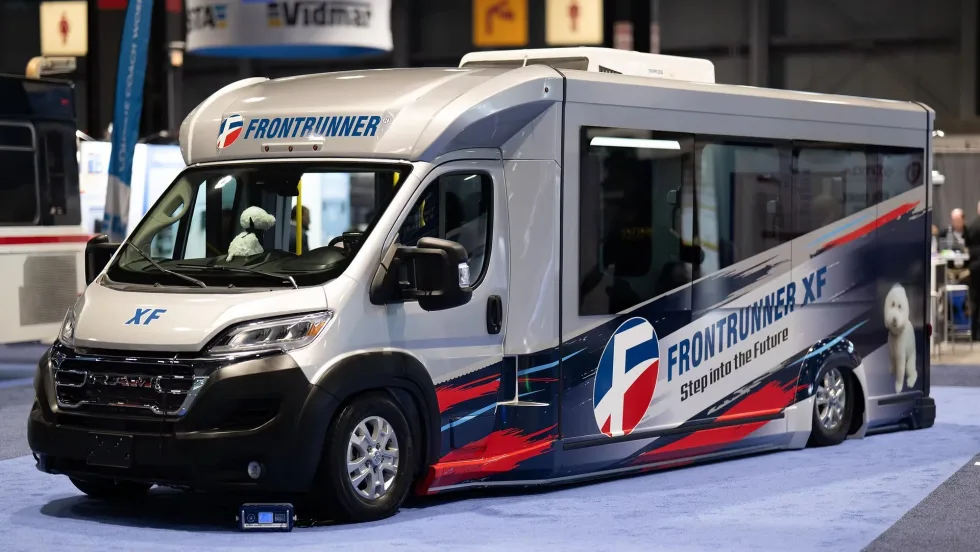
Frontrunner Bus Group Introduces XF Low-Floor Bus with Enhanced Accessibility
The new mid-sized bus features a full flat-floor design, eight-inch curbside step-in height, and zero-entry rear ramp to improve passenger access and operational flexibility.
Read More →
Building a Flexible Path to Transit Electrification with BAE's John Hroncich
John Hroncich discusses BAE Systems’ modular and scalable approach, lessons learned from decades of real-world operations, and how agencies can identify electrification strategies that fit their fleets.
Read More →
Scenes from APTA TRANSform & EXPO 2026
Transit leaders, manufacturers, and industry professionals gathered in Chicago to explore new technologies, share ideas, and discuss the future of public transportation.
Read More →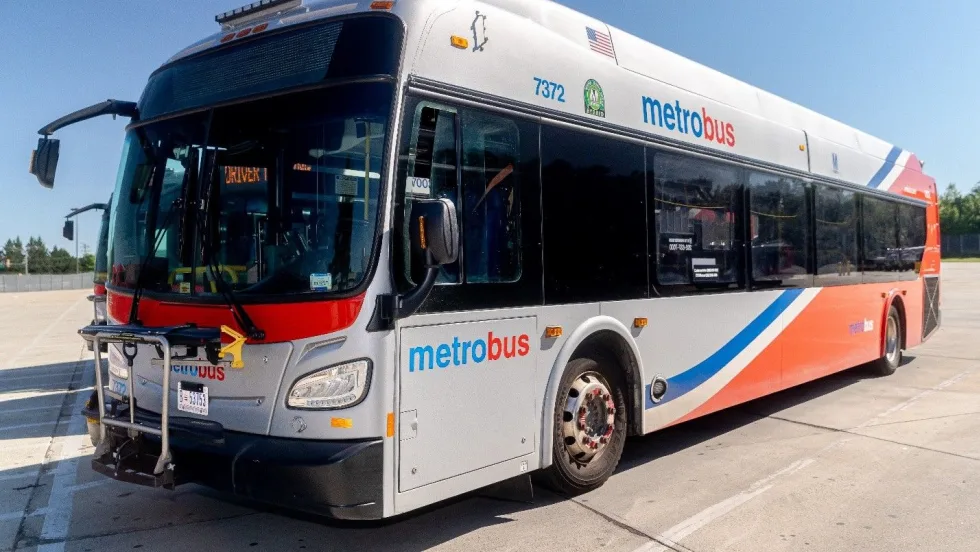
Biz Briefs: New Flyer Secures Additional 100-Bus Order from WMATA and More
In METRO's latest installment, we also take a look at recent news from Masabi, MCI, Samsara, and more partnerships making headlines across the transportation sector.
Read More →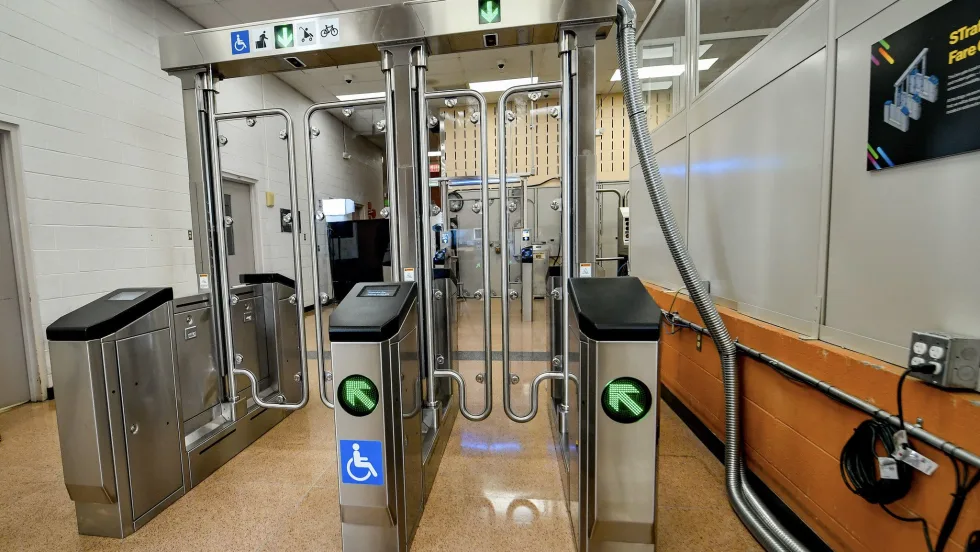
MTA Fare Gate Pilot Reduces Fare Evasion by 35%
Following a 20-station pilot, the agency plans to install new fare gates at 20 additional subway stations as part of a $1.1 billion modernization initiative.
Read More →
California Law Extends AC Transit’s Bus Lane Camera Enforcement
The new law allows AC Transit to continue using forward-facing bus cameras to enforce parking violations in bus-only lanes and at bus stops.
Read More →