



Caltrain’s Electrification Drives a New Era of Ridership Growth
The railroad’s shift to electric service has brought more frequent trains, stronger customer satisfaction, and increased ridership, earning it APTA’s Outstanding Public Transportation System award.

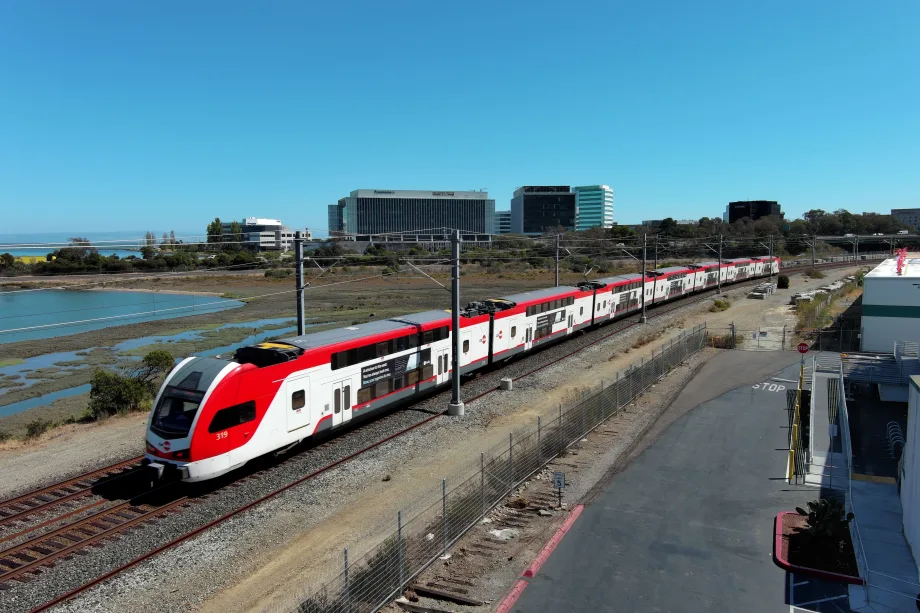
Caltrain’s transition from diesel to electric service has increased service frequency, improved reliability and reduced emissions along the San Francisco Peninsula corridor.
Caltrain
- Caltrain's transition to electric service has led to an increase in train frequency and overall customer satisfaction.
- The electrification project has contributed to a rise in ridership for the railroad.
- Caltrain received APTA’s Outstanding Public Transportation System award for its successful implementation of electric service.
*Summarized by AI
For the Bay Area’s Caltrain, the American Public Transportation Association’s (APTA) Outstanding Public Transportation System award (More than 3 million but fewer than 15 million annual passenger trips) represents more than recognition for a single project or a year of strong ridership. The award reflects a broader transformation of the San Francisco Peninsula regional railroad, driven by electrification, more frequent service, improved customer amenities, and efforts to operate more efficiently.
Caltrain Board Chair Rico E. Medina and Executive Director Michelle Bouchard accepted the award in Chicago, where APTA recognized the agency for achievements in ridership growth, safety, operations and maintenance, financial management, and customer experience.
The recognition follows a series of milestones for Caltrain, including a 57% year-over-year ridership increase in 2025, the fastest growth among U.S. transit systems that year, and record-high customer satisfaction after introducing electric train service.
For Bouchard, the award acknowledges the collective effort required to modernize a railroad with more than 160 years of history.
“It’s an incredible honor and a testament to the entire organization's hard work,” she said. “The Peninsula Corridor Electrification Project was a tremendous effort, requiring decades of planning and collaboration just to get off the ground, let alone complete.”
Bouchard added that the project has delivered a new standard of service for the railroad.
“The result is the best service this railroad has seen in 162 years, which is why Caltrain led the nation in ridership growth in 2025,” she said. “It’s also faster, safer, cleaner, and greener than ever before.”
A New Era of Rail Service
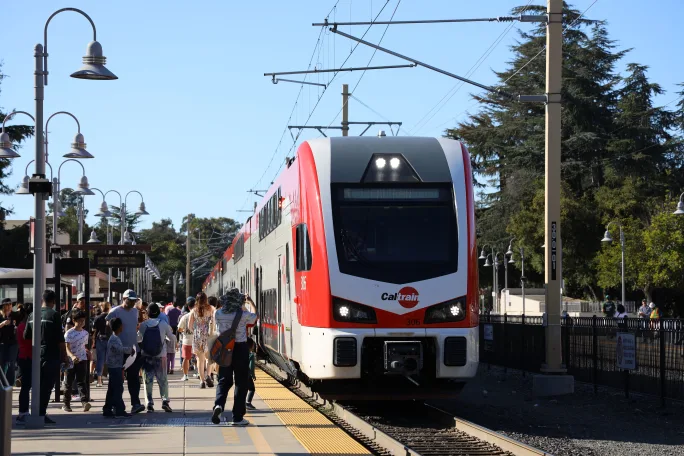
Caltrain’s modernization efforts extend beyond electrification to include grade-crossing safety upgrades, potential battery-powered service to Gilroy and long-term plans for improved regional connectivity.
Caltrain
Electrification has been central to Caltrain's evolution. The agency transitioned its mainline service from diesel power to electric trains powered by renewable electricity, changing how the railroad operates and how passengers experience the service.
The electric fleet offers more frequent service and onboard amenities, including free Wi-Fi, power outlets, and baby-changing tables in restrooms. Caltrain reports a 25% increase in service and 95% on-time performance.
The agency's recent customer satisfaction survey found that 92% of riders were satisfied with the service, with overall satisfaction reaching 4.4 out of 5, an all-time high.
These changes have helped position Caltrain as a transportation option for more than traditional weekday commuters. Bouchard pointed to weekend ridership, which has nearly doubled compared with pre-pandemic levels, as evidence that passengers are using the railroad for a broader range of trips, with 20% of new riders taking Caltrain to a social event rather than work.
“Caltrain’s frequent, reliable half-hourly service has been the primary driver,” she said.
The agency has also introduced a $1 youth fare and partnered with seven local sports teams (with an eighth coming soon) and concert venues to encourage fans to travel by train. Themed trains have provided additional opportunities to attract riders, particularly around major events.
The strategy reflects Caltrain's effort to make the railroad relevant to more people throughout the Peninsula and surrounding communities. Rather than relying exclusively on conventional commute patterns, the agency is promoting its service for weekend activities, entertainment, and other travel needs, and it has shifted from a commuter railroad to a regional one.
When the award was announced, Chair Medina said electrification's benefits extend beyond the railroad itself.
“Electrifying Caltrain has given the people of the Peninsula an easy, affordable, and convenient means of getting where they need to go,” Chair Medina said. “Having green-powered transit available every half-hour connecting to some of the most exciting and economically vibrant cities in the world has made the Peninsula an even better place to live, and we couldn’t be prouder of that accomplishment.”
The transition has also reduced emissions from train operations and improved conditions for communities along the corridor. Combined with more frequent service and an updated passenger experience, electrification has become a foundation for Caltrain's broader efforts to increase ridership and strengthen regional mobility.
Efficiency Amid Financial Challenges
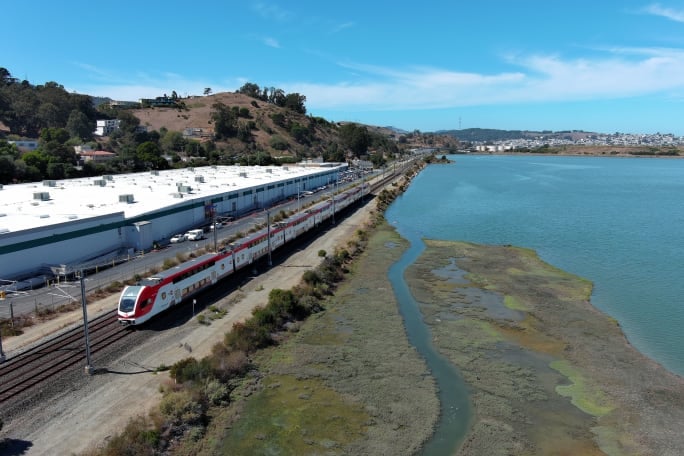
Caltrain’s electric fleet features passenger amenities including free Wi-Fi, power outlets and baby-changing tables, supporting an improved onboard customer experience.
Caltrain
Caltrain's recent achievements have come alongside a difficult financial outlook. Like other Bay Area transit agencies, the railroad faces a structural operating deficit as remote and hybrid work continue to change commuting patterns.
Although ridership and fare revenue have increased and Caltrain has pursued other revenue sources, those gains have not been enough to close the funding gap. The agency has also reported more than $76 million in operating cost savings over five years, but Caltrain says it will need additional external funding to maintain current service levels.
Bouchard attributed the savings to staffing and operational changes, including a targeted hiring freeze, improved crew efficiency, and reduced overtime. Caltrain has also reduced the need for special trains, incorporated infrastructure maintenance costs into existing contracts, reduced professional services expenses, and lowered electricity costs.
At the same time, the agency is seeking additional revenue from parking, advertising, property, and communications assets. Other efforts include expanding employer-sponsored transit pass programs, exploring retail opportunities at stations, and studying energy storage to optimize electricity use.
The challenge is to preserve the service improvements that have attracted riders while managing the cost of operating and maintaining the railroad.
“This national recognition is yet more proof that our investment in this railroad was worthwhile, and we will continue to serve the millions of people who rely on us to get them where they need to go,” said Caltrain Board Vice Chair Pat Burt.
For Caltrain, the award underscores the importance of pairing major capital investments with continued attention to operating performance, customer needs and financial sustainability.
Building on the Transformation
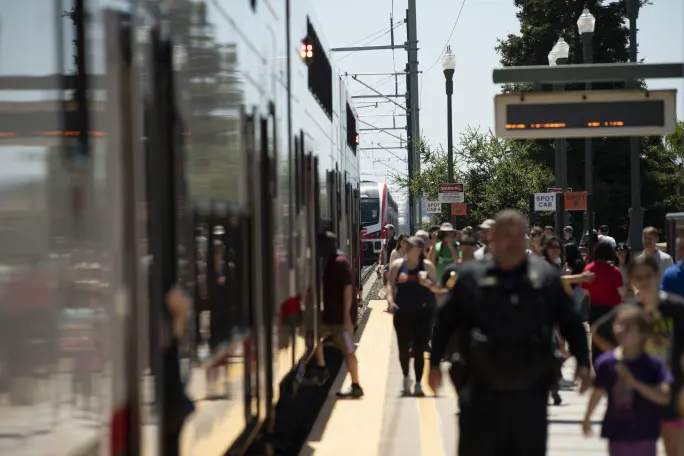
With connections to BART, GO Transit, local bus routes and other regional services, Caltrain is working to strengthen multimodal mobility throughout the Bay Area.
Caltrain
Caltrain's plans extend beyond the completion of mainline electrification. Near-term priorities include safety enhancements throughout the corridor, with 41 grade crossings recently getting upgrades, and efforts to introduce battery-powered electric service on the San Jose-Gilroy segment.
Longer-term initiatives include grade separations designed to eliminate conflicts between trains and local roads, a downtown extension that would connect Caltrain to the Salesforce Transit Center in San Francisco, and the Diridon Project, which aims to transform the San Jose station into a multimodal transportation hub.
The agency is also pursuing transit-oriented development at high-demand stations and working to improve connections with BART, VTA, SamTrans, Muni, and other regional transportation providers.
The efforts reflect Caltrain's goal of making rail service part of a more connected regional network, allowing passengers to move between systems more easily and reach destinations throughout the Bay Area.
The agency's additional APTA recognition also highlights work beyond service expansion. Caltrain received a Certificate of Merit in Rail Safety, following its Rail Safety Gold Award in 2025, as well as a National AdWheel award for Best Marketing and Communications to Increase Ridership or Sales for its “Driving is for Dodgers Fans” campaign.
Bouchard said Caltrain's experience offers lessons for agencies considering major investments in infrastructure and passenger service, particularly the importance of collaboration among public agencies, labor, businesses, elected officials, and transit advocates.
“The riding public is hungry for a modern transit system, and collaboration is essential to deliver it,” he said. “We brought transit advocates, business and labor leaders, and elected officials together and worked for decades. Because of that work, the people we serve have a faster, more frequent, and more reliable service and will enjoy cleaner air for generations to come.”
The Outstanding Public Transportation System award marks a milestone in Caltrain's modernization. Still, the agency's next phase will require sustaining its ridership gains, addressing its operating deficit and delivering additional infrastructure improvements.
For Bouchard, the achievement belongs to the people who keep the railroad running and the communities that depend on it.
“We have achieved something great together, and our riders and the communities we serve will benefit from it for decades to come,” she said.
Quick Answers
Caltrain's electrification has resulted in more frequent trains, stronger customer satisfaction, and increased ridership.
*Summarized by AI
More Rail
FTA Advances $164M Broward County Commuter Rail Project
The proposed 10.5-mile commuter rail extension would connect Fort Lauderdale and Aventura, expanding passenger rail options in South Florida.
Read More →
New York MTA Launches Historic $1.9B Signal, Track Modernization Project
Funded in part by congestion pricing revenue, the project will replace nearly century-old signals along the A and C lines in Brooklyn and Queens.
Read More →
LA Metro Breaks Ground on East San Fernando Valley Light Rail Project
The 6.7-mile line will add 11 stations along Van Nuys Boulevard, expand access to jobs and regional transit connections, and support Metro’s broader efforts to improve mobility as rail ridership grows.
Read More →
CSA Group Releases Climate Resilience Standard for Transit, Passenger Rail
Developed with support from the Standards Council of Canada, CSA D700 guides assessing climate-related risks and planning adaptation measures for transit and passenger rail systems.
Read More →
LA Metro September Ridership Climbs 3.9%, Led by Rail Growth
The agency recorded more than 27.2 million boardings, with rail ridership increasing 12.4% year over year and the D Line posting the largest gains.
Read More →
First Full MetroLink Rail Expansion Completed in 20 Years with $192M Airport Project
The project links two St. Louis-area airports by light rail while adding roadway and bike trail connections to improve regional access and mobility.
Read More →
Utilimarc Launches SmartReplace to Optimize Fleet Replacement Decisions
AI-powered SmartReplace helps fleets prioritize vehicle replacements, model budget scenarios, and build more defensible long-term strategies.
Read More →
Scenes from APTA TRANSform & EXPO 2026
Transit leaders, manufacturers, and industry professionals gathered in Chicago to explore new technologies, share ideas, and discuss the future of public transportation.
Read More →
USDOT Awards $416 Million for Florida Rail Crossing Safety Upgrades, New Brightline Station
The projects aim to reduce risks for motorists and pedestrians at rail crossings while expanding passenger rail access along Florida’s Space Coast.
Read More →
OCTA Declares Emergency to Protect Rail Corridor From Coastal Erosion
The California agency is accelerating shoreline protection and plans to place approximately 690,000 cubic yards of sand along the San Clemente coast to protect a key passenger and freight rail link.
Read More →