



What's Driving the Growing Popularity of Video Surveillance?
Heightened concerns about security are only part of the reason that the transit industry has embraced surveillance cameras on buses. Battling fraudulent claims and assisting in accident investigations are also cited.
As the role of surveillance systems on transit buses expands beyond passenger security, new questions arise about the use of ever-increasing technology. The pros and cons of surveillance must be taken into account by transit systems wanting to improve security and increase ridership. Video and audio recording is used to monitor driver-passenger interactions, identify vandals and refute fraudulent claims. But this has not happened without creating a few waves of discontent. Surveillance system manufacturers report that sales have seen a greater increase in the past two years than at any other time. The terrorist attacks of Sept.11, spurred some of the sales hike, but the advent of higher quality systems and falling prices also contributed. Pre-planned annual budgets make it difficult to measure how great an effect the terrorist attacks had because most agencies could not immediately invest in surveillance, says Judie Souknary, marketing director for Houston-based Safety Vision. “A lot of agencies take considerable time to do research and then they have to do bidding contracts, and it takes time to spec everything out. One sale can take a year to close.” Warren Musselman, vice president of Transit Video Security Systems (TVSS) in New York, says the increase manufacturers have seen since 2001 is due largely to transit agencies’ liability concerns. Agencies are looking for a product that can help resolve claims, which Musselman says has been made possible through more advanced technology. Like any technology, video recording systems have become less expensive to produce. Manufacturers hope this will allow smaller agencies to enter the market and make an investment that may have been impossible before. Drivers vulnerable? Surveillance equipment is regularly touted as additional protection for an agency and its drivers, but not all drivers feel that they are benefiting. Some claim that what management sees on videotape is not the same as actually being there. Drivers who have been reprimanded for their handling of a situation have defended their actions because of the context of the incident. Other drivers feel that they, not the passengers, are being scrutinized with the surveillance systems and that this leads to an inability to do their job as effectively as possible. Aldo Fuentes, a bus driver for 15 years, engaged in a verbal exchange with a rude passenger that was caught on his bus’ surveillance system. At press time, he was still waiting for a decision from his supervisor regarding the incident. “These cameras in my opinion are there, at least in some agencies, to watch the driver’s behavior and habits and they should not be,” Fuentes says. “Is the bus driver supposed to be respected and treated like a human being or is he supposed to be cursed at and mistreated?” (For more on the legal issues of onboard surveillance, see sidebar below.) After weighing each side of the issue, Miami-Dade Transit elected to install monitoring devices on every new vehicle purchased. Close to 400 of the agency’s 732 buses are now equipped with cameras. Acting General Superintendent Derrick Gordon says that the video equipment was originally purchased as a protection device for the operator, but it has proved useful in a variety of investigations. “Our risk management department wants [surveillance] for each accident to prevent fraud. Our discipline office wants them to support any discipline applied. Our union doesn’t like them except when it proves the employees right,” says Gordon. Trimming review times A common concern for operators wrestling with the idea of installing surveillance systems is the additional manpower required to maintain and review the systems. Transit authorities with limited employees are wary of burdening an already overworked staff with additional responsibilities. Features that address this issue are available on systems, including date stamps and driver-prompted “flags” at specific moments. This can eliminate the time-consuming task of fast forwarding and rewinding to reach the exact moment that needs to be viewed. Wireless networks eliminate the need to hook up a laptop to the bus to download marked files. Omnitrans in San Bernardino, Calif., uses this feature to collect any incidence files automatically. “We don’t actually pull tapes, it’s done on a computer and then it’s routed to the people who need to see it,” says Bob Bach, director of maintenance at Omnitrans. “There is no doubt there is a lot of time involved in this kind of system and you want to take as much labor out of the picture as possible.” Denver’s Regional Transportation District employs a security systems technician to review any tapes that have been brought to the attention of the agency. Public Safety Manager David Genova says tapes are only pulled when requested. Reasons for reviewing tapes usually stem from a security incident, a customer service issue or a claims issue, he says. Still, others randomly review tapes or take on the additional work themselves, like Rick Ryckeghem, risk management specialist for MetroLINK in Rock Island, Ill. “All 65 of our buses have at least four cameras inside and one forward-facing camera on the outside. They have proven to be a lot of work for me, but the benefit has been great,” he says. Fewer claims observed According to TVSSÕs Musselman, agencies can actually save money by investing in surveillance equipment because people are often less likely to file claims that cannot be supported by the videotape. “One customer said they are saving about $1 million a year and have found their administrative burden to be way down,” Musselman says. “People really behave differently when they know there are cameras.” Transit authorities that can’t afford surveillance systems or those interested in testing the deterrent effect can install dummy cameras instead of the real thing. These cameras look authentic but do not contain any recording equipment. Caution is advised to agencies that take this course of action. “You can get yourself into a liability issue when people think they’re being recorded and something happens,” says Bach of Omnitrans. “If you need that tape for an investigation and you don’t have it, you could be sued for alleging to have had it. We decided not to go that route.” Safety Vision’s Souknary says fake cameras should be an option, but only as a last resort. As a better alternative, Souknary advises agencies with limited funds to install surveillance systems on only the most frequently used buses instead of the entire fleet. Improved image quality Operators currently using surveillance equipment cite frames per second and the storage capacity of the hard drive as two of the most important features. Digital has improved analog’s recording time by leaps and bounds, but technological advancements are always welcome. “With a slow frame rate, sometimes you don’t get enough video to capture the incident. It’s just too jerky of coverage,” says Genova with Denver RTD. “And storage time is important because you may not hear of an incident for five or six days and you want to be able to retrieve that video if at all possible.” These features are especially important for cases that have the potential to go to court. Surveillance is worthless in legal proceedings if it has already been erased or if the footage is not clear enough to view. Although only in limited use, it is possible to have real-time recording at 30 frames per second. Currently, most agencies record at a rate of five to 20 frames per second. Need for bells, whistles? While the size and location of an agency affects its needs, most want very similar things, says Brian Curliss, market solutions manager for Silent Witness in British Columbia. “Of course, features like remote download, GPS and remote monitoring are nice to have, assuming agencies have the budget and the infrastructure to support these features,” says Curliss. The extra bells and whistles available on a system can have great advantages — if used appropriately. The user-friendliness of a system is key to getting its full benefits. Units that are difficult to install or require a lot of individual settings can make operators less inclined to use them, thus defeating the purpose. Regardless of any debate, surveillance appears here to stay. New options are being developed that further reduce the manpower required, produce clearer, longer-lasting images and incorporate more data than just a visual image. Technology similar to an airplane’s black box is now on the market, measuring the impact and G-force at the point of collision. Radio Engineering Industries (REI), based in Omaha, Neb., released the program in the summer. “It measures the recorded data against a national database to determine if any injuries are possible at that particular point of impact,” says George Cranford, account executive in the transit division of REI. Technology still being developed would allow real-time viewing of recordings on a bus from a remote location, such as an office or a car. This would allow police officers to monitor the inside of a vehicle during a hostage situation or other emergency.
The Big Brother Factor
Despite good intentions, onboard surveillance raises questions that transit officials must address. The line is blurred between public and private information on government-funded vehicles. The American Civil Liberties Union has spoken out against the monitoring system, citing a violation of personal privacy. Its Website states that many passengers do not expect to be recorded on a bus and that notices informing riders of audio and visual recording are often small and go unnoticed. Warren Musselman, VP of TVSS, dismisses the claim and says transit agencies have the right to record events involving a public service, such as transportation. “There is not an expectation of privacy on a public bus,” he says. State laws set the requirements for agencies to inform riders of surveillance. The California Research Bureau, a division of the state library, reports that it is the opinion of most legal scholars that video surveillance of public areas does not present significant legal obstacles. The report goes on to say that citizens who sue operators of public video surveillance for First Amendment violations often must prove actual mental anguish or distress. Audio recording through the use of microphones is a related issue that has been debated, but the legal consensus appears to side with government agencies. In an effort to preserve a degree of privacy for passengers, some transit agencies do not record audio until an incident is actually occurring.
More Management
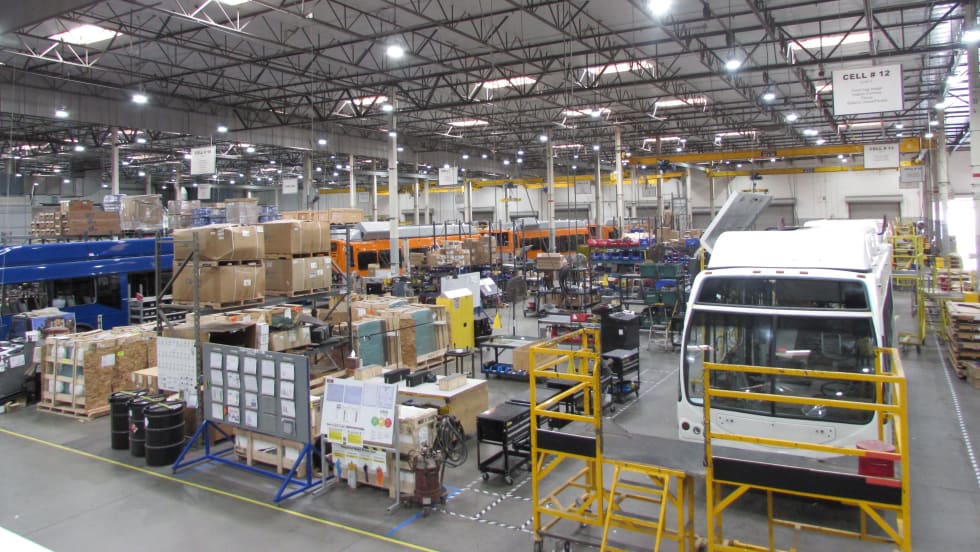
LA Metro Board Awards 220 Battery-Electric Bus Contract to ENC
The contract, which is the largest base award of battery-electric buses by a U.S. transit agency, will be built in Southern California, sustaining good jobs as LA prepares to welcome the world in 2028
Read More →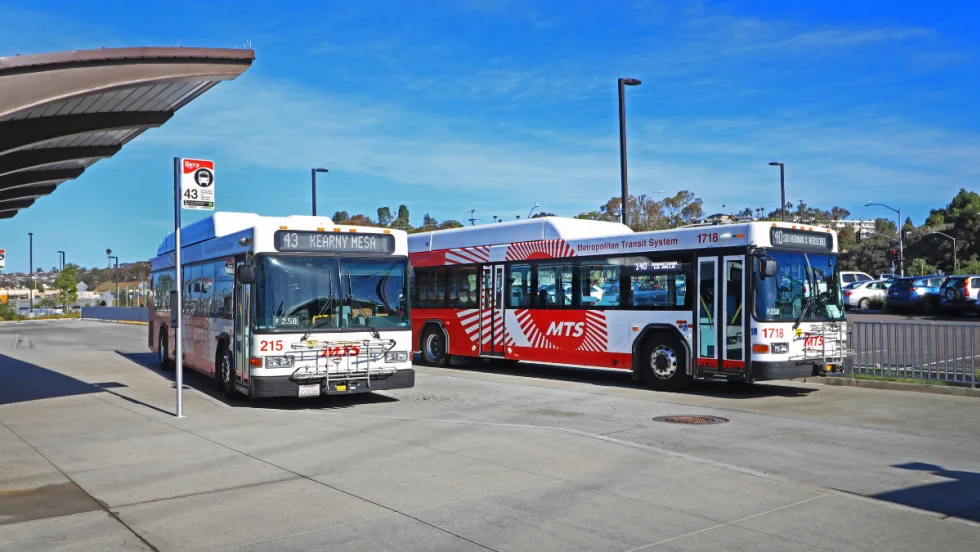
What’s Behind San Diego MTS’s Award-Winning Transit Strategy
Named one of APTA’s 2026 Outstanding Public Transportation Systems with 50 million or more annual passenger trips, California’s San Diego Metropolitan Transit System points to gains in ridership, safety, technology, and reliability as foundations of its success.
Read More →
Public Transit Conference Returning to GFX in 2027, Call for Papers Now Open
The Call for Papers is now open, allowing transit agency professionals and industry experts to help shape the PTC educational program by submitting session ideas for consideration.
Read More →
Indian River Transit’s Community-Focused Approach Earns National Recognition
Named APTA’s 2026 Outstanding Public Transportation System in its size category, Florida’s Indian River County transit system continues to grow ridership through fare-free service and a focus on evolving community needs.
Read More →
ENC Lands MATA Contract and More in Biz Briefs
In this edition of Biz Briefs, we spotlight the latest developments shaping the future of mobility.
Read More →
From Surviving to Thriving: Building Stronger Transportation Organizations
Bus Business Consultants founder Brian Dickson shares lessons on leadership, organizational health, and creating options for long-term success in a changing transportation industry.
Read More →
Everett Transit, Community Transit Outline Consolidation Agreement
The proposed agreement calls for a 50% increase in bus service in Everett, a new microtransit zone, continued paratransit service, and the transfer of Everett Transit operations to Community Transit.
Read More →
Strada360’s Steve Lassey on Turning Transit Data Into Better Decisions
From breaking down data silos to preparing for AI, Strada360 CEO Steve Lassey discusses how transit agencies can use technology to improve operations, customer information, and long-term decision-making.
Read More →
People Movement: Phil Washington Joins HNTB, Denver RTD Launches CEO Search, and More
In this edition, we also spotlight recent personnel moves at STV, the Eno Center for Transportation, and more, highlighting the people taking on new roles across the transportation industry.
Read More →
SEPTA Details Accelerate Vision for Transit System
The plan outlines investments in trolley modernization, new Metro and Regional Rail vehicles, accessible stations, and more frequent bus and rail service.
Read More →