



Wi-Fi Blazing Trail for Onboard Convenience
Wi-Fi, or wireless Internet access, is still in its early stages but is expected to grow substantially in North American and European rail systems in the near future. Trial runs are being completed with high satisfaction ratings from passengers and rail operators. Other onboard technologies are coming online.
In the near future, rail passengers will have a lot more options for how to spend their commute time.
Rail system operators and consultants are exploring a host of new high-tech amenities for their passengers, including Internet access, automated real-time train position information, onboard TV screens with news and entertainment, voice-over-IP phone service and video conferencing. Of course, all of these “wish list” items are still in the early stages, but technology product suppliers are bringing to the market an array of services and capabilities that put these possibilities within reach.
Inter-city and commuter railcars could start looking more like commercial passenger jets. With the promise of wireless Internet access coming to fruition, train travel may actually be ahead of air travel, which has been slow to offer passengers in-flight Internet or cellular access.
Train riders will soon be able to send and receive e-mail, surf the Web, download real-time train schedule updates, view programming on TV screens and use the Internet for phone calls and videoconferencing. The train ride will become a moving workstation, while also offering entertainment to leisure-minded passengers, making the commuter train experience more productive and pleasurable.
Wi-Fi leading the way
During the next five to 10 years, most rail system riders in North America and Europe are expected to have onboard wireless Internet access (Wi-Fi), according to some industry estimates. Currently, there are only token applications in these regions, mostly in the pilot stages. Amtrak, for instance, has been experimenting with both onboard Wi-Fi and Internet access within train stations.
Last summer, Amtrak and AT&T Wireless implemented Wi-Fi “hot spots” at six Northeast Corridor stations: Boston Route 128; Providence, R.I.; New York Penn; Philadelphia 30th St.; Wilmington, Del.; and Baltimore Penn. AT&T customers with Wi-Fi enabled laptops or PDAs can access the system without extra charges. Non-customers can pay $9.99 via credit card for 24 hours of access.
The onboard Wi-Fi trial is taking place on the Amtrak Capitol Corridor, which runs between Sacramento and San Jose. The trial program is being implemented in conjunction with technology partner PointShot Wireless. PointShot is an Ottawa, Ontario-based mobile wireless solution provider for the rail industry. PointShot has also conducted trials with Altamont Commuter Express (ACE) in central California, VIA Rail Canada and rail operators in the U.K. and Sweden, according to Shawn Griffin, the company’s president and CEO. These rail operators are now extending Wi-Fi access to other trains in their systems.
PointShot has entered into a partnership with Parsons Transportation Group to serve rail operators, Griffin says. Parsons is expanding its Wi-Fi network, and PointShot is providing the equipment for trains to link up to Wi-Fi systems.
Train passenger users of Wi-Fi link their laptops to Wi-Fi ports, where they view a splash page on their Web browsers. They log on to the system and receive either free access or, if the rail system charges an access fee, a payment processing mechanism.
Under a full implementation scenario, Wi-Fi offers multiple capabilities to passengers and rail system operators. Wireless Internet access is currently operating within the speed range of a 56.6 dial-up modem or up to DSL-type speed in certain applications. This speed will be doubling in the next version of the PointShot system, Griffin says. Passengers will also benefit from real-time train position information through rail agency Websites, PDAs and onboard and in-station LED boards, since the Wi-Fi hardware contains GPS transponders that upload precise train position coordinates.
Gains for rail operators
Rail operators will also see multiple benefits. Automated real-time train position information will take system management to the next level of efficiency and safety. There are also applications for train systems that sell tickets based on assigned seating, which will be better able to track seat sales and passenger location, helping improve utilization and offering a more accurate passenger manifest.
Real-time automated train data will help rail agencies lower labor costs since customers will be able to get train arrival times through the Internet, telephone Interactive Voice Response (IVR) systems and handheld devices used by station agents.
“Data from the train could also be used to manage maintenance,” Griffin says. “A device malfunction could be detected by the train’s onboard systems, and information could be transmitted to the rail operator. Replacement parts could be waiting at the next station.”
While most of the trial applications have focused on onboard wireless Internet access for commuters, PointShot is now working with transit agencies and rail operators on the next generation of services — especially those offering operators more real-time train management data.
ACE takes pioneering role,
ACE, based in Stockton, Calif., prides itself on taking innovative steps forward in implementing customer service technology. ACE was an early adopter of the PointShot Wi-Fi trial, which ran a pilot for about four months beginning in September 2003. Since February 2004, Wi-Fi service has been available on one designated car of each of ACE’s three trains, according to Hal Singer, IT manager.
ACE transports passengers who live in the Central Valley area to San Jose, where many of them work for high-tech companies. The longest distance anyone rides on the 84-mile, heavy-rail system is two hours and 15 minutes — offering plenty of time for productivity through Wi-Fi access. Wireless Internet access has allowed riders to arrange more flexible schedules with their employers, since employers know that the commute time now can be used for efficient work output, Singer says.
Wi-Fi service is free to ACE passengers, the cost being underwritten by the University of Phoenix. The car behind the locomotive is designated as a classroom environment and is branded with University of Phoenix decals. The university made the investment because of the ideal audience demographic — tech workers who might need an additional college degree to advance their careers, Singer says.
Passengers love the service but have offered two criticisms: there are “dead zones” with no Internet service availability, and the access speed could be faster. ACE is fixing the dead zone problem, which occurs primarily in the 1.2-mile stretch inside and adjacent to the Niles Canyon tunnel. The agency is installing cellular service throughout the tunnel and immediate area in conjunction with other work being done on the tunnel and radio communications system. Work is scheduled to be completed this spring. As for the access speed problem, that can be resolved with more funding. ACE is working with PointShot to improve the service speed, and is exploring different technology options.
Other initiatives being considered are extending Wi-Fi to all railcars, voice-over-IP telephone service, video conferencing, movie and news broadcasting and satellite radio. The agency became possibly the first in the nation to offer customers ticket sales over the Internet, according to Singer. ACE saves money on labor costs because there is no physical handling of tickets and manual payment processing for this popular service, which is offered on its Website.
“We take the attitude of ‘why not’ when considering new technologies,” Singer says. “Being a small rail system, we can move faster on implementation.”
Agencies in planning stage
Transit agencies and rail system operators throughout the country are exploring technology options to increase passenger satisfaction and productive use of their travel time, according to industry sources. The successful trial usage of Wi-Fi is creating an atmosphere of increasing possibilities for system operators.
Trinity Railway Express (TRE) is the train operator for the light rail system used by Dallas Area Rapid Transit and Ft. Worth Transit Authority. Forty-six trains run during the week, and 24 on Saturday. The longest ride, from point to point, is more than an hour between Dallas and Ft. Worth.
According to Pete Sklannik, COO of TRE, many technology options are being considered to allow passengers to use that commute time to their benefit. As the TRE rail line expands during the upcoming years, onboard technology will be an important consideration in the planning process.
TRE has been talking to various technology suppliers, including PointShot, Nortel and Verizon, about their offerings. It has also talked with colleagues such as ACE to find out about their Wi-Fi operating experience, Sklannik says. The capital investment is always a concern, he adds, as are trade-offs one must make in adopting a particular technology. “We can get faster access speed, but not volume, and vice versa,” Sklannik says.
Caltrain, the commuter rail system that operates between San Jose and San Francisco, is also considering several onboard technologies, according to Ben Lamoreaux of Cedar City, Utah-based Lamoreaux McLendon, a design engineering firm working with Caltrain. The agency is testing several prototypes, including a closed circuit TV system that uses wireless technology to transmit images to enhance train safety. TVs mounted in Caltrain stations allow operators to verify that a train has clearance on both sides and can leave the station safely.
Caltrain wants an integrated Wi-Fi system that brings together all of what Lamoreaux calls the benefits of this technology — passenger convenience, train location and a full host of train management tools. Like TRE, Caltrain has been talking to agencies that have gone through Wi-Fi pilots and many technology suppliers to find the right fit for its long-term technology planning, though there is no one system that meets all of the agency’s current needs, Lamoreaux says.
More Management

The Business Voice Behind Public Transportation
As chair of APTA’s Business Members Board of Governors, Ray Melleady explains how more than 850 business members are partnering with transit agencies to advance funding, innovation, and industry-wide collaboration.
Read More →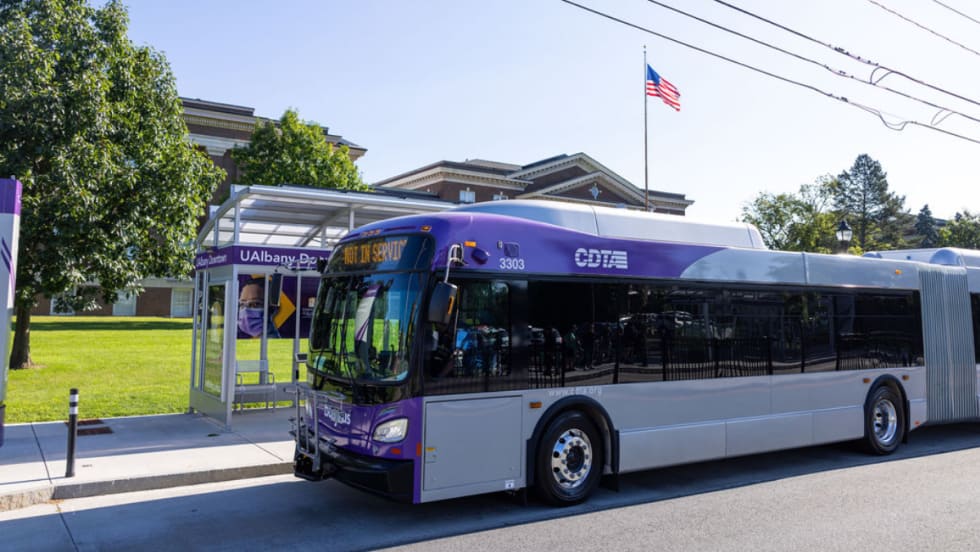
New York’s CDTA Service Rebalancing Boosts Productivity, On-Time Performance
Despite a slight dip in ridership, the agency’s FY2026 results show its service rebalancing strategy is helping the agency carry more riders per service hour while improving reliability.
Read More →
People Movement: ABC Names John Walsh as Chief Commercial Officer
In this edition, METRO also covers recent appointments and announcements at the DART, STV, and more, showcasing the individuals helping to shape the future of transportation.
Read More →
From Surviving to Thriving: Building Stronger Transportation Organizations
Bus Business Consultants founder Brian Dickson shares lessons on leadership, organizational health, and creating options for long-term success in a changing transportation industry.
Read More →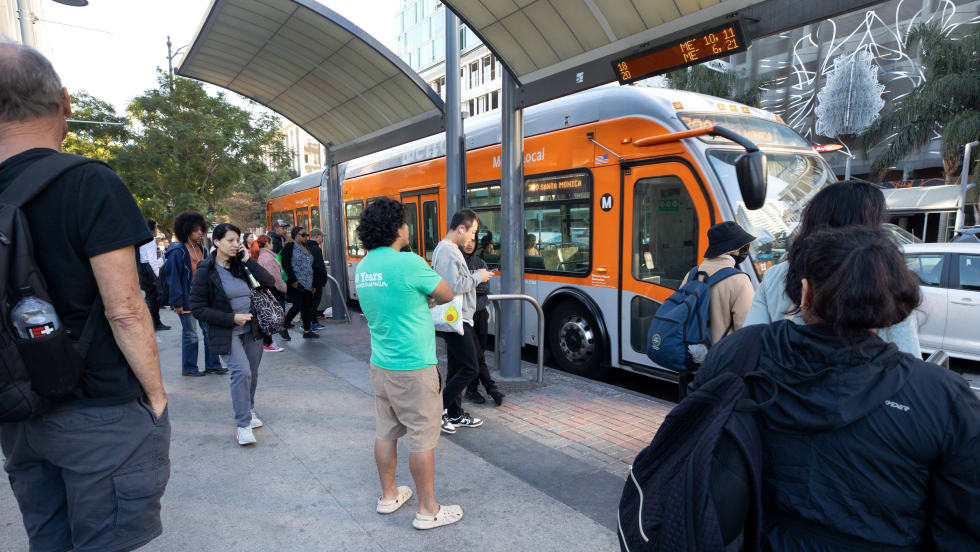
LA Metro Ridership Continues Growth as Rail Gains Accelerate
New rail connections and major events help drive continued ridership gains, with Metro recording its eighth consecutive month of year-over-year rail growth.
Read More →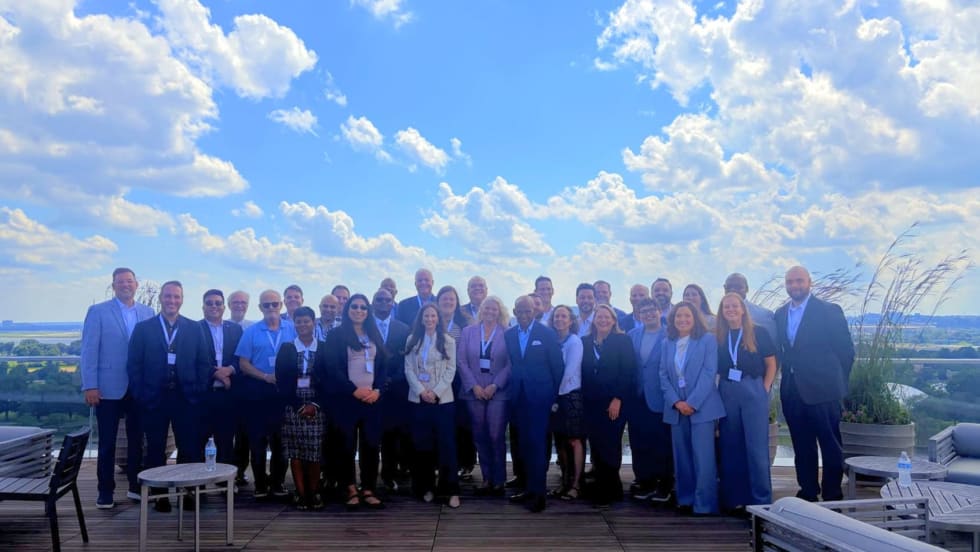
TransDASH Summit Focuses on Measuring What Matters in Transit
Transit agencies unveil a national performance platform designed to benchmark customer experience, safety, community value, and other outcomes.
Read More →
Jacksonville’s NAVI Project Charts a New Course for Autonomous Public Transportation
Through its NAVI program, JTA is showing how autonomous vehicles, intelligent infrastructure, and coordinated operations can work together to deliver everyday public transportation.
Read More →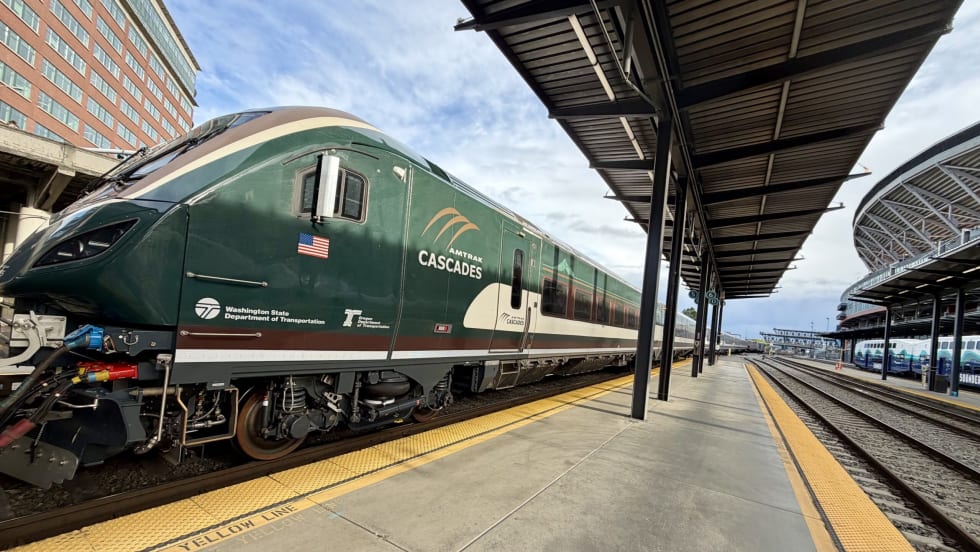
FRA Announces $5.3B in Rail Investments, Including $2B for Amtrak
Funding will support grade-crossing improvements, infrastructure upgrades, and new Amtrak equipment in 23 states.
Read More →
Finding the ‘Happy Medium’: Optimizing Maintenance Without Sacrificing Reliability
The key to maintenance optimization isn’t doing less work—it’s doing the right work at the right time on the right assets.
Read More →
People Movement: MARTA Drops Interim Tag on GM/CEO Hunt and More
In this edition, METRO covers recent appointments and announcements at the FMCSA, HDR, SilverRide, and more, showcasing the individuals helping to shape the future of transportation.
Read More →