



Women in Transportation: K. Jane Williams
A discussion with FTA Acting Administrator K. Jane Williams.

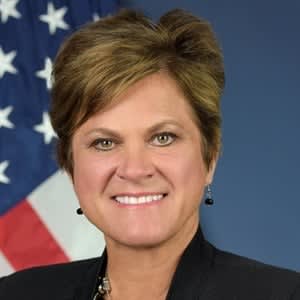
Grew up: Elkton, Md., which is located in rural Cecil County, on Maryland’s beautiful Northeastern Shore.
Studies: I graduated from the University of Maryland with a Bachelor of Science degree from the School of Journalism.
Early career aspirations: As a young woman, I was always interested in current affairs. In fact, my 10th grade English teacher noticed that, while other girls focused their class journal entries on daily high school drama, I was more interested in news and current events. My teacher encouraged me to think seriously about a career in public service. While attending the University of Maryland, I sold advertising for the school newspaper, The Diamondback, and dreamed of selling advertising in New York.
Influences: I began working for my father at the family automobile dealership when I was 13 years old, and it was there that I learned the value of hard work. My father taught me the importance of a strong work ethic and following through on your commitments, while looking for additional ways I could contribute. He taught me to always be prepared for the day ahead. So, I learned from an early age the importance of working hard, showing up on time, and contributing above and beyond what is expected. He also consistently demonstrated the importance of treating everyone with respect, regardless of their position.
Intro. to the transportation industry: I began working in the transportation field when I returned to federal service on Capitol Hill in 2011 as a staff member to Maryland Congressman Andy Harris.
Previous role: In 2015, I was hired as the director of the Washington Area Transit Office at the Maryland Department of Transportation under newly-elected Maryland Gov. Larry Hogan. As the director, I worked with the Washington Metropolitan Area Transit Authority and local bus systems in the Washington metropolitan area, both of which gave me tremendous experience in working with two of FTA’s largest grantees.
Current role: I joined the Federal Transit Administration as deputy administrator in August of 2017. Since that time, I have served as the acting administrator, managing a team of 500 employees with a $13.5 billion annual budget. FTA, one of nine operating administrations within the U.S. Department of Transportation, provides financial and technical assistance to local public transit systems, including buses, subways, light rail, commuter rail, trolleys, and ferries. FTA carries out its mission to improve public transportation for America’s communities in four principal ways: it provides financial assistance, technical assistance, leads research and innovation, and performs stewardship of federal resources through program oversight. Leading FTA has given me the opportunity to meet many people across the nation that provide transit services to their communities.
Accomplishments: I’m proud of the progress we’ve made in advancing U.S. Transportation Secretary Elaine Chao’s number one priority: Safety. Although safety is a relatively new line of business for FTA, it was an issue I was very familiar with given my former position at the Maryland Department of Transportation. As a member of the team, I worked with the Commonwealth of Virginia and the District of Columbia in drafting the Metrorail Safety Commission legislation. I learned firsthand during that experience the importance of partnership.
When I arrived at FTA in August of 2017, we were beginning a major initiative helping states achieve State Safety Oversight Program certification. At the time, not one state was certified. FTA’s Office of Transit Safety and Oversight has done a great job in being a partner, with 24 States achieving State Safety Oversight (SSO) certification. We continue to work with the remaining states each and every day to bring them across the finish line prior to the April 15, 2019 deadline.
In addition, I am also proud that FTA published two critical final rules for Public Transportation Agency Safety Plans and training, which ushered in a new era in transit safety.
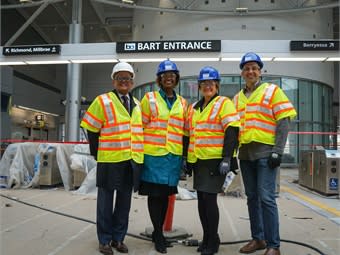
Challenging/Rewarding: Leading FTA has been very rewarding as you see firsthand the impact transit has on communities across the nation. Providing both formula and competitive grant funding to the industry and the communities they serve can at times be challenging. Meeting with grantees and project sponsors allows you to learn the benefits each project could bring to the individual community. When I call transit agencies to let them know they are a recipient of one of our competitive grants, there is a genuine sense of pride, as these transit projects impact their communities and enable them to grow and prosper. The impact is a lasting one. Of course, one of the most rewarding aspects of my job has been the opportunity to work with such a passionate and professional team at FTA. It is their partnership that allows me to make tough decisions and tackle our biggest challenges.
Skills: Growing up in a household of 10, my mom was a strong role model for me. She and my dad taught me the importance of organization, teamwork, and sharing. They taught me in both their words and their deeds key values — working hard, following through, giving back, and listening. Listening for me has been key, both internally and externally. It has helped me understand the industry and its priorities. Of course, you can be the best listener, but if you don’t follow through on what you hear, it doesn’t matter. As a result, I’ve always tried to be a person of action. Those early life lessons are still applicable today, as I find myself continuing to focus on preparation, perseverance, and working hard.
Projects: I am proud of the work we are doing in safety, ushering in a new era of safety at FTA. Rebuilding our infrastructure is also key as we continue to invest in communities across the nation. This year, for example, we allocated $10 billion in FY18 formula funding, and $534 million in funding for competitive programs.
Although the Capital Investment Grants (CIG) program has been controversial, FTA has committed approximately $2 billion for 11 CIG projects across the nation. Lastly, FTA is focused on innovation. Secretary Chao is leading the development of a new Automated Vehicle plan called ‘AV 3.0,’ which is multimodal and includes transit, and we are excited to partner with other operating administrations across the department on this initiative.
Profound moment: When I was contacted by the Maryland Department of Transportation to interview for the director of the Washington Area Transit Office position, I was initially not interested. I was working on Capitol Hill and, frankly, liked what I was doing. When a former colleague called me personally and asked that I interview for the position as a personal favor, I agreed. During the interview process, many convinced me that this was the right position for me, and I eventually agreed that it was time for a change. If I had not made that decision, I am convinced that I would not have been considered for my current position. Serving as the director of the Washington Area Transit Office allowed me to learn more about individual transit systems, including both rail and bus. Working with the WMATA system gave me the opportunity to see firsthand issues being faced by a legacy transit system.
Inspiration: My parents continue to inspire me each and every day. Both of them taught me so many life lessons. My mom was busy raising seven children, and while doing so taught us the importance of organization and preparation. She also taught us the importance of giving back to our community. In fact, after raising all of us, she became the first and only chairwoman of the board of the local hospital after being a volunteer in the auxiliary. She taught me that you can have it all, you just can’t have it all at the same time. As a professional, I am inspired by Secretary Chao. Her career has been dedicated to public service, whether working for the federal government under four U.S. presidents or leading the United Way. She approaches each and every day with a mission but also a sense of collaboration, as well.
Favorite pastimes: I enjoy spending time with my two daughters and my large extended family. We enjoy traveling, sailing, and spending time at our beach house on the Eastern Shore.
More Management

METRO Opens Submissions for 2026 Motorcoach Awards
Nominations are now being accepted for METRO Magazine’s Operator of the Year and Innovative Operator of the Year awards.
Read More →
New York MTA Advances Final Contract for Second Avenue Subway Expansion
Contract Four is the largest in the Second Avenue Subway Phase 2 project and includes construction of station infrastructure, tracks, and signals for the subway expansion, MTA officials said. Work on Contract Four will begin in 2027.
Read More →
Transit Agencies Highlight Safety Gains at National Summit
Leaders from 15 major transit systems shared crime-reduction results and safety initiatives while discussing the role of continued federal support.
Read More →

NITA Names New Leadership, Expands Reduced-Fare Program at First Board Meeting
The new regional transit authority appointed its first board chair and interim executive director while extending reduced fares across CTA, Metra, and Pace for eligible riders.
Read More →
Beyond the Checklist: A Structured Approach to Transit Maintenance
Reliability-Centered Maintenance helps transit agencies move beyond routine checklists to focus limited resources on the assets and failures that have the greatest impact on safety, reliability, and service.
Read More →
APTA 2026 Nominating Committee Selects Leadership Slate, Names Chair and Vice Chair Nominees
Leadership changes will help shape the association’s priorities and its representation of the transportation industry during the 2026–2027 term.
Read More →
DART Launches Major Security, Fare Enforcement Initiative
The 90-day demonstration will deploy coordinated security teams at five light rail stations while testing controlled access and gathering data to guide future investments.
Read More →
Advancing Fare Collection Through Technology and Innovation
Learn about delivering 1300 gates at 91 stations while managing fare evasion. Explore the large scale deployment, solution customization and real-world results that affect the region. Prepare for deployment in your region now.
Read More →
Game Day in Motion: Moving Millions During the 2026 World Cup
Between packed transit stations and team motorcoaches, see how agencies and operators across North America tackled the transportation demands of the 2026 FIFA World Cup.
Read More →
Surface Transportation Extension Averts Shutdown, Leaves Transit Funding Gap
The stopgap keeps federal transportation programs moving, but missing advance funding could complicate the transit and rail projects agencies are planning next.
Read More →