



How 'Safety Blitzes' Help Test Bus Operators for Compliance
Think of a safety blitz as seeking confirmation that bus operators are in compliance, or non-compliant, with your standard operating procedures during an unannounced "spot check" of a specific skill set. A blitz may also be initiated in response to a sudden spike in unsafe actions being reported, observed or indicated by video review.

This month, in our continuing coverage of bus operator training tips, we will cover the topic of safety blitzes.
What exactly is a safety blitz?
Think of a safety blitz as seeking confirmation that bus operators are in compliance, or non-compliant, with your standard operating procedures during an unannounced "spot check" of a specific skill set. A blitz may also be initiated in response to a sudden spike in unsafe actions being reported, observed or indicated by video review.
Why a safety blitz?
The goal is to gain an accurate account of what’s going on in your system.
There are several reasons you might want to consider initiating a “blitz.” Let's take a quick look:
Customer complaints regarding operator’s use of cell phone while operating their bus.
Operators have been observed using one hand to steer the bus.
Operators failing to utilize their directional signals when entering a bus stop.
Operators accelerating to cross intersection during yellow and red signal conditions.
To establish that an "unannounced randomly selected" blitz can occur at any given time.
To ensure that any unsafe act will not go unnoticed by management.
To acknowledge and recognize those operators that continue to demonstrate safe consistent operation of their bus on a daily basis.
How can a safety blitz be implemented?
Select the skill set to be observed for compliance.
Identify the locations to position personnel to gather your information.
Set a start and finish time.
Agree on what verbal corrective action/remedy will be utilized for operators found to be non-compliant.
Schedule a follow up blitz
Provide incentives for compliant operators
When should it be conducted?
Randomly, to see whether compliance is the standard operating procedure.
During the probationary period of an operator in addition to onboard observation rides.
After a spike in a particular collision or complaint.
Who will conduct the blitz?
Supervisory-level personnel, preferably training department personnel.
In cases where training dept. personnel and safety dept. personnel are on the same page with standard operating procedures — and this should always be the case — it can be a joint training and safety effort.
RELATED:How to know when your trainees are ready to roll
I mentioned incentives for those operators found to be compliant during the "safety blitz." I knew of an agency that would provide patches, pens, lapel pins, hats, etc., to those individuals that were observed doing their jobs to the agency’s standards.
It would work like this: let’s say the blitz focused on the proper use of directionals entering a bus stop. An operator that was observed to be compliant in this particular skill would first be approached by the person conducting the blitz and made aware of his/her good actions. The operator would be given a ticket stub to turn in to supervision at the end of their tour. Upon turning in the stub they would be given the predetermined item selected as a reward during that particular blitz.
This is easy to implement, you can be creative as you want and most importantly unsafe behavior is quickly identified and can be dealt with in a constructive manner that will protect the operator, the agency and your loyal customers.
Louie is the former director of training for the New York City Transit Dept. of Buses Safety & Training Division and 2003 NTI Fellow. Currently, he is sr. consultant/SME in transit training & bus simulation at L-3 D.P. Associates and independent consultant at "Bus Talk" Surface Transit Solutions.
In case you missed it...
Read our previous blog, "How to Maximize Peak Performance from Your New Transit Maintenance Facility"
More Blog Posts
Improving Transit Accessibility by Offering Assistive Listening
Did you know that there are literally tens of millions of people worldwide with hearing loss, many of whom will use some form of public transit at some point?
Read More →
35 Years of the ADA, Making Travel Easier for Seniors
Thirty-five years after the passage of the Americans with Disabilities Act of 1990 (ADA), the impact of this landmark piece of civil rights legislation cannot be overstated.
Read More →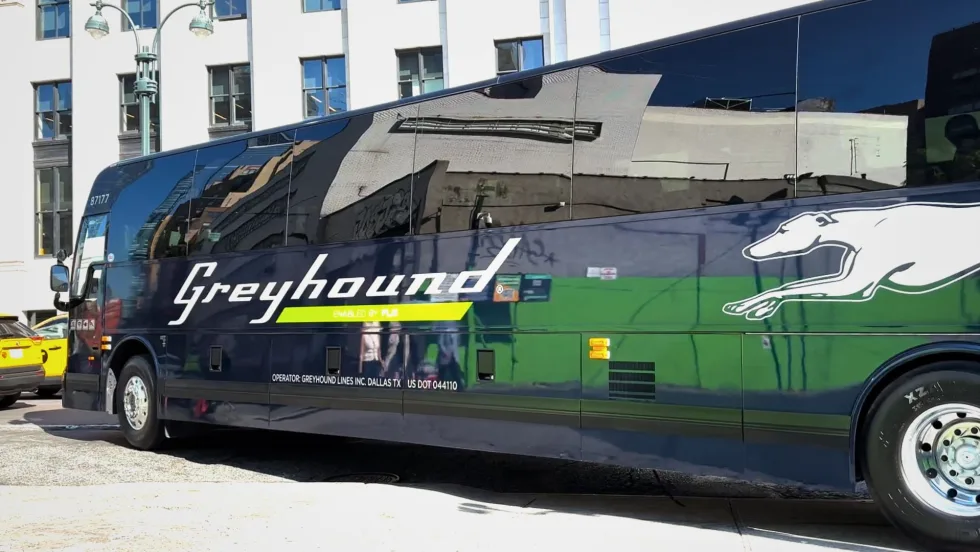
Driving Performance with Purpose: How I Lead One of Greyhound’s Top Teams
Safety, on-time performance, and customer experience are critical elements in intercity bus operations. But getting them right doesn’t come down to plans or protocols alone. It comes down to execution. How well your team performs on the ground, in real time, is what defines success.
Read More →
Navigating Emerging Privacy Laws: A Call to Action for Service Providers in Mass Transit
With Data Privacy Day Jan. 28, I want to spotlight a critical challenge faced by service providers in the mass transit sector: managing personal information responsibly in an era of rapidly evolving privacy regulations.
Read More →
Human Trafficking Awareness: What Public Transportation Can Do?
January is National Slavery and Human Trafficking Prevention Month in the U.S., and January 11 is National Human Trafficking Awareness Day.
Read More →
Want to Improve Transit Safety and Operations? Break Down the Silos
Retrieving and reviewing data and video can be a cumbersome process for fleet managers. Each system or tool provides a piece of the puzzle, but seeing the complete picture requires tedious manual synchronization.
Read More →
Ensuring Public Transit Cybersecurity Through Robust Protective Measures
In today’s highly connected world, cybersecurity is of utmost importance, particularly for transportation agencies overseeing transit bus systems that rely increasingly on sophisticated technologies, including the use of data analytics in traffic signal networks, to manage and operate their systems.
Read More →
How Advances in Thermal Management Revolutionize Urban Mobility
In the daily hustle and bustle of city life, transit buses serve as the backbone of urban transportation, allowing millions of city dwellers to get from point A to point B each day reliably.
Read More →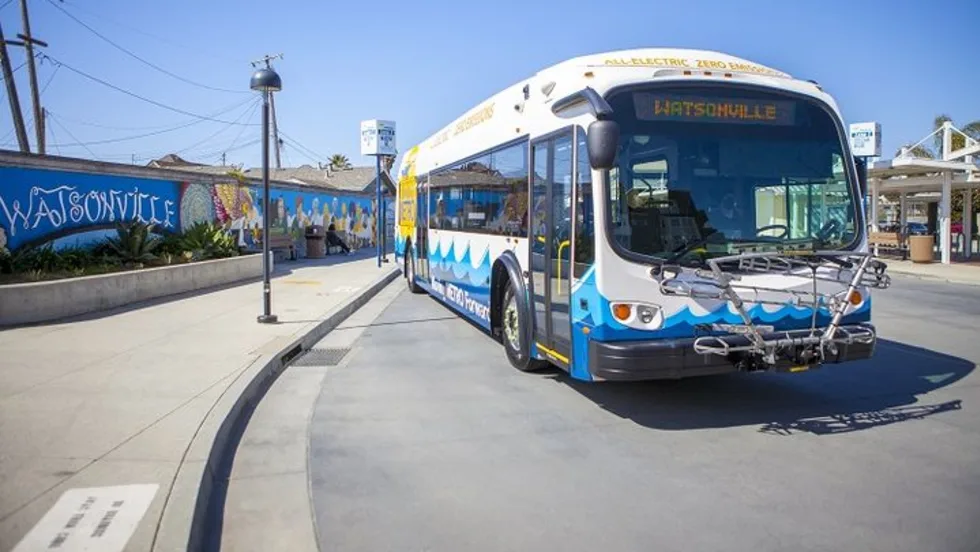
The Evolution of Bus Design
Thirty years ago, drivers not only had to drive the bus and navigate heavy traffic, but they were also responsible for tasks like supervising passenger loading and unloading, selling tickets, and providing passengers with various kinds of information, all while sitting in an often ill-fitting workstation.
Read More →
What 'Transit Safety 101' Really Means
Safety, Safety, Safety. This word is used repeatedly, and in many contexts, without most people understanding what it actually means.
Read More →