



35 Years of the ADA, Making Travel Easier for Seniors
Thirty-five years after the passage of the Americans with Disabilities Act of 1990 (ADA), the impact of this landmark piece of civil rights legislation cannot be overstated.

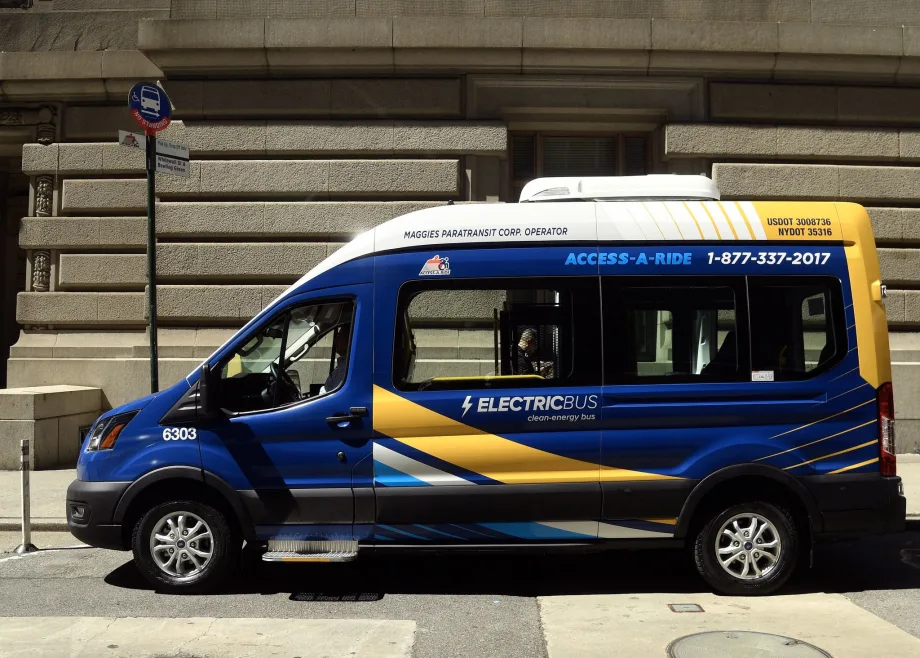
In the 35 years since its passage, the Americans with Disabilities Act has left an indelible mark on the lives of seniors in the New York Metro region.
Photo: Marc A. Hermann
- The ADA, passed in 1990, significantly advanced civil rights for individuals with disabilities.
- Thirty-five years post-enactment, the ADA continues to positively impact accessibility in travel for seniors.
- The legislation's influence underscores the importance of inclusive policies in travel and mobility.
*Summarized by AI
Thirty-five years after the passage of the Americans with Disabilities Act of 1990 (ADA), the impact of this landmark piece of civil rights legislation cannot be overstated.
The ADA has transformed the lives of millions of Americans for the better, guaranteeing that “people with disabilities have the same opportunities as everyone else to enjoy employment opportunities, purchase goods and services, and participate in state and local government programs.”
This impact has been particularly felt by seniors, given the mobility limitations that often accompany aging.
According to 2023 data from research firm Statista, about 24% of Americans between the ages of 65 and 74 reported having a disability. That category accounted for more than 45% of Americans aged 75 and older.
Offering Equal Access
In New York City, fair treatment of older Americans means giving them equal access to public transit.
Our train and bus network comprises the most expansive public transportation system in the country, connecting not just the five boroughs but countless cities and towns across three states — New York, New Jersey, and Connecticut.
Now, as we celebrate the 35th anniversary of this life-changing law, we must recognize that there is still more work to be done to ensure that this transportation system is fully accessible to our city’s aging population.
From 2000 to 2023, New York City’s 65+ population grew by 53%, 17 times faster than the total population, according to a report from the New York State Comptroller. This trend is likely to continue as baby boomers age and life expectancy increases, making it vital that we address all ADA shortcomings today.
We have an essential duty to ensure that every resident, work commuter, and traveler can make full use of our robust transportation network. Through the ADA, seniors with mobility issues gain greater freedom to see friends and family, travel, shop, and maintain an active lifestyle.
That elevator or ADA-compliant ramp at the subway station might not mean much to the average person. Still, for mobility-limited seniors, it can mean the difference between easily traversing from borough to borough or neighborhood to neighborhood to meet a friend for lunch or take their grandchildren to the park.
Furthermore, making our subways and suburban rail systems more accessible can alleviate some of the burden on services like Access-A-Ride, which seniors often use for necessary medical appointments.
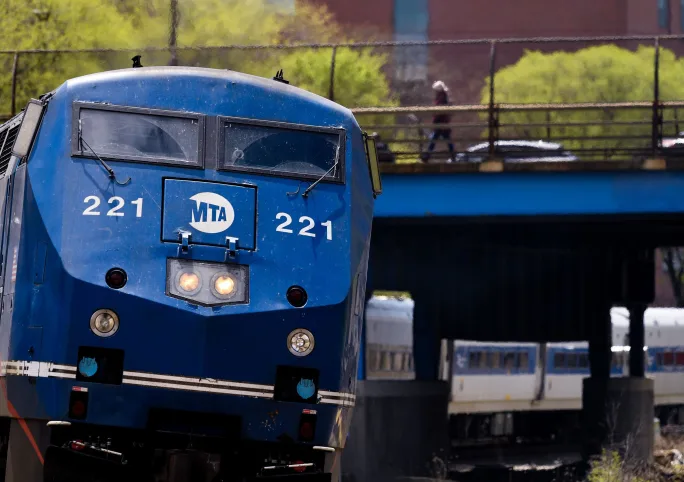
New York's train and bus network comprises the most expansive public transportation system in the country, connecting not just the five boroughs but countless cities and towns across three states — New York, New Jersey, and Connecticut.
Photo: Marc A. Hermann
Opening Options
Without continued investments in ADA-compliant transportation options, seniors risk falling prey to the loneliness and isolation epidemics that have proven detrimental to both physical and mental health.
A study by the National Center for Mobility Management found that public transportation plays a key role in overcoming social isolation for older adults who are no longer able to drive independently.
On the other hand, a lack of accessible transit “is associated with more difficulties accessing community events, health care, essential services, and social opportunities.”
Whether it’s the subway that takes seniors to their medical appointments or the Metro-North, LIRR, or PATH Trains to see their grandchildren, unimpeded access to quality transportation is a right that must not be ignored.
In the 35 years since its passage, the Americans with Disabilities Act has left an indelible mark on the lives of seniors in the New York Metro region.
Thankfully, New York is a more accessible and connected place thanks to this federal law, but the work is not yet done. Addressing the remaining obstacles will help make our region a place where everyone, regardless of age or mobility, can enjoy the connected, dynamic lives we all deserve.
Quick Answers
The Americans with Disabilities Act (ADA) is a civil rights law enacted in 1990 to prohibit discrimination against individuals with disabilities in all areas of public life, including jobs, schools, transportation, and all public and private places open to the general public.
*Summarized by AI
More Blog Posts
Improving Transit Accessibility by Offering Assistive Listening
Did you know that there are literally tens of millions of people worldwide with hearing loss, many of whom will use some form of public transit at some point?
Read More →
Driving Performance with Purpose: How I Lead One of Greyhound’s Top Teams
Safety, on-time performance, and customer experience are critical elements in intercity bus operations. But getting them right doesn’t come down to plans or protocols alone. It comes down to execution. How well your team performs on the ground, in real time, is what defines success.
Read More →
Navigating Emerging Privacy Laws: A Call to Action for Service Providers in Mass Transit
With Data Privacy Day Jan. 28, I want to spotlight a critical challenge faced by service providers in the mass transit sector: managing personal information responsibly in an era of rapidly evolving privacy regulations.
Read More →
Human Trafficking Awareness: What Public Transportation Can Do?
January is National Slavery and Human Trafficking Prevention Month in the U.S., and January 11 is National Human Trafficking Awareness Day.
Read More →
Want to Improve Transit Safety and Operations? Break Down the Silos
Retrieving and reviewing data and video can be a cumbersome process for fleet managers. Each system or tool provides a piece of the puzzle, but seeing the complete picture requires tedious manual synchronization.
Read More →
Ensuring Public Transit Cybersecurity Through Robust Protective Measures
In today’s highly connected world, cybersecurity is of utmost importance, particularly for transportation agencies overseeing transit bus systems that rely increasingly on sophisticated technologies, including the use of data analytics in traffic signal networks, to manage and operate their systems.
Read More →
How Advances in Thermal Management Revolutionize Urban Mobility
In the daily hustle and bustle of city life, transit buses serve as the backbone of urban transportation, allowing millions of city dwellers to get from point A to point B each day reliably.
Read More →
The Evolution of Bus Design
Thirty years ago, drivers not only had to drive the bus and navigate heavy traffic, but they were also responsible for tasks like supervising passenger loading and unloading, selling tickets, and providing passengers with various kinds of information, all while sitting in an often ill-fitting workstation.
Read More →
What 'Transit Safety 101' Really Means
Safety, Safety, Safety. This word is used repeatedly, and in many contexts, without most people understanding what it actually means.
Read More →
5 Ways AI Will Impact the Bus and Motorcoach Sector
The old joke that you wait ages for one bus and suddenly three come along at once may be consigned to the history bin thanks to developments in artificial intelligence (AI).
Read More →