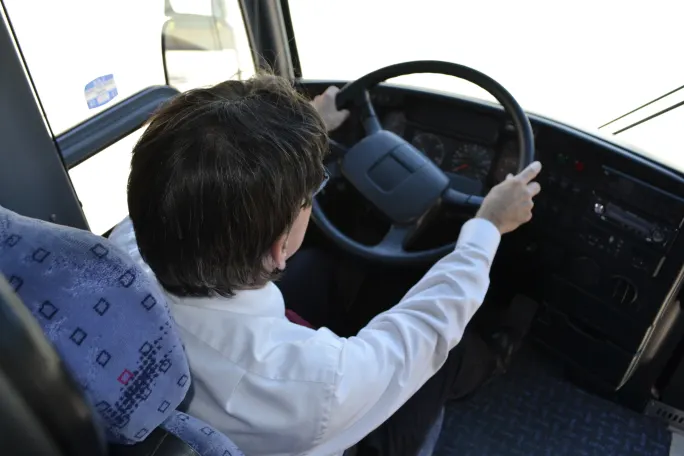
Thirty years ago, drivers not only had to drive the bus and navigate heavy traffic, but they were also responsible for tasks like supervising passenger loading and unloading, selling tickets, and providing passengers with various kinds of information, all while sitting in an often ill-fitting workstation.
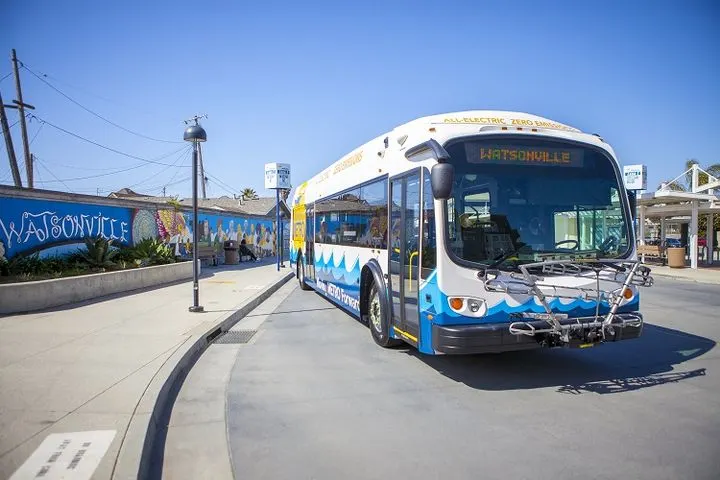
Some buses feature blind-spot monitoring systems combined with lane departure warnings and automatic emergency braking, further protecting passengers and assisting drivers.
Photo: Proterra
4 min to read
The main character from the 1970s British sitcom "On the Buses," a driver called Stan, was always trying to get off work with various hare-brained schemes.
Hardly surprising, when you learn that during this era work-related health problems forced bus drivers from the era to quit driving long before retirement age.
Ad Loading...
How the Times Have Changed
Thirty years ago, drivers not only had to drive the bus and navigate heavy traffic, but they were also responsible for tasks like supervising passenger loading and unloading, selling tickets, and providing passengers with various kinds of information, all while sitting in an often ill-fitting workstation.
Numerous studies have shown this combination of psychological and physical stresses cut many a driver’s career short.
Since then, bus design has changed significantly, and drivers are now supported by technology.
For example, as a passenger today, you can tap your travel card to buy a ticket, enjoy live travel updates on a digital screen, and even charge your devices via USB.
Modern buses are a world away from their 1990s counterparts, but it seems much of the development has focused on passengers. What about the drivers?
Ad Loading...
According to a 2024 RMT survey, drivers are still suffering at work.
In fact, four out of five drivers (78%) say their occupation caused them musculoskeletal complaints, such as back pain, shoulder pain, or neck pain.
If you ask them what the problem is, 19 out of 20 (95%) say the driver cabin could be designed in a more ergonomic way to reduce the risk of discomfort and pain.
It's no wonder the industry faces a staff shortage. The UK government is even relaxing rules on 18-year-old drivers to bolster the workforce, but what is the industry doing to make the role more attractive?
With their more basic cabin design, drivers of these older buses are at greater risk of injury, as the RMT data demonstrates.
Photo: METRO Magazine
Adding Comfort to Bus Design
Manufacturers must not be laid back when it comes to driver comfort. Workplaces, in general, must be comfortable to improve wellbeing, but with passenger safety at risk if a driver becomes distracted, it’s especially important.
Ad Loading...
Seat design, for example, has evolved over the years to improve conditions for drivers. To reduce driver fatigue and increase comfort, seats are now fully adjustable, often heated, insulated from vibration, and feature lumbar support.
Controls are also more ergonomic, with various switches grouped according to frequency of use and within easy reach while driving.
Improved Adjustability
One cabin feature that’s often overlooked is the steering column.
Unlike domestic cars, which usually have just one or two drivers, buses are regularly driven by multiple different people, so frequently require adjustments to the cabin settings.
The one-size-fits-all approach no longer applies, and today most steering columns are adjustable to some degree.
Ad Loading...
However, the RMT survey results suggest that drivers still find themselves forced into awkward postures and that there is room for improvement.
It may be that a greater range of adjustability would help.
For example, a tilting head steering column that allows the driver to fully customize both the reach and the angle of the steering wheel might help ensure a comfortable and ergonomic driving posture that minimizes shoulder, back, and neck strain.
Additionally, drivers who are pressed for time at the beginning of a shift will benefit from an electric column with a memory function, so that the steering wheel instantly adjusts to a driver’s favorite position at the touch of a button.
If connected to the seating, the seat could also adjust to their preferred position. This would eliminate the need for manual or repeated adjustments every shift, saving valuable time and ensuring maximum ergonomic benefit.
Ad Loading...
As well as reducing set-up time, a column designed to make adjusting the height and angle of the wheel quick and easy — or automatic — would ensure a comfortable posture throughout every shift, reducing the risk of fatigue and discomfort throughout the day.
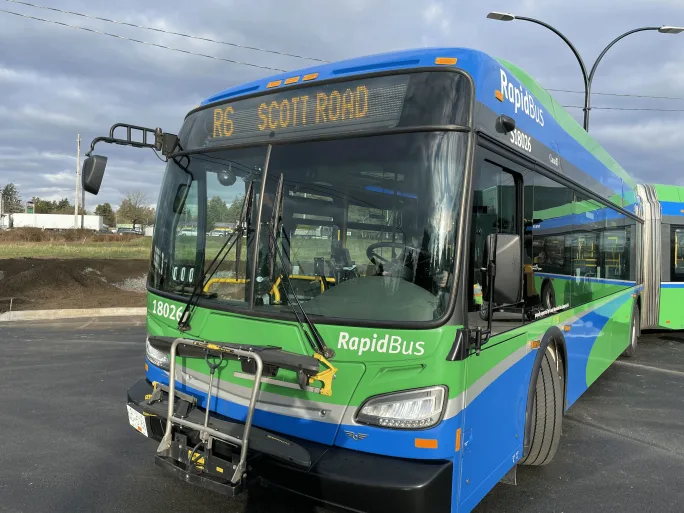
Manufacturers must not be laid back when it comes to driver comfort.
Photo: TransLink
Safe Travels
Initially intended to protect drivers from unruly passengers, the cabin in modern buses is isolated from the rest of the interior with plexiglass.
This proved very useful for protecting drivers from illness during the pandemic, and now, dedicated climate control ensures a comfortable working temperature for the driver regardless of passenger cabin conditions.
Some buses feature blind-spot monitoring systems combined with lane departure warnings and automatic emergency braking, further protecting passengers and assisting drivers.
Live information about the vehicle is clearly displayed on an LCD screen within easy eyesight of the driver.
Ad Loading...
Buses are even safer for people outside the vehicle. Zero tailpipe emissions buses, such as electric or hydrogen-fuel-cell-powered vehicles, improve urban air quality and reduce pollution.
Although many of the features described above are common for new buses, bus drivers in rural areas are often stuck driving much older buses.
With their more basic cabin design, drivers of these older buses are at greater risk of injury, as the RMT data demonstrates.
Hopefully, these buses will soon seem as out of date as some of the riskier jokes from On the Buses, and drivers will no longer be spending so much time recovering from back and neck pain.
Did you know that there are literally tens of millions of people worldwide with hearing loss, many of whom will use some form of public transit at some point?
Thirty-five years after the passage of the Americans with Disabilities Act of 1990 (ADA), the impact of this landmark piece of civil rights legislation cannot be overstated.
Safety, on-time performance, and customer experience are critical elements in intercity bus operations. But getting them right doesn’t come down to plans or protocols alone. It comes down to execution. How well your team performs on the ground, in real time, is what defines success.
With Data Privacy Day Jan. 28, I want to spotlight a critical challenge faced by service providers in the mass transit sector: managing personal information responsibly in an era of rapidly evolving privacy regulations.
Retrieving and reviewing data and video can be a cumbersome process for fleet managers. Each system or tool provides a piece of the puzzle, but seeing the complete picture requires tedious manual synchronization.
In today’s highly connected world, cybersecurity is of utmost importance, particularly for transportation agencies overseeing transit bus systems that rely increasingly on sophisticated technologies, including the use of data analytics in traffic signal networks, to manage and operate their systems.
In the daily hustle and bustle of city life, transit buses serve as the backbone of urban transportation, allowing millions of city dwellers to get from point A to point B each day reliably.
The old joke that you wait ages for one bus and suddenly three come along at once may be consigned to the history bin thanks to developments in artificial intelligence (AI).