



Increasing Ridership: A Case Study from Herzliya, Israel
A bus system overhaul and the ability to rapidly generate the most efficient schedules made it possible to double ridership in a year.
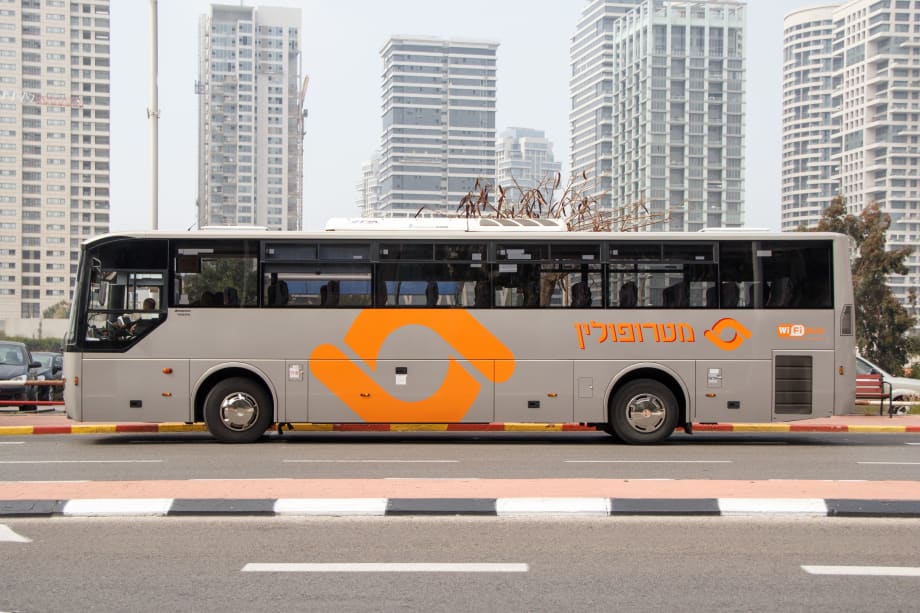
By following in Herzeliya, Israel's footsteps, other cities around the world can do the same.
Metropoline
By following in Herzeliya, Israel's footsteps, other cities around the world can do the same.
Metropoline
Public transit use may be on the decline, but luckily, there’s hope for increasing ridership. Restructuring routing and optimizing scheduling stand to overcome the main barriers to public transportation use: a lack of frequency and reliability.
A coastal Israeli city, Herzliya, has already reaped the benefits of this strategy, more than doubling ridership in a 12-month period. Here’s how they did it.
The Planning Process
The redesign of Herzliya’s bus routes began when its central bus station, which served as the depot for all routes, was demolished, forcing planners to completely restructure the system. While this was inconvenient in the short term, it ended up creating the opportunity to drastically improve the transit network’s appeal to riders and significantly boosting ridership.
Dr. Robert Ishaq, a transportation planner and researcher affiliated with the Technion — Israel Institute of Technology, was tasked with the redesign. He began by analyzing the previous routes, which looked like this:
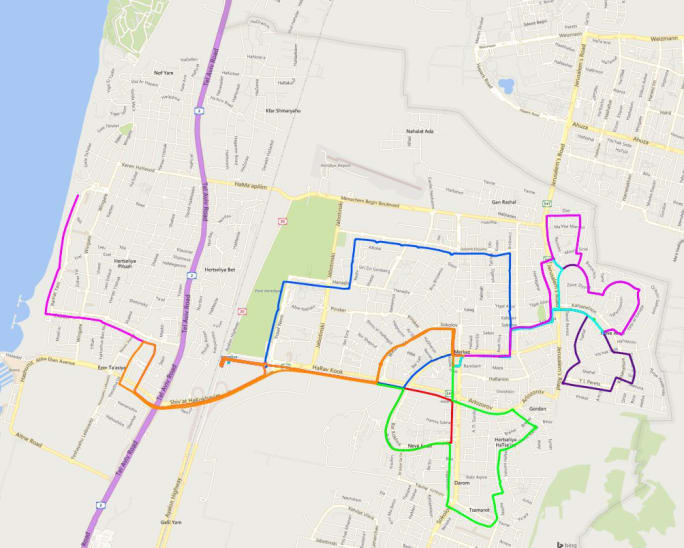
There were a few obvious issues:
Routes were unidirectional and ran in semicircles, so if you took the bus somewhere, you couldn’t take the same route to get back to your point of origin. This is both inefficient and complicated for riders.
The routes were very short, requiring lots of transfers for cross-city commuters.
The service was infrequent. Lines ran once or twice an hour, and some routes stopped operating as early as 7 p.m. or 8 p.m.
But the largest problem Dr. Ishaq identified was that while the city had evolved, its bus system hadn’t.
“As train service improved, people began going to and from the city’s train station, but few buses got there,” he said. “The high-tech employment center near the beach had begun to thrive, malls were added, land use was transformed, and the city’s population quadrupled. As a result, public transit routes weren’t serving the city’s population as they should.”
The Implementation Process
To address these problems, Dr. Ishaq began by understanding “what access public transportation should provide — to schools, cultural centers, medical centers, business centers, hospitals, as well as a rail station,” and using this information to create a map of desired lines.
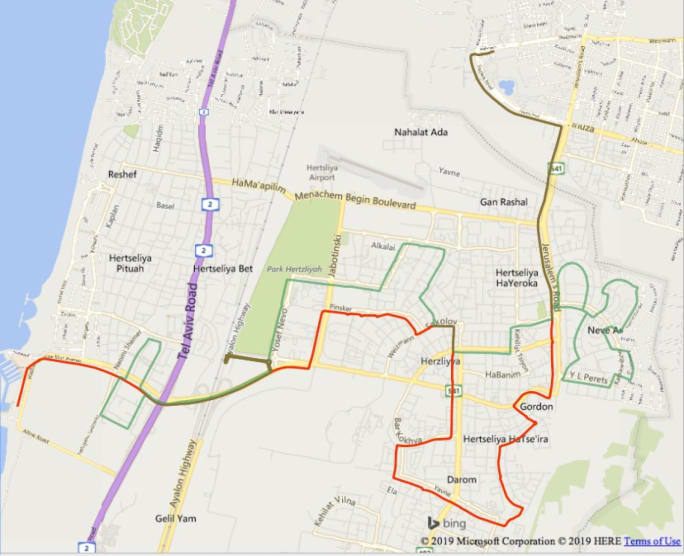
The result was a simplified service that replaced the nine short routes with two longer and more efficient cross-city routes, and increased their frequency to a minimum of every 20 minutes. The hours of operation also increased, with buses running from 6 a.m. to 11 p.m.:
The next challenge fell to Metropoline, which, as the transit system’s PTO, needed advanced technology to be able to quickly experiment with different scenarios until figuring out the most efficient schedules for drivers and vehicles and the most useful timetable for passengers.
“It took us four weeks to create an entire schedule for the city,” says Roei Fried, VP, planning and transportation, at Metropoline. “This could not have happened with older scheduling platforms. With Optibus, we can create optimized schedules quickly and efficiently, so we can compare multiple scenarios, and immediately understand the implications on our business goals, creating better shifts for drivers and savings costs.”
An overhaul of the bus system and the ability to rapidly generate the most efficient schedules made it possible for Herzilya to double its ridership in a year. Maybe, by following in the Israeli city’s footsteps, other cities around the world can do the same.
Amos Haggiag is the CEO and co-founder of Optibus.
More Bus

New York MTA Plans Largest Bus Fleet Upgrade in More Than a Decade
The agency is seeking manufacturers for 650 new CNG buses to replace aging vehicles, improve reliability, and advance its broader fleet modernization strategy.
Read More →
Building a Flexible Path to Transit Electrification
John Hroncich discusses BAE Systems’ modular and scalable approach, lessons learned from decades of real-world operations, and how agencies can identify electrification strategies that fit their fleets.
Read More →
Bus Tech Talk: Keeping Transit Technicians Ahead of the Technology Curve
LA Metro’s Obed Mejia discusses technician training, evolving maintenance technology, fleet replacement, and strategies for getting the most out of today’s transit fleets.
Read More →
Biz Briefs: RIPTA Unveils New Frontrunners, Clevland RTA Adds New Siemens, and More
In METRO's latest installment, we take a look at recent news from Siemens, Prevost, Dodge, and more partnerships making headlines across the transportation sector.
Read More →
People Movement: Holly Arnold Joins Transdev and More
In this edition, we also cover recent appointments and announcements at Pace, CamTran, MCI, and more, showcasing the individuals helping to shape the future of transportation.
Read More →
The High Cost of Transit Buses: Industry Leaders Look to Procurement Reform
Transit leaders and policymakers examine how standardized bus designs, streamlined procurement, and predictable funding could help agencies stretch budgets and deliver better service.
Read More →
The Business Voice Behind Public Transportation
As chair of APTA’s Business Members Board of Governors, Ray Melleady explains how more than 850 business members are partnering with transit agencies to advance funding, innovation, and industry-wide collaboration.
Read More →
From Surviving to Thriving: Building Stronger Transportation Organizations
Bus Business Consultants founder Brian Dickson shares lessons on leadership, organizational health, and creating options for long-term success in a changing transportation industry.
Read More →
Finding the ‘Happy Medium’: Optimizing Maintenance Without Sacrificing Reliability
The key to maintenance optimization isn’t doing less work—it’s doing the right work at the right time on the right assets.
Read More →
LA Metro, City of West Hollywood, and Partners Advance Smarter Bus Lane Enforcement
The award-winning partnership combines AI-powered detection with human oversight to improve bus reliability, accessibility, and enforcement efficiency.
Read More →