



Real-Time Information: Now Arriving
To expand customer service and ridership, transit properties are investing in high-tech methods of providing passengers with real-time information via displays, annunciator systems, the Internet and e-mail.

Taking the bus in Williamsport, Pa., is a lot more comfortable since the new Transit and Trade Center opened there three years ago. Home to City Bus, the center’s construction also included the installation of mobile data terminals (MDT) on the city’s fleet of 28 buses. Now run-ups are prevented, and patrons can wait inside, out of the cold and wet, until audio and visual announcements let them know that their bus has arrived at the terminal. According to John Kiehl, assistant general manager of City Bus, real-time arrival information is only the first step in a full-fledged automatic vehicle locator (AVL) rollout that could include stop announcements, Web-based tracking and vehicle diagnostics. Avail Technologies, the vendor on City Bus’ MDT system, also worked with Acadia National Park, in Bar Harbor, Maine, on its Island Explorer Project. This federally funded initiative was done in partnership with the Department of the Interior as a pilot program for the National Park Service. Vehicle tracking, signage and announcement, passenger counting and real-time arrival information are available for all 17 buses in the fleet, on all seven routes. Reaction to the global positioning system (GPS)-based technology has been “overwhelmingly positive, from drivers, dispatchers and passengers,” says Paul Murphy, operations manager for Down East Transportation, which provides transit in the park. Like City Bus, Island Explorer has a service agreement with Avail, which provides for hardware maintenance and remote troubleshooting. The vendor also helps the park ramp up each summer, when its seasonal service begins in June. That process will include rolling out a Web-based application this coming season. L.A. makes the jump to GPS The Los Angeles County Metropolitan Transportation Authority (MTA) is also making the jump to GPS. MTA’s Metro Rapid service already includes real-time arrival information at bus stations, information that is communicated from transponders mounted beneath buses to loops embedded in the pavement along the two corridors it serves. That project, pursued in conjunction with Motorola and Orbital, has been so successful that Ed Scannell, an MTA spokesman, says that ridership on those lines has increased by 40% since the advent of Metro Rapid. As Metro Rapid expands to include more routes (27 are planned by 2008), local bus service is also benefiting from new tracking technologies. With a $99.7 million investment of local and federal funds, MTA, Motorola and Orbital plan to install GPS-driven AVL equipment on MTA’s fleet of buses beginning this summer, for launch in December. The systems are part of a larger radio overhaul that will update and replace MTA’s current equipment. John Drayton, manager for vehicle technology at the MTA, anticipates advantages for customers, operators and management. Aside from relaying stop announcements to riders, the system will also track passenger loads, farebox recovery and route and schedule adherence. Information can be gathered and published daily, which Drayton says allows for almost real-time response. “If you can’t measure it, you can’t manage it,” he says. MTA anticipates operational savings of 3% to 5%, as well as a reduction of 65% to 70% in radio traffic, in favor of instant messages. The program, which MTA is calling an Advanced Transportation Management System, will also include arrival information displays at bus stops and onboard video surveillance, with an option to integrate vehicle help systems. Frances Yuhas, national sales manager for Orbital, says that these systems are popular with transit agencies and the Federal Transit Administration alike. That is because they benefit customers and managers, contribute to Americans with Disabilities Act compliance and automate collection of required data, such as passenger counts. Making systems simpler Jeff Cawthorne, technical lead at WebLinc LLC, developed PATHVision™ for the Port Authority of New York and New Jersey’s PATH system with ease of maintenance in mind. After the Port Authority lost two stations in the attack on the World Trade Center on Sept. 11, trains were running and PATHVision had been reconfigured within 24 hours. On a more routine basis, the ONTIME system tracks trains using signaling systems from the 1960s, and can be integrated with new signaling hardware. According to Cawthorne, the Microsoft Windows-based system of more than 50 servers and 255 monitors delivering arrival information in Spanish and English, news, weather and advertising, can be maintained in-house by a single technician. Customer service improvement was the impetus for exploring arrival information systems, says Henry Rosen, manager of system technology and fare collection for PATH. Tapping the power of the Web The Washington Metropolitan Area Transit Authority (WMATA) also tied into existing signaling equipment for its latest customer service innovation, eAlert. At an annual cost of $35,000 to the system, transit customers can be alerted within two minutes of any significant delay. Syd Garris, electronic communications media manager at WMATA, says that when the idea was first conceived, turnkey vendors estimated its cost at $1.5 million. Garris reports that more than 13,000 subscribers have signed up for the free service since its inauguration at the end of January. The alerts are customized according to WMATA’s five light rail lines and five different travel periods. The program was developed in-house, but an outside provider, MIS Sciences, sends the messages. Garris says that this relationship resolves two problems anticipated by WMATA: an unknown number of potential subscribers and the need for rapid notification. In-house, the challenge has been to craft messages that are succinct enough for receipt on cell phones and PDAs. Disruptions of more than 10 minutes are noted manually by operations personnel in the normal course of their duties, and alerts are then issued automatically, Garris says. King Country Metro in Seattle is using the Web and e-mail to keep transit customers aware of arrival information as well as unforeseen delays. Dan Overgaard, supervisor of systems management and analysis at King County, sees those services as part of a larger move toward a more intelligent bus. Overgaard says that the system was developed in the mid-1990s in response to operator concerns about safety and the agency’s desire to increase communication between vehicles and dispatch. AVL was installed on the fleet’s 1,000 active buses as part of a $15 million radio replacement program in 1993. The system pre-dates GPS, using transmitted odometer data matched to existing patterns. The development of data applications came from the University of Washington, using grant money obtained by the school. The Metro’s Website, transit.metrokc.gov, includes My Bus, which provides estimated arrival times, and Bus View, which allows riders to call up particular areas of the city for a graphic representation of the progress of individual buses. Customers may also set an alarm to go off when their bus is a certain distance away. E-mail alerts are used in cases of large disruptions, such as adverse weather and sporting events. Safety, the original concern, was addressed by the installation of a silent alarm on vehicles. Overgaard credits vehicle tracking with faster emergency response time, a benefit also noted by other properties, and a significant part of why transit agencies invest in these programs. Not only does tracking technology let emergency personnel pinpoint a vehicle’s location in case of an emergency, operators often also have increased access to dispatchers. MTA’s Drayton estimates that some operators must wait minutes to get through to dispatch by radio. “You have significant issues when you put operators out there with passengers. We expect this system to be 100% better,” he says. Brainy bus shelters Real-time bus arrival information, with voice and visual display, can be transmitted to bus shelters without much difficulty these days, says Pat Amlinger, president of Daytech Shelters. Providing passengers with other communication options has benefits that could also boost ridership. For example, Daytech’s shelters can be retrofitted or factory-equipped with two-way communication systems that allow a customer to call authorities in the event of a crime or other emergency. A phone or other communication device at the shelter can be connected to the transit agency’s dispatch center or to the police. “You’ve got real-time information, which is a given, but now you have safety and security for the rider,” Amlinger says. Improvements like these show no signs of slowing down. New technologies are being developed on a near constant basis, according to Dan Kelleher, business area director of Mark IV/Luminator. The company’s embedded PC system keeps communications separate from other functions because of the rapid evolution of products in that sector. Kelleher cites difficulty in integrating new communications products with older systems as one of the biggest challenges in bringing fleets into a transit-tracking program.
More Management
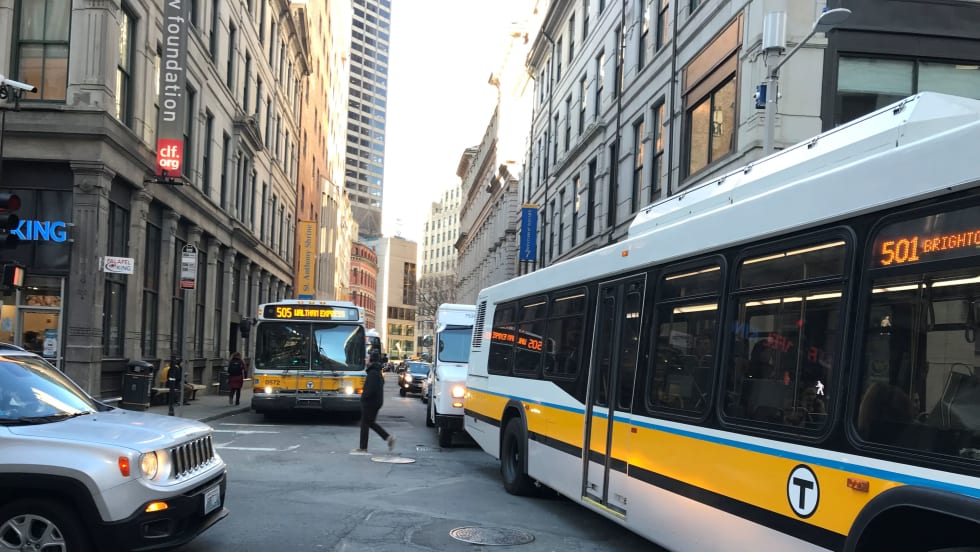
MBTA Rolls Out Pilot Programs to Cut Costs, Simplify Travel
Three new fare pilots — including unlimited two-hour transfers, reduced express bus fares, and free transit for eligible seniors — will launch this fall as Massachusetts extends popular commuter rail discounts through November.
Read More →
FTA Opens $610 Million Funding Opportunity for Bus Infrastructure Projects
The latest Notice of Funding Opportunity provides transit agencies with funding for bus facilities, fleet modernization, and low- and no-emission vehicles, with applications due September 21.
Read More →
Biz Briefs: STV teams with Amtrak, Motorcoach Operators Boost Fleet and Land Contracts, and More
From manufacturers and suppliers to transit agencies and motorcoach operators, these updates offer a snapshot of the projects, partnerships and business moves driving the industry forward.
Read More →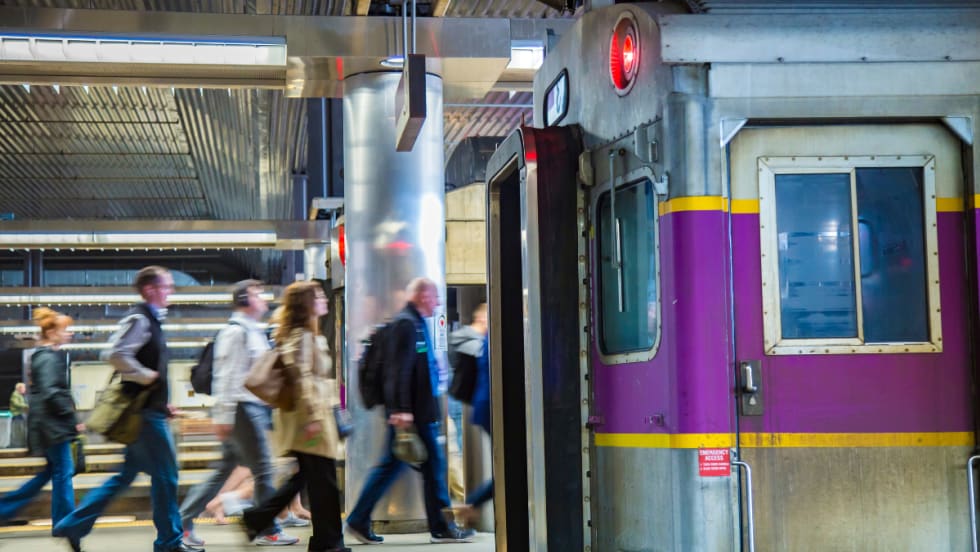
Massachusetts Approves $530M to Strengthen MBTA Operations, Infrastructure
The funding package targets operating stability, capital improvements, and fare affordability, offering a model for agencies navigating long-term funding challenges.
Read More →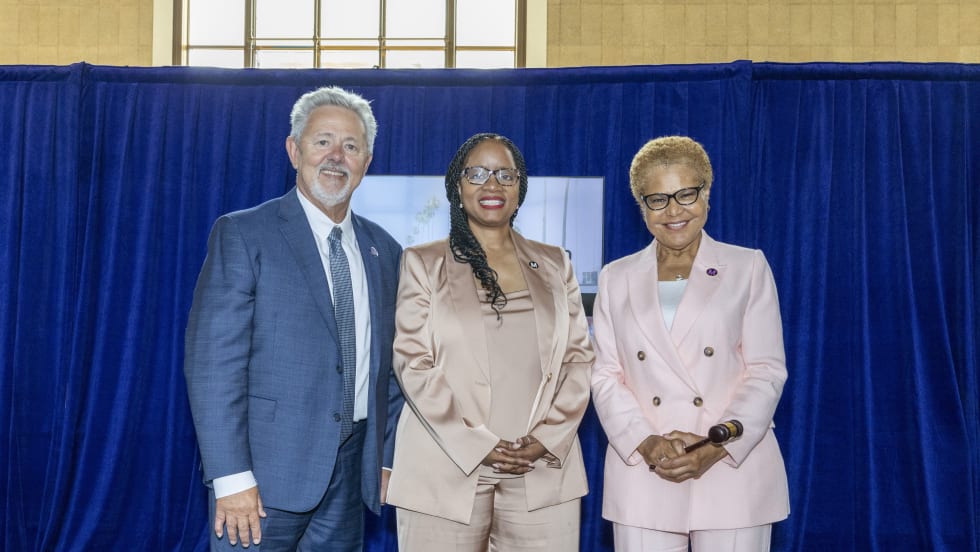
LA Metro Marks Banner Year, Sets Ambitious Goals for New Fiscal Year
Incoming LA Metro Board Chair and Los Angeles Mayor Karen Bass joined outgoing Board Chair Fernando Dutra and LA Metro CEO Stephanie Wiggins to review accomplishments from fiscal year 2026, which included the opening of new rail extensions, advancement of major transit projects, expanded safety programs, and new rider amenities.
Read More →
DART Taps Nathaniel P. Ford Sr. as Next President/CEO
Since 2012, Ford has served as the CEO of the Jacksonville Transportation Authority
Read More →
AC Transit’s Cecil Blandon on Building the Next Generation of Transit Maintenance Leaders
The agency’s maintenance chief discusses leadership, workforce development, zero-emission technology, and preparing technicians for the future of public transportation.
Read More →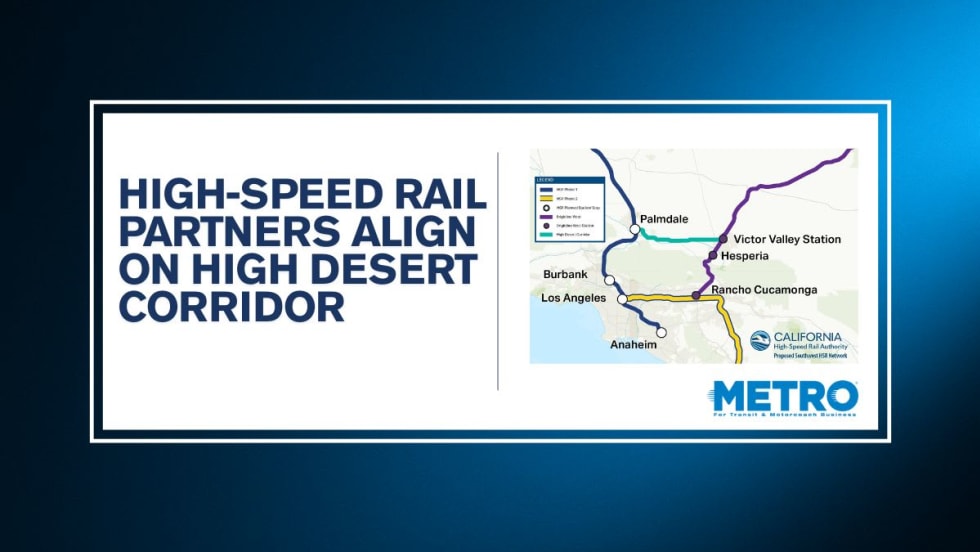
California High-Speed Rail Authority Signs MOU to Advance High Desert Corridor
The agreement deepens collaboration between the California High-Speed Rail Authority and the High Desert Corridor Joint Powers Agency, supporting design integration, cost savings, and faster delivery of a key Southern California rail link.
Read More →
Building the Next Generation of Transit Technology
In this edition of METROspectives, Luminator CEO Magnus Friberg discusses the company's transformation, the growing role of AI and software, and what's next for transit technology.
Read More →
How Data, Strategy, and Community Engagement Are Reshaping Transit
In this edition of METROspectives, strada360 CEO Steve Lassey discusses how transit agencies can better align planning with operations, leverage data to improve decision-making, and build public trust as they prepare for the future of mobility.
Read More →