



Evolving video tech to solve the toughest fleet problems
Recorded video can be organized with tags that are associated with hardwired triggers — like when a ramp is deployed — or cloud-based triggers from third-party software, like collision avoidance systems.


GCRTA
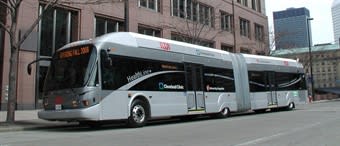
GCRTA
It’s like a mantra that loops continuously through the minds of transit operators — safety, security, safety, security. These two broad areas of concern remain at the forefront of an operator’s daily thinking as they take people to and from the places they need to be.
Video technology has come a long way in helping identify and bring definition to safety and security issues, which makes them easier to address and mitigate. But as much as CCTV has been a welcome tool in the fleet operator’s arsenal, it can be a hassle to manage, and a burden on operations to search and locate that one clip when and where it’s needed.
Video telematics, which captures video triggered by a driving event like hard braking or a sudden swerve, has made obtaining critical clips a bit more convenient, serving up video that’s associated with operator behavior, and providing data-backed insights that will help an operator improve. That data — like time of day, location, speed, etc. — captured from an event adds a layer of actionable information and, over time, helps managers identify important trends.
But picking up and delivering passengers safely and without incident isn’t always within an operator’s control. There are trips and falls (boarding and exiting the bus), criminal activity, changing road conditions, and so on.
Think about the costliest incident in your agency’s history. Now, think about how different your incident management process would have been if you had a time machine to transport you back to the precise moment when the incident happened. What would you look for? What questions would you like to have answered?
Depending on the nature of the incident, you may wish to ask: Did the bus remain at rest while that passenger boarded? How was the bus positioned? Were the interior lights functional at the point of the assault? What were the weather and road conditions like? Was the operator alert and engaged when entering the intersection? Was a proper pre-trip inspection performed?
Lytx, the company that makes the DriveCam video telematics program, has a new program called Lytx Video Services to help you answer these questions — and so many more — with incredible efficiency. It works in conjunction with the market-leading Lytx DriveCam safety program to link up to 12 third-party NTSC or PAL CCTV cameras for maximum visibility in and around the vehicle.
Lytx Video Services has an on-board DVR that holds approximately 100 hours of video with on-demand access to that video, both in the moment, and up to a week afterward.
Recorded video can be organized with tags that are associated with hardwired triggers — like when a ramp is deployed — or cloud-based triggers from third-party software, like collision avoidance systems. Finding video with tags makes it easy to search and find the desired video clip. For example, if a user needs to find all of the passenger door activities that took place during a 15-minute period to determine if a slip and fall claim was valid, they would simply search the video by the door-open tag during the designated time frame and select the camera angles that would show exactly what happened. Clip length is completely customizable up to 20 minutes per clip.
That means managers can get to the bottom of the story faster than ever.
If you’d like to see the next generation in video technology to help protect your transit fleet and improve operational efficiency, come see a demonstration of Lytx Video Services during the APTA EXPO at Booth #3303.
More New Mobility

From Hardware to Digital Partner: Luminator Charts Its Next Chapter
CEO Magnus Friberg discusses Luminator’s shift toward becoming a digital partner, the growing importance of software and interoperability, and how AI can help agencies improve operations and passenger experience.
Read More →
Biz Briefs: Alstom Lands Canadian Contract, LYT to Supply California TSP, and More
In METRO's latest installment, we take a look at recent news from Complete Coach Works, Beep, FlixBus, and more partnerships making headlines across the transportation sector.
Read More →
CharterUP’s Armir Harris on Technology, AI, and the Future of Group Mobility
In a recent episode of METROspectives, CharterUP Founder/CEO Armir Harris discussed the company’s evolution from an online charter bus marketplace into a technology platform supporting public- and private-sector mobility and much more.
Read More →
Jacksonville’s NAVI Project Charts a New Course for Autonomous Public Transportation
Through its NAVI program, JTA is showing how autonomous vehicles, intelligent infrastructure, and coordinated operations can work together to deliver everyday public transportation.
Read More →
Biz Briefs: Luminator Marks Milestone and More
From manufacturers and suppliers to transit agencies and motorcoach operators, these updates offer a snapshot of the projects, partnerships and business moves driving the industry forward.
Read More →
New Tricks for Old Bureaucracies: Joshua Schank on Making Transit Innovation Stick
Former LA Metro Chief Innovation Officer Joshua Schank discusses why good ideas aren't enough, how transit agencies can overcome resistance to change, and why today's challenges demand more innovation.
Read More →
How DART's GoPass Is Redefining Regional Mobility
Serving 14 transit agencies, GoPass simplifies multimodal travel by allowing riders to plan, pay for, and manage an entire trip through one app.
Read More →
Biz Briefs: OCTA Taps Clean Energy for Hydrogen Station, Stadler to Supply Via Rail Vehicles, and More
From manufacturers and suppliers to transit agencies and motorcoach operators, these updates offer a snapshot of the projects, partnerships and business moves driving the industry forward.
Read More →CharterUP Expands Into New Mobility and Autonomous Transportation
Vice President of New Mobility Stephen Joos discusses how CharterUP is leveraging its nationwide transportation network, technology platform, and autonomous vehicle partnerships to expand into workforce mobility, campus shuttles, and transit solutions.
Read More →
METRO Magazine Announces 2026 Innovative Solutions Awards Winners
Projects Recognized for Advancing Mobility Through Technology, Accessibility, Workforce Innovation, and Operational Excellence
Read More →