
Outstanding Public Transportation System Achievement
More Than Four Million, Fewer Than 20 Million Annual Passenger Trips


 MENU
MENU SEARCH
The agency covers four major cities, spanning 2,300 square miles and provides local, express, commuter, and bus rapid transit services.
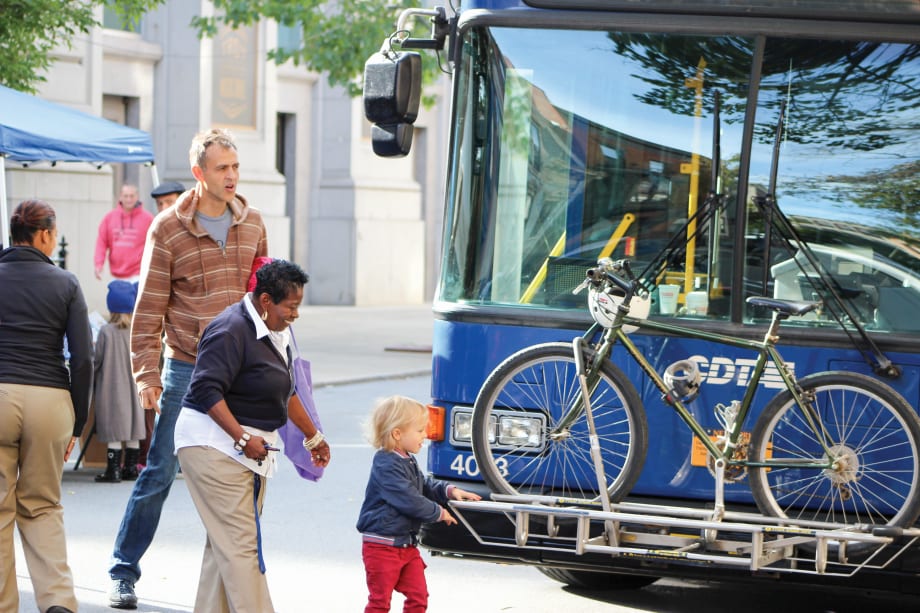
The agency is providing better service options to travel throughout the region and even more will take shape over the next year. Photo: CDTA
The agency is providing better service options to travel throughout the region and even more will take shape over the next year. Photo: CDTA
The Capital District Transportation Authority (CDTA), based in Albany, N.Y., is a progressive and innovative company that is changing the way people think about transit in New York’s Capital Region. The agency covers four major cities, spanning 2,300 square miles and provides local, express, commuter, and bus rapid transit services (BRT). It also operates a bikeshare program and oversees the taxi cab industry in the region. CDTA owns and operates two train stations, and employs 685 people who work to deliver a transit system that transports 60,000 customers each weekday.
“Our Board of Directors has developed an Innovation Platform of activities that have dramatically improved our service network, reduced operating costs, and sharpened our community image,” said David M. Stackrow, CDTA Board Chairman.
The plan is highlighted by innovative projects like Upstate New York’s first and only BRT service and the agency’s successful Universal Access rider program.
“The results have been outstanding with CDTA ridership increasing by 25% over the past six years, setting our all-time ridership records in back-to-back years along the way,” Stackrow said.
This ambitious vision has also resulted in CDTA taking on new challenges, pursing new opportunities, and serving as a leader on regional programming to enhance mobility. The agency is providing better service options to travel throughout the region and even more will take shape over the next year. Additionally, CDTA’s regional bike-share program, CDPHP Cycle!, launched this summer and they are continuing work on the regionalization of taxi service in four counties. These programs complement CDTA’s route network and the introduction of ridesharing by adding choices to customer travel routines.
“We are excited by the potential of our Navigator smart-card and mobile ticketing system, which is being positioned to offer seamless payments across multiple travel modes,” Stackrow said.
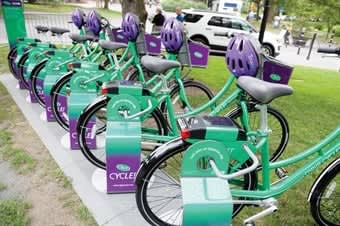
More than 2,000 members have taken 7,615 rides on the agency’s regional bikeshare program, CDPHP Cycle!, since its July 2017 launch. Photo: CDTA
All of this is possible thanks to a forward-thinking business plan that directs day-to-day activities. Outstanding financial practices, strong,and effective advocacy for improving transit services, enhanced partnerships that increase ridership and revenue, and consistent community outreach are at the core of the operation and the focus of the Board.
CDTA is poised to do more for its customers, partners, and the region.
“Our services carry more people than ever before, our route network is primed for expansion and we are going to add more BusPlus BRT service to the region’s busiest roadways,” Stackrow said. “Our equipment and facilities are modern and attractive, while our employees are committed to our innovation platform.”
It’s the dedication and commitment of the Board of Directors, its employees, and customers that has put CDTA in a position to offer this wide menu of mobility options to the community and position the agency as a regional leader, he added.

CEO Magnus Friberg discusses Luminator’s shift toward becoming a digital partner, the growing importance of software and interoperability, and how AI can help agencies improve operations and passenger experience.
Read More →
In METRO's latest installment, we take a look at recent news from Complete Coach Works, Beep, FlixBus, and more partnerships making headlines across the transportation sector.
Read More →
In a recent episode of METROspectives, CharterUP Founder/CEO Armir Harris discussed the company’s evolution from an online charter bus marketplace into a technology platform supporting public- and private-sector mobility and much more.
Read More →
Through its NAVI program, JTA is showing how autonomous vehicles, intelligent infrastructure, and coordinated operations can work together to deliver everyday public transportation.
Read More →
From manufacturers and suppliers to transit agencies and motorcoach operators, these updates offer a snapshot of the projects, partnerships and business moves driving the industry forward.
Read More →
Former LA Metro Chief Innovation Officer Joshua Schank discusses why good ideas aren't enough, how transit agencies can overcome resistance to change, and why today's challenges demand more innovation.
Read More →
Serving 14 transit agencies, GoPass simplifies multimodal travel by allowing riders to plan, pay for, and manage an entire trip through one app.
Read More →
From manufacturers and suppliers to transit agencies and motorcoach operators, these updates offer a snapshot of the projects, partnerships and business moves driving the industry forward.
Read More →Vice President of New Mobility Stephen Joos discusses how CharterUP is leveraging its nationwide transportation network, technology platform, and autonomous vehicle partnerships to expand into workforce mobility, campus shuttles, and transit solutions.
Read More →
Projects Recognized for Advancing Mobility Through Technology, Accessibility, Workforce Innovation, and Operational Excellence
Read More →