



L.A. Metro unveils 'hybrid package' to continue service during COVID-19
Both bus and rail service will be adjusted that will result in slightly less service than offered on the typical weekday but more than on a typical weekend.

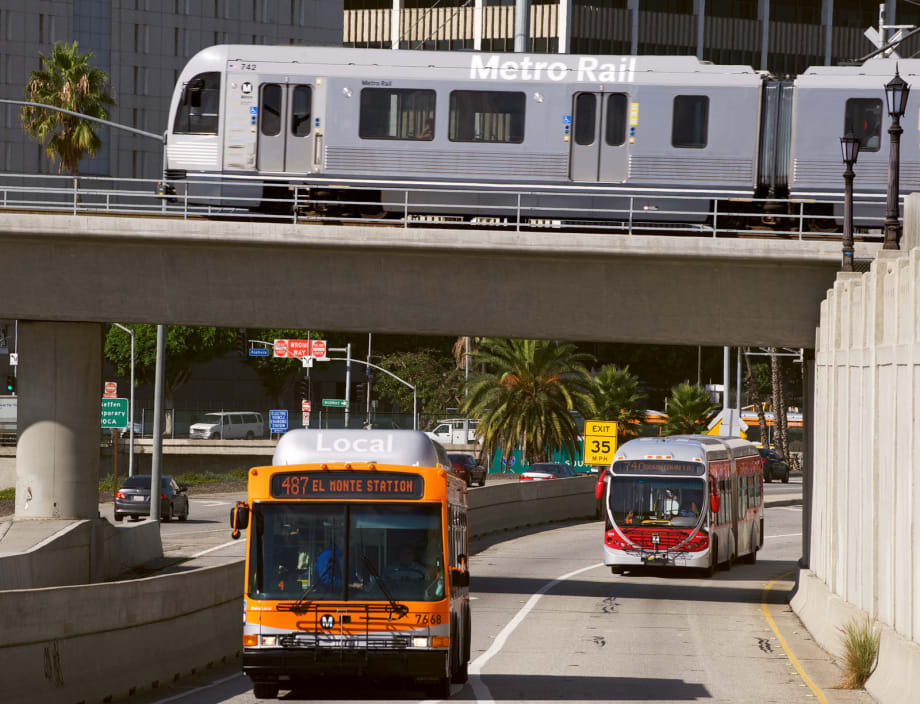
LA Metro
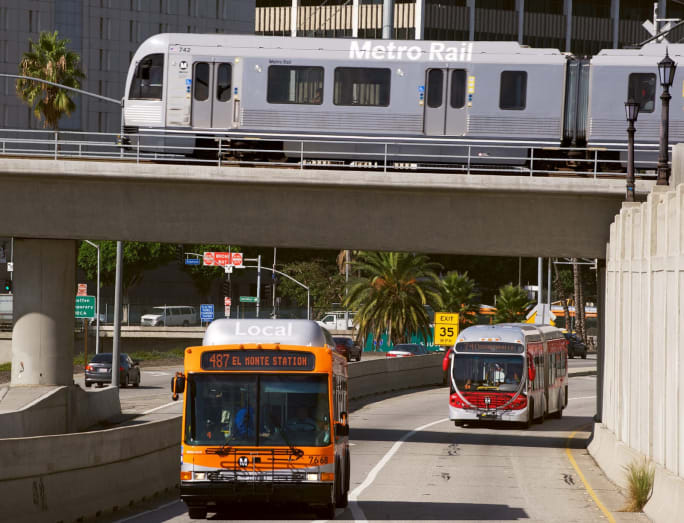
The agency is dubbing its combined approach their “hybrid service package.” LA Metro
Los Angeles County Metropolitan Transportation Authority (Metro) CEO Phillip A. Washington outlined aggressive steps taken by Metro to continue to provide transit service and to safeguard the riding public and Metro’s workforce in response to the current COVID-19 crisis.
With the state of California and local officials announcing “stay at home” orders on Thursday, Metro officials reiterated that bus and rail service will continue but with service adjustments to reflect on-the-street reality of lower demand. Both bus and rail service will be adjusted that will result in slightly less service than offered on the typical weekday but more than on a typical weekend. The agency is dubbing its combined approach their “hybrid service package.”
As a result, some bus trips may be canceled, and all rail lines will run slightly less frequently during peak hours. Late night service on rail lines on Friday and Saturday nights will also be adjusted. Service could be adjusted further as the situation with the virus evolves.
Metro is the third busiest transit system in the U.S. and ridership earlier this week was about 50% to 60% lower than normal due to school closings, people staying home from work and the closure of restaurants, bars, and entertainment/sporting venues. The agency still saw more than 550,000 daily boardings on both Monday and Tuesday this week — compared to about 1.2 million average weekday boardings in February.
“Metro is not considering halting transit services at this time,” said Washington. “We know our services are extremely important to thousands of people in the most populous county in the United States, including first responders, hospital workers, and essential county and city workers. I’ve been in the transit industry for two decades and was in the U.S. Army for 24 years before that and though this challenge is unique, and we are operating with an abundance of caution, we are not operating from a position of fear. We understand the devastating effects COVID-19 is having and Metro will do everything it can to ensure we get through this.”
In addition to adjusted rail service, Metro has made other changes this week, including:
Metro will begin installing and increasing sanitation stations and access to hand sanitizer at major transit stops and stations to allow riders to wash their hands, one of the best safeguards against the COVID-19 virus. Metro is also exploring and researching how to equip buses and trains with hand sanitizer dispensers to help control the virus.
Metro has already strengthened its cleaning regimes within buses, trains, stations, and facilities and all nonessential Metro employees are now working from home.
Metro’s Headquarters building was closed to the public effective Wednesday, March 18, until further notice. All Metro Board of Directors meetings in March were also cancelled with all agenda items pushed to the next meeting.
Metro continues to follow the orders and recommendations from the L.A. County Department of Public Health and the Center for Disease Control (CDC). Metro’s primary direction to its employees is to protect themselves and others through good personal hygiene practices, work/social spacing and other precautions. More vulnerable segments of staff have already been directed to stay at home and service adjustments will allow more staff to care for their families.
There have been no reported cases of COVID-19 being contracted on Metro, nor is Metro aware of any staff member who has contracted COVID-19. Metro has nearly 11,000 employees.
Metro has also activated its Emergency Operations Center and established an Incident Management Team to work with Metrolink, Amtrak, Access Services, and Union Station. Metro is also in daily contact with the L.A. County Department of Public Health as well as city and county of Los Angeles emergency officials.
More New Mobility

From Hardware to Digital Partner: Luminator Charts Its Next Chapter
CEO Magnus Freiberg discusses Luminator’s shift toward becoming a digital partner, the growing importance of software and interoperability, and how AI can help agencies improve operations and passenger experience.
Read More →
Biz Briefs: Alstom Lands Canadian Contract, LYT to Supply California TSP, and More
In METRO's latest installment, we take a look at recent news from Complete Coach Works, Beep, FlixBus, and more partnerships making headlines across the transportation sector.
Read More →
CharterUP’s Armir Harris on Technology, AI, and the Future of Group Mobility
In a recent episode of METROspectives, CharterUP Founder/CEO Armir Harris discussed the company’s evolution from an online charter bus marketplace into a technology platform supporting public- and private-sector mobility and much more.
Read More →
Jacksonville’s NAVI Project Charts a New Course for Autonomous Public Transportation
Through its NAVI program, JTA is showing how autonomous vehicles, intelligent infrastructure, and coordinated operations can work together to deliver everyday public transportation.
Read More →
Biz Briefs: Luminator Marks Milestone and More
From manufacturers and suppliers to transit agencies and motorcoach operators, these updates offer a snapshot of the projects, partnerships and business moves driving the industry forward.
Read More →
New Tricks for Old Bureaucracies: Joshua Schank on Making Transit Innovation Stick
Former LA Metro Chief Innovation Officer Joshua Schank discusses why good ideas aren't enough, how transit agencies can overcome resistance to change, and why today's challenges demand more innovation.
Read More →
How DART's GoPass Is Redefining Regional Mobility
Serving 14 transit agencies, GoPass simplifies multimodal travel by allowing riders to plan, pay for, and manage an entire trip through one app.
Read More →
Biz Briefs: OCTA Taps Clean Energy for Hydrogen Station, Stadler to Supply Via Rail Vehicles, and More
From manufacturers and suppliers to transit agencies and motorcoach operators, these updates offer a snapshot of the projects, partnerships and business moves driving the industry forward.
Read More →CharterUP Expands Into New Mobility and Autonomous Transportation
Vice President of New Mobility Stephen Joos discusses how CharterUP is leveraging its nationwide transportation network, technology platform, and autonomous vehicle partnerships to expand into workforce mobility, campus shuttles, and transit solutions.
Read More →
METRO Magazine Announces 2026 Innovative Solutions Awards Winners
Projects Recognized for Advancing Mobility Through Technology, Accessibility, Workforce Innovation, and Operational Excellence
Read More →