



Motorcoach survey: Business solid, opportunities for operators await
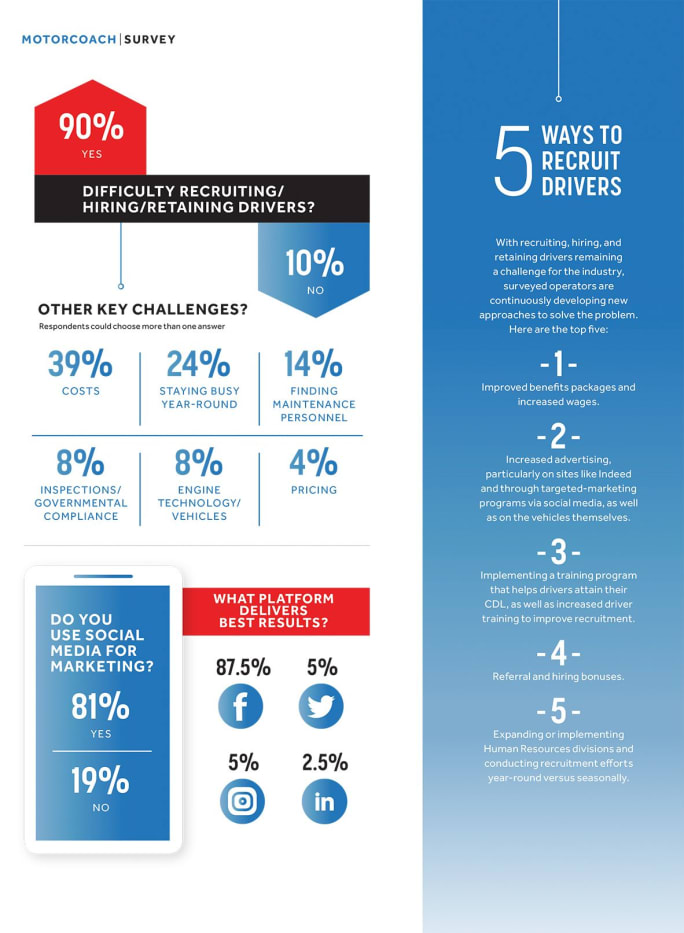
While 82% report that business is up or at least flat, the opportunities for further success for many continue to depend on the ability to identify and retain drivers, as well as control costs.
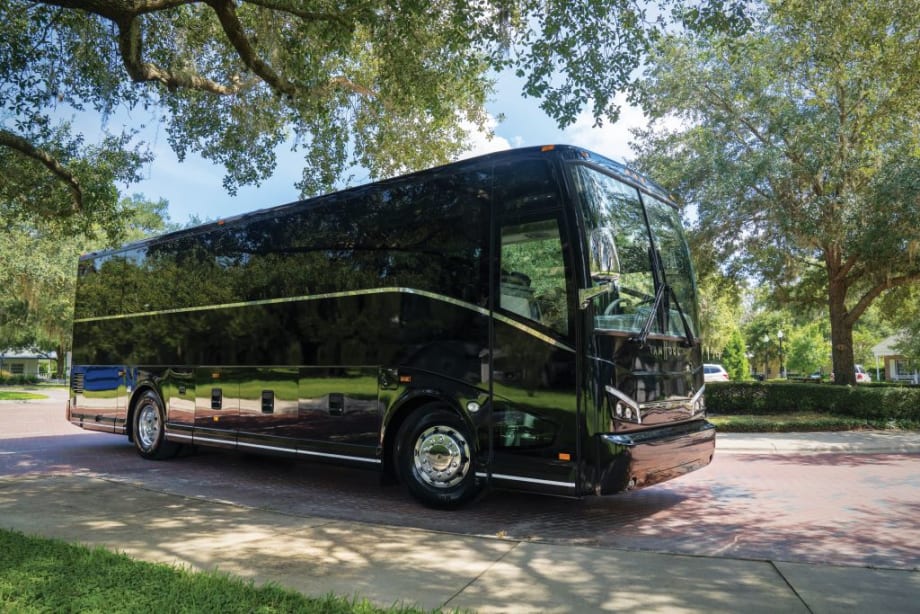
This year's survey is sponsored by ABC Companies and ABC Parts.
ABC Companies
This year's survey is sponsored by ABC Companies and ABC Parts.
ABC Companies
Recruiting, hiring, and retaining drivers and containing soaring costs continue to be the biggest challenges facing motorcoach operations today, according to respondents to this year’s METRO Motorcoach Survey. Participants range from operations with as many as 618 motorcoaches to as little as two, while also capturing operations that perform a broader range of services.
To address growing costs, operators are looking for ways to increase operational efficiencies, better monitor expenses, prudently raise prices, and increase utilization, especially during winter months. Interestingly, those rising costs are sometimes associated with efforts to recruit new drivers, with many operators saying they are paying more to market and advertise for their open positions, or even create or expand Human Resources divisions or implement a CDL training department.While cost is the top issue outside of the driver problem, reported by 39% of respondents, other issues facing operations throughout North America include staying busy year-round, finding maintenance personnel, and inspections/governmental compliance.
Many operations specifically cited the rising cost of insurance and its impact on operating a financially sound business. To address this, respondents are increasing driver training programs, shopping for lower rates, and looking for ways to reduce loss ratios.
Another growing issue mentioned in this year’s survey is the difficulty in finding trained maintenance personnel. Ways operations have been trying to fill this void include increased recruiting efforts, particularly looking beyond just those with bus experience, and training current staff to diagnose and fix issues.
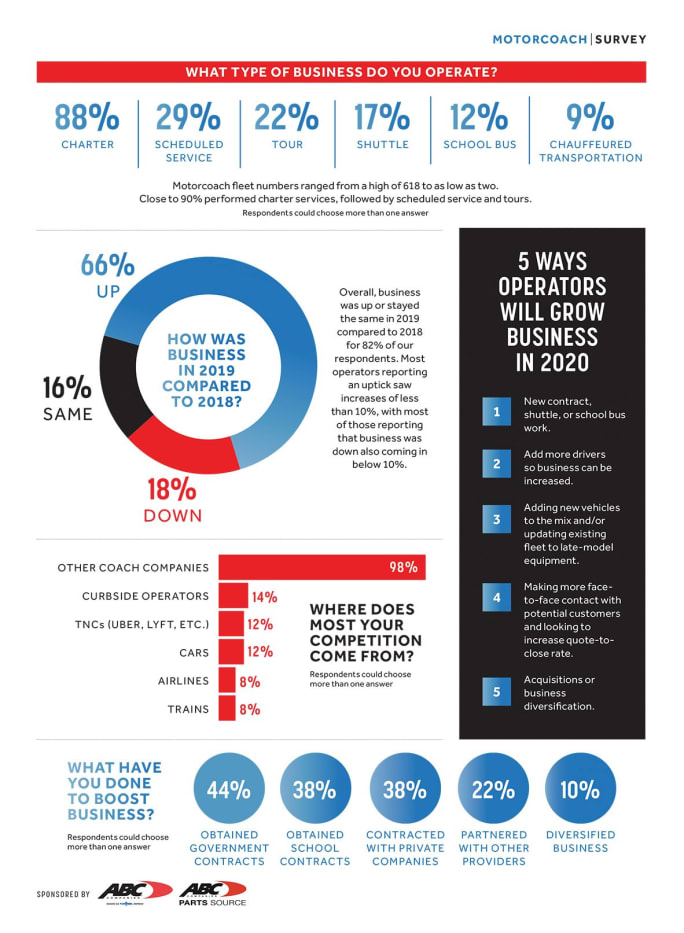
Overall, 82% of operators around the U.S. and parts of Canada reported business was either up or even in 2019, compared to the year previous.
Peter Pan Bus Lines
Business strategies
Overall, 82% of operators around the U.S. and parts of Canada reported business was either up or even in 2019, compared to the year previous.
When asked what actions they took to increase business, operators reported several strategies, including going after new contracts, making acquisitions, expanding existing scheduled services, forging new partnerships, increasing advertising efforts particularly on the web, and increasing quote-to-close ratios.
Increased tour offeringsInnovations recently implemented by respondents that helped them grow business in 2019, increase safety or efficiencies, or improve the customer experience included:
Implementation of new idling procedures
Updated websites
Dynamic scheduling and pickups
Going paperless
Technology usage, including AI software, paperless DVIRs, and safety cameras.
Increased social media presence
24-hour dispatch
Survey respondents plan on purchasing both new and used vehicles in 2020, with 24% reporting that those plans are firm, with predominant brands being ABC/Van Hool, MCI, Prevost, and Temsa.
Finally, 69% of operators reported providing additional training for drivers outside of new-hire and refresher courses, with customer service being the key focus, followed by increased safety, ELD and other technologies, ADA, problem-solving, and compliance training.
METROwould like to thank all the motorcoach operators in the U.S. and Canada who responded to this year’s survey. If your operation would like to participate, or if you have suggestions, please contact us at info@metro-magazine.com.
More Motorcoach

METRO Opens Submissions for 2026 Motorcoach Awards
Nominations are now being accepted for METRO Magazine’s Operator of the Year and Innovative Operator of the Year awards.
Read More →
Biz Briefs: Alstom Lands Canadian Contract, LYT to Supply California TSP, and More
In METRO's latest installment, we take a look at recent news from Complete Coach Works, Beep, FlixBus, and more partnerships making headlines across the transportation sector.
Read More →
Biz Briefs: RIPTA Unveils New Frontrunners, Clevland RTA Adds New Siemens, and More
In METRO's latest installment, we take a look at recent news from Siemens, Prevost, Dodge, and more partnerships making headlines across the transportation sector.
Read More →
People Movement: Holly Arnold Joins Transdev and More
In this edition, we also cover recent appointments and announcements at Pace, CamTran, MCI, and more, showcasing the individuals helping to shape the future of transportation.
Read More →
ABA Report: Motorcoach Travel Generates $161.6B Economic Impact
The 2025 analysis finds motorcoach travel supported nearly 900,000 jobs and generated $28 billion in federal, state, and local taxes.
Read More →
CharterUP’s Armir Harris on Technology, AI, and the Future of Group Mobility
In a recent episode of METROspectives, CharterUP Founder/CEO Armir Harris discussed the company’s evolution from an online charter bus marketplace into a technology platform supporting public- and private-sector mobility and much more.
Read More →
People Movement: ABC Names John Walsh as Chief Commercial Officer
In this edition, METRO also covers recent appointments and announcements at the DART, STV, and more, showcasing the individuals helping to shape the future of transportation.
Read More →
From Surviving to Thriving: Building Stronger Transportation Organizations
Bus Business Consultants founder Brian Dickson shares lessons on leadership, organizational health, and creating options for long-term success in a changing transportation industry.
Read More →
Biz Briefs: Luminator Marks Milestone and More
From manufacturers and suppliers to transit agencies and motorcoach operators, these updates offer a snapshot of the projects, partnerships and business moves driving the industry forward.
Read More →
ABAF Study Reveals Growing Insurance Crisis for Motorcoach Operators
Preliminary findings show 98% of operators faced premium increases over the past five years, while shrinking insurer participation is putting added pressure on businesses and customers.
Read More →