



AASHTO: States making strides toward high-speed rail
15 of the 29 states that received ARRA grants are using the funds to expand and upgrade existing lines; purchase new locomotives, track, and other equipment; and modernize and build new train stations.

States are taking their first steps toward achieving the vision for high-speed rail in the U.S. as the one-year anniversary approaches of the announcement of $8 billion in grants for intercity and high-speed passenger rail.
State departments of transportation, the Federal Railroad Administration, and freight railroads are working aggressively to expand the country's passenger rail system, according to a new study released on Thursday by the American Association of State Highway and Transportation Officials (AASHTO).
States have been given the green light by the FRA to proceed on almost $4.3 billion worth of projects.
"We are fully engaged in a game-changing national enterprise that enhances mobility, saves energy, reduces pollution, revives inner cities, creates jobs, and boosts the economy," said Eugene Conti, chair of AASHTO's High-Speed and Intercity Passenger Rail Leadership Group and secretary, North Carolina Department of Transportation.
Based on congressional appropriations, 29 states and the District of Columbia received grants from the American Recovery and Reinvestment Act. They are using these funds to modernize passenger rail for the 21st Century, according to the new AASHTO study, “States Ramping Up Action on Passenger Rail.”
"High-speed and intercity rail investments give people more travel options and reduce traffic congestion on highways and in the air. They're also good for America because they're regional in scope, supporting significant economic development along corridors, sustainable jobs, and more opportunities for U.S. manufacturing," said John Horsley, AASHTO's executive director.
In this first year of funding, project profiles from 15 states find these monies are going to expand and upgrade existing lines; purchase new locomotives, track, and other equipment; modernize and build new train stations; and, equally important, plan for the future.
The study also identifies the significant new opportunities for American manufacturing and sustainable jobs. For example, Nor-Trak, headquartered in Decatur, Ill., is making the castings used to hold rail to ties along the Chicago-St. Louis Corridor. Steel Dynamics Inc., in Fort Wayne, Ind., is making continuously welded rail at its Columbia City, Ind., plant, to be delivered to Recovery Act projects in Maine and Vermont. A company once operating at only 27 percent of capacity, Steel Dynamics officials are now indicating that the plant will expand and hire additional workers this spring to meet growing demand.
As part of the work, new or refurbished stations in Rochester, N.Y., Battle Creek, Mich., and San Jose, Calif., are being designed or are under construction. Delaware and North Carolina are purchasing new locomotives and passenger cars. In Illinois, Maine and Vermont, workers are adding new rails that will allow for increased speeds in the near future.
Ridership on America's passenger rails is growing. Almost 14 million people rode on state-supported rail lines outside of the northeast corridor in the 12 months between October 2009 and September 2010. Another 10 million rode trains between Washington, D.C., and Boston.
The FRA is expected to approve additional funding for passenger projects in the coming weeks. By law, FRA must approve all Recovery Act projects by Sept. 30, 2012.
More Rail
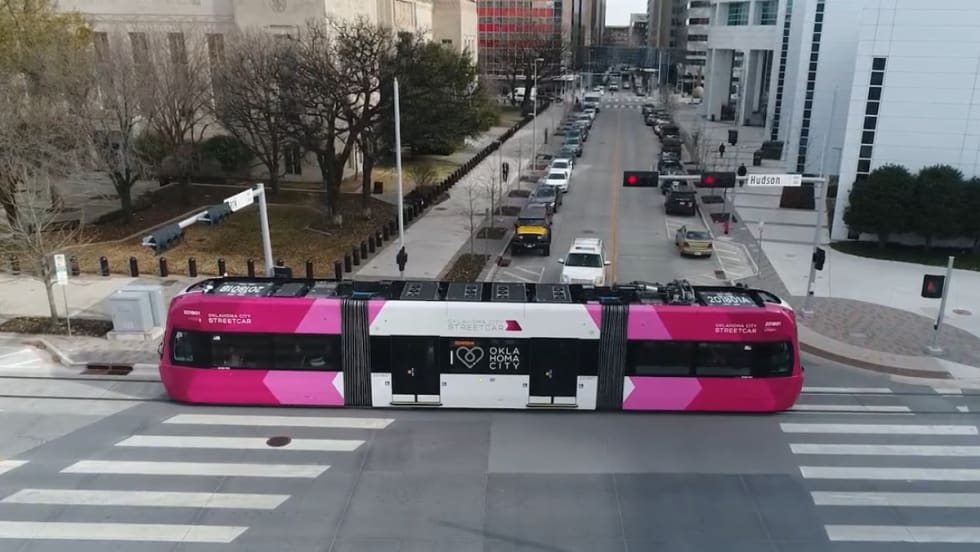
OKC Streetcar Makes Zero-Fare Service Permanent
Ridership increased an average of 71% compared with the same period a year earlier during the fare-free pilot.
Read More →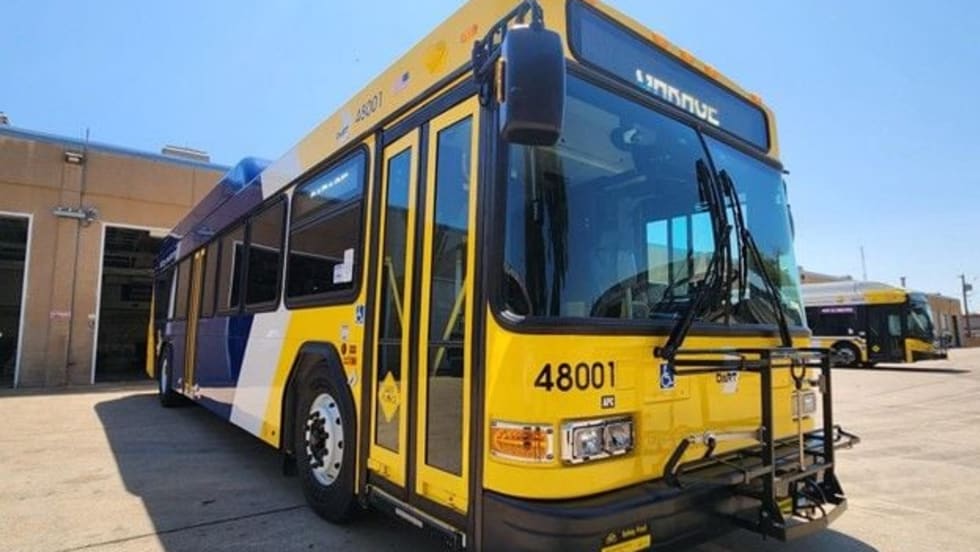
DART Customer Satisfaction Reaches Six-Year High
Overall satisfaction rose to 74.9%, while the agency’s Net Promoter Score reached a record 33.7.
Read More →
How DART's GoPass Is Redefining Regional Mobility
Serving 14 transit agencies, GoPass simplifies multimodal travel by allowing riders to plan, pay for, and manage an entire trip through one app.
Read More →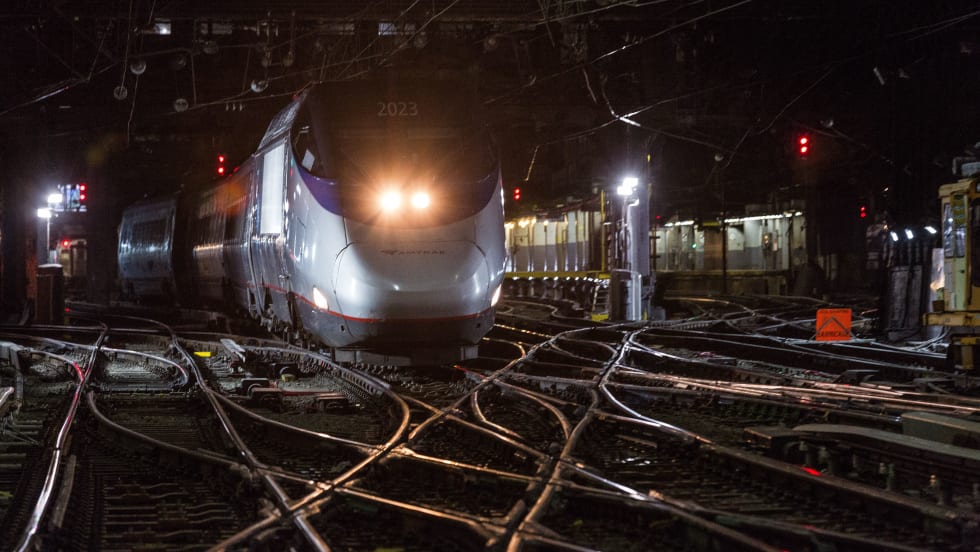
Amtrak Board Advances Plan to Restructure Organization, Seeks Public Input
The proposal, developed by Amtrak management and approved by the board for further consideration, is intended to modernize the organization's structure while improving accountability, operational efficiency, and customer service.
Read More →
Biz Briefs: STV teams with Amtrak, Motorcoach Operators Boost Fleet and Land Contracts, and More
From manufacturers and suppliers to transit agencies and motorcoach operators, these updates offer a snapshot of the projects, partnerships and business moves driving the industry forward.
Read More →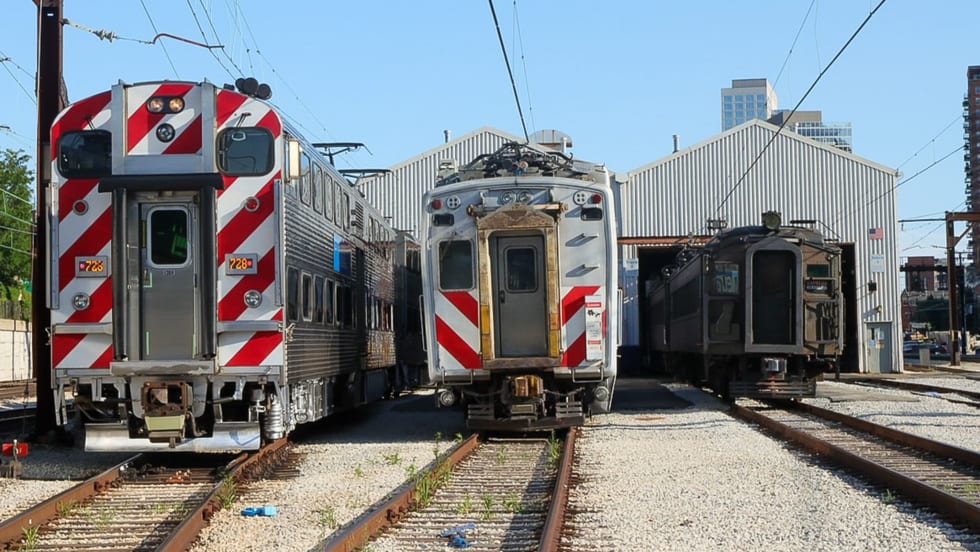
Metra Celebrates 100 Years of Electric Rail, Looks to the Future
The event was also a celebration of recent reforms to public transportation in the Chicago area, changes that could be as transformative in the future as the major civic achievement a century ago, said officials.
Read More →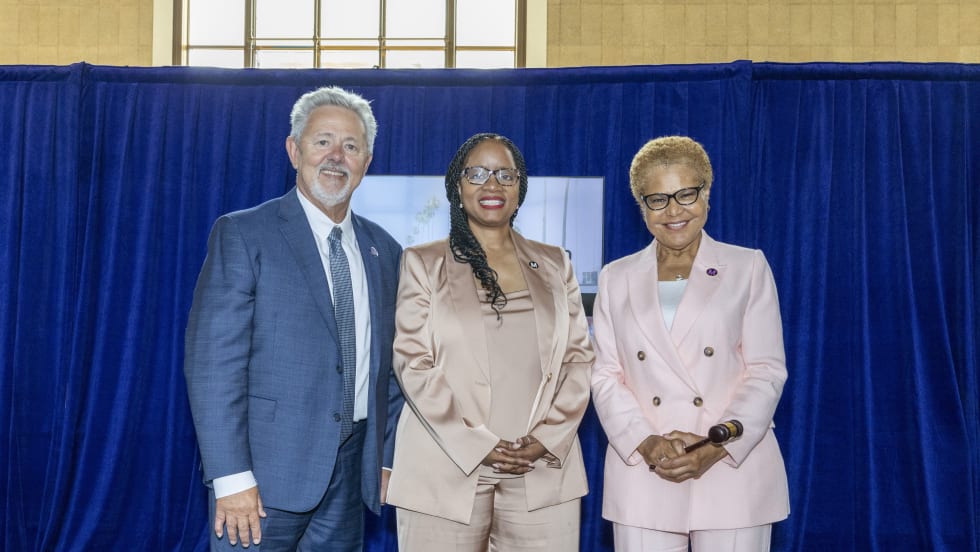
LA Metro Marks Banner Year, Sets Ambitious Goals for New Fiscal Year
Incoming LA Metro Board Chair and Los Angeles Mayor Karen Bass joined outgoing Board Chair Fernando Dutra and LA Metro CEO Stephanie Wiggins to review accomplishments from fiscal year 2026, which included the opening of new rail extensions, advancement of major transit projects, expanded safety programs, and new rider amenities.
Read More →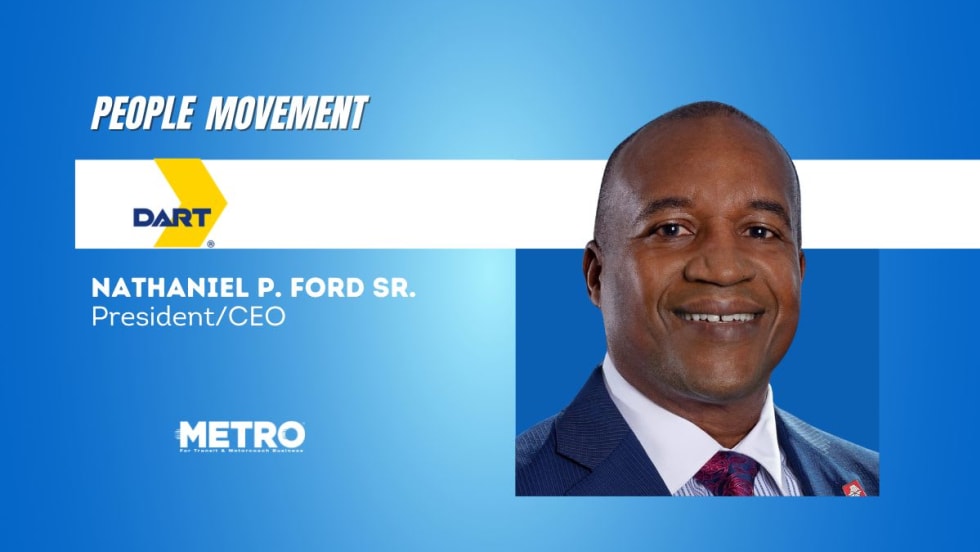
DART Taps Nathaniel P. Ford Sr. as Next President/CEO
Since 2012, Ford has served as the CEO of the Jacksonville Transportation Authority
Read More →
California High-Speed Rail Authority Signs MOU to Advance High Desert Corridor
The agreement deepens collaboration between the California High-Speed Rail Authority and the High Desert Corridor Joint Powers Agency, supporting design integration, cost savings, and faster delivery of a key Southern California rail link.
Read More →
Building the Next Generation of Transit Technology
In this edition of METROspectives, Luminator CEO Magnus Friberg discusses the company's transformation, the growing role of AI and software, and what's next for transit technology.
Read More →