



Access to public transportation is key for returning military veterans with disability for reintegration success
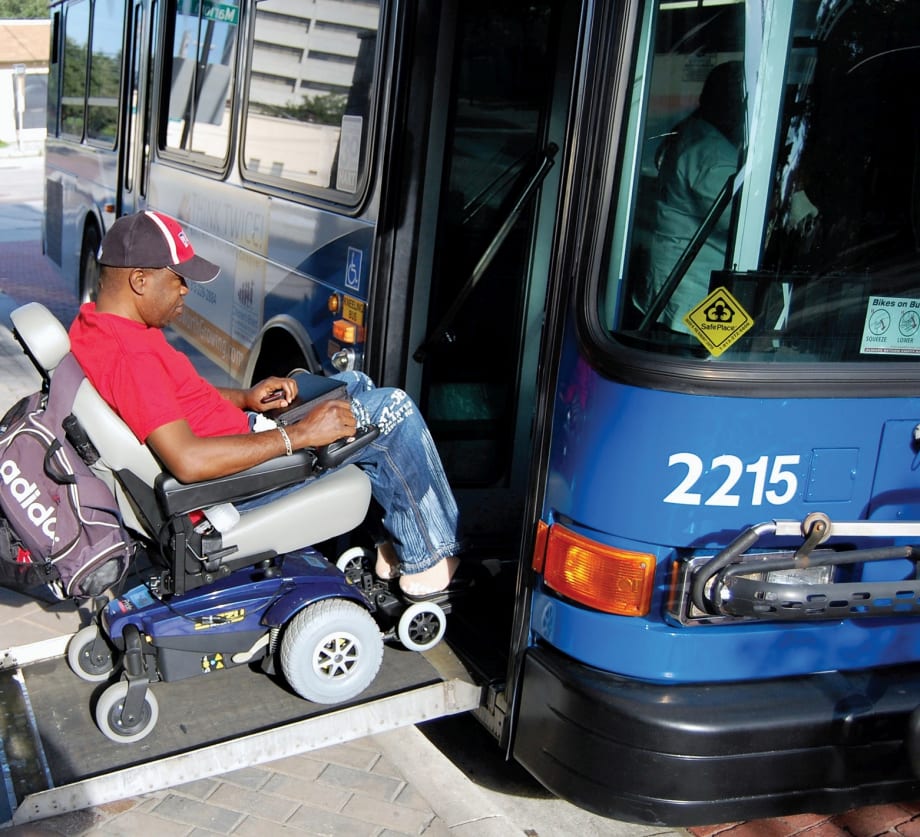
Access to reliable transportation, particularly public transportation, is essential for returning military veterans with disabilities to reintegrate to civilian life and obtain critical medical and support services, according to a new Rutgers study.

Courtesy HART
Courtesy HART
Access to reliable transportation, particularly public transportation, is essential for returning military veterans with disabilities to reintegrate to civilian life and obtain critical medical and support services, according to a new Rutgers study.
The research, conducted by the Alan M. Voorhees Transportation Center (VTC) at the Edward J. Bloustein School of Planning and Public Policy, found that veterans with disabilities living in transit-oriented developments – mixed-use residential and commercial land uses integrally tied to transit – seem to be better poised to meet their needs independently.
“Mobility limitations can adversely affect veterans’ ability to reach medical services and employment,” said Stephanie DiPetrillo, one of two principal investigators on the VTC study. “Isolation, both physical and emotional, can make reintegration more difficult. Promoting transportation independence is a way to meet veteran needs.”
The study, Exploring Transportation, Employment, Housing, and Location Issues for New Jersey Veterans with Disability, included interviews with diverse public and private stakeholders in New Jersey and the U.S. veteran community, as well as working-age veterans with disabilities.
The majority of participants in interviews and focus groups agreed that transition to civilian life for veterans with disabilities involves learning to address a range of physical, mental and emotional challenges. They emphasized that lack of transportation is a significant obstacle to finding gainful employment, stable housing, support services and continuing education opportunities, and hinders the ability to reconnect with family, friends and community.
Pursuing additional research on the transportation and siting characteristics of successful veteran transit-oriented developments. This would help communities establish facilities that would best support veterans’ transition to civilian life.
Creating a one-stop resource center to guide a veteran through the discharge process and continue to provide consistent support from a single point of contact for the extended transition period.
Establishing a state-level task force to discuss holistic approaches and other means to promote a nationwide discussion on how transit-oriented development models can support multiple veteran needs, including housing, employment and transportation.
The authors found that reintegrating with civilian society is daunting for all veterans and can easily be overwhelming without appropriate information and support.
Veterans coping with the strain of one or more disabilities – more than 25% of U.S. veterans, according to American Community Survey estimates – must address and overcome even more obstacles.
“Transportation may seem to be the least of their worries, but it is the lynchpin that connects disparate parts of daily living,” said co-principal investigator Andrea Lubin. “Access to transportation must therefore be considered in any reintegration efforts.”
DiPetrillo and Lubin are seeking funding to pursue additional research that will help identify best practices and contribute to a greater understanding of transportation’s vital role in successful U.S. veteran community reintegration.
The project was conducted with support and collaboration from the Mineta National Transit Research Consortium based at San Jose State University. To read the report, click here.
More Paratransit

Biz Briefs: RIPTA Unveils New Frontrunners, Clevland RTA Adds New Siemens, and More
In METRO's latest installment, we take a look at recent news from Siemens, Prevost, Dodge, and more partnerships making headlines across the transportation sector.
Read More →
King County Metro Makes ADA Paratransit Easier to Navigate
METRO's Innovative Solutions Award winner replaces complex service-area descriptions with an accessible, interactive map that puts paratransit information directly in customers’ hands.
Read More →
Jacksonville’s NAVI Project Charts a New Course for Autonomous Public Transportation
Through its NAVI program, JTA is showing how autonomous vehicles, intelligent infrastructure, and coordinated operations can work together to deliver everyday public transportation.
Read More →
Driving Smarter Paratransit
John Hanlon shares how AlphaRoute is leveraging AI-powered technology to help paratransit providers optimize operations, support frontline staff, and enhance the rider experience.
Read More →
METRO Magazine Announces 2026 Innovative Solutions Awards Winners
Projects Recognized for Advancing Mobility Through Technology, Accessibility, Workforce Innovation, and Operational Excellence
Read More →
Biz Briefs: STV teams with Amtrak, Motorcoach Operators Boost Fleet and Land Contracts, and More
From manufacturers and suppliers to transit agencies and motorcoach operators, these updates offer a snapshot of the projects, partnerships and business moves driving the industry forward.
Read More →
Biz Briefs: Masabi Teams with St. Louis Metro and More
In METRO's latest installment, we take a look at recent news from Transdev, Hitachi, and more partnerships making headlines across the transportation sector.
Read More →
New York MTA Leverages Zoning Program to Advance Station Accessibility
Accessibility enhancements at Nevins St Station will be financed through a development agreement tied to the MTA's Zoning for Accessibility initiative.
Read More →
Reinventing Fleet Maintenance with Real-time Visibility and AI
Transit leaders need to know what needs fixing, where to look, who is responsible, when work is completed, and what it costs without having to chase information across disconnected systems.
Read More →
SamTrans Sets Priorities for Potential Connect Bay Area Revenue
The board-approved framework allocates future funding to maintaining service, rider improvements, equity initiatives, and infrastructure repairs.
Read More →