




Related: Safeguard my personal data, our democracy depends on it
ACLU files lawsuit challenging secrecy of face recognition tech usage
The lawsuit was filed against the Department of Homeland Security, U.S. Customs and Border Protection, ICE, and the TSA.
March 13, 2020
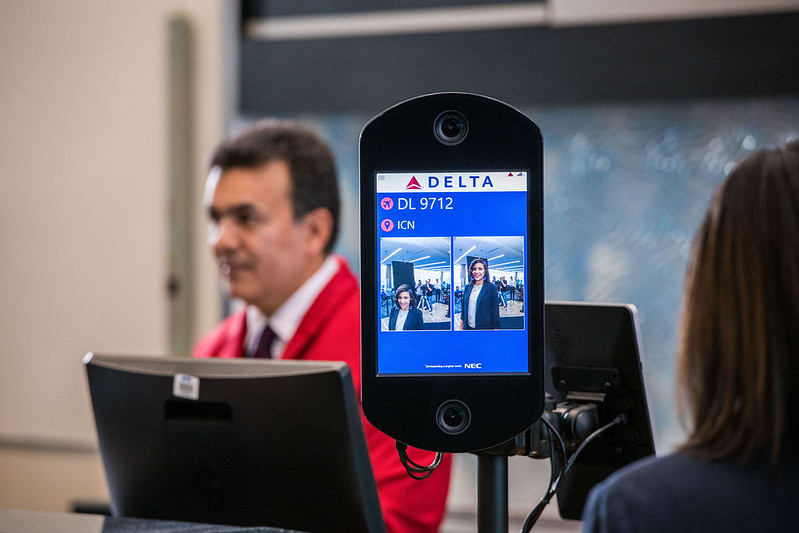
Delta_FacialRecognitionTech_viaDelta-John Paul Van Wert-Rank Studios
2 min to read
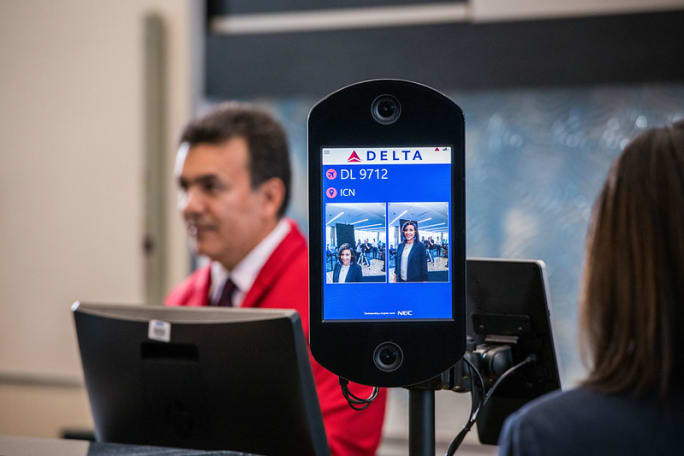
Delta Air Lines reveals their new biometric scanning technology at Hartsfield-Jackson International Airport in Atlanta, Ga. on Monday, November 19, 2018. (Photo: John Paul Van Wert/Rank Studios 2018)
The American Civil Liberties Union and the New York Civil Liberties Union filed a lawsuit challenging the secrecy shrouding federal law enforcement use of face recognition surveillance technology. The lawsuit was filed against the Department of Homeland Security, U.S. Customs and Border Protection, ICE, and the TSA.
“Unlike other ways of verifying a person’s identity, face recognition technology can enable persistent government surveillance on a massive scale,” said Ashley Gorski, staff attorney with the ACLU’s National Security Project. “The public has a right to know when, where, and how the government is using face recognition, and what safeguards, if any, are in place to protect our rights. This unregulated surveillance technology threatens to fundamentally alter our free society and is in urgent need of democratic oversight.”
The agencies failed to comply with requests for information filed under the Freedom of Information Act. The ACLU is now asking a federal court to order the agencies to turn over records concerning:
plans for further implementation of face surveillance at airports;
government contracts with airlines, airports, and other entities pertaining to the use of face recognition at the airport and other ports of entry;
policies and procedures concerning the acquisition, processing, and retention of our biometric information; and
analyses of the effectiveness of facial recognition technology
"The public should know how airlines and companies are helping federal agencies to prop up this mass surveillance infrastructure," added Gorski.
The lawsuit is part of the ACLU’s ongoing efforts to bring face surveillance technology under democratic control. The ACLU previously sued the FBI to make public information about the agency’s use of the technology. As part of ACLU-led campaigns, including the Community Control Over Police Surveillance initiative, a number of cities and municipalities across the country have passed or are considering bans on law enforcement use of face recognition technology. Members of Congress have also held a series of hearings to investigate the technology’s use.
Many in the industry have responded to this widespread and growing grassroots opposition to face surveillance with a call for regulations.
“That we even need to go to court to pry out this information further demonstrates why we should be wary of weak industry proposals and why lawmakers urgently need to halt law and immigration enforcement use of this technology,” responded Gorski. “There can be no meaningful oversight or accountability with such excessive, undemocratic secrecy.”
The lawsuit was filed under the Freedom of Information Act in the U.S. District Court for the Southern District of New York.
More Security and Safety

Transit Agencies Highlight Safety Gains at National Summit
Leaders from 15 major transit systems shared crime-reduction results and safety initiatives while discussing the role of continued federal support.
Read More →
DART Launches Major Security, Fare Enforcement Initiative
The 90-day demonstration will deploy coordinated security teams at five light rail stations while testing controlled access and gathering data to guide future investments.
Read More →
RTD Launches NextRide App to Consolidate Trip Planning, Fares, Security Reporting
The app expands on RTD’s existing NextRide web application and allows customers to view real-time vehicle locations and service alerts, purchase and store digital fares, and access customer support.
Read More →

TAPTCO Updates OSHA Compliance Training for Transit Maintenance Operations
The revamped program addresses 26 OSHA standards for maintenance facilities, with TAPTCO pointing to training, documentation, and everyday shop hazards as continuing challenges for transit operations.
Read More →
Sponsored•August 18, 2026
How VaporVision Adds Value to Transit Door Systems
Wabtec engineers explain how the system improves doorway detection, strengthens diagnostics and gives transit agencies and OEMs greater operating flexibility.
Read More →
FRA Announces $5.3B in Rail Investments, Including $2B for Amtrak
Funding will support grade-crossing improvements, infrastructure upgrades, and new Amtrak equipment in 23 states.
Read More →
Chicago, Maryland Expand Non-Law-Enforcement Safety, Rider Support
The CTA and MTA are launching new programs aimed at de-escalation, crisis response, rider assistance, and greater transparency.
Read More →
LA Metro, City of West Hollywood, and Partners Advance Smarter Bus Lane Enforcement
The award-winning partnership combines AI-powered detection with human oversight to improve bus reliability, accessibility, and enforcement efficiency.
Read More →
LA Metro Reports 57% Decline in Homelessness on Transit System Since 2024
The agency's latest homelessness count offers new data on how care-based services and cross-sector partnerships can complement traditional transit security strategies.
Read More →
FTA Launches 'Transit Moves America' Dashboard to Highlight Agency Safety and Performance
The online dashboard transforms National Transit Database information into a public-facing resource that allows users to compare transit agencies on key operational and safety metrics.
Read More →