



ADASTEC, Beep Form Alliance to Advance Shared Autonomous Transit
The partnership combines ADASTEC’s technology expertise with Beep’s deployment capabilities to scale automated public transportation across more use cases and regions.

Beep’s AutonomOS supervision and management platform complements ADASTEC’s automated driving technology by providing fleet orchestration, vehicle and cabin monitoring, and integrated operations support, critical tools for ensuring safe and reliable service at scale.
Photo: ADASTEC/Beep
ADASTEC Corp., a software company specializing in SAE Level-4 automated driving software solutions for public transit buses and commercial vehicles, announced a strategic alliance with Beep Inc.
The partnership combines ADASTEC’s technology expertise with Beep’s deployment capabilities to scale automated public transportation across more use cases and regions. Initial deployments in Georgia and Florida will set a new benchmark for the industry.
Driving Scalable AV Deployments
Through the alliance, ADASTEC’s SAE Level-4 automated driving software platform, flowride.ai, and its global OEM partnerships will be integrated with Beep’s expertise in planning, launching, and managing autonomous mobility networks.
Together, the companies provide a comprehensive, end-to-end solution for municipalities, transit agencies, campuses, airports, and private communities, fully compliant with Build America, Buy America requirements and Federal Motor Vehicle Safety Standards (FMVSS).
“Beep’s proven track record in operating shared autonomous networks makes them an ideal partner to bring ADASTEC’s technology to scalable deployment across more routes and regions,” said Dr. Ali Peker, CEO of ADASTEC. “Together, we are enabling scalable deployments of factory-fitted automated buses, combining our advanced automated driving technology with Beep’s deployment expertise to deliver public transportation that is safer, more efficient, and truly accessible."
Beep’s AutonomOS supervision and management platform complements ADASTEC’s automated driving technology by providing fleet orchestration, vehicle and cabin monitoring, and integrated operations support, critical tools for ensuring safe and reliable service at scale.
“Partnering with ADASTEC allows us to extend our autonomous mobility solutions to higher capacity, production-grade vehicles,” said Kevin Reid, CEO of Beep. “This is about helping more people connect to jobs, healthcare, education, and each other more quickly and more safely than ever before, all while using state-of-the-art technology that is made in America.”
Driving Growth
ADASTEC’s flowride.ai, together with its advanced sensor suite, including LiDAR, radar, RGB cameras, and high-precision GNSS, has been successfully deployed in more than a dozen countries worldwide, operating across diverse geographies, climates, and road conditions. These deployments demonstrate the maturity and reliability of ADASTEC’s technology, enabling buses and commercial vehicles to operate safely and consistently in mixed traffic and under challenging weather conditions.
The platform enables buses, factory-fitted with ADASTEC’s technology, to operate at speeds of up to 35 miles per hour without the need for on-board human intervention.
Beep’s AutonomOS platform is AV-agnostic and ensures that advanced automation translates into safe and reliable everyday mobility for passengers.
Together, ADASTEC and Beep are moving beyond automation by delivering solutions that are scalable, sustainable, accessible, and fully operational.
More New Mobility

ENC Unveils ZAVIR Medium-Duty Electric Shuttle
The new ZAVIR brand targets shuttle and paratransit operations with battery-electric and range-extended electric vehicle options.
Read More →
Public Transit Conference Returning to GFX in 2027, Call for Papers Now Open
The Call for Papers is now open, allowing transit agency professionals and industry experts to help shape the PTC educational program by submitting session ideas for consideration.
Read More →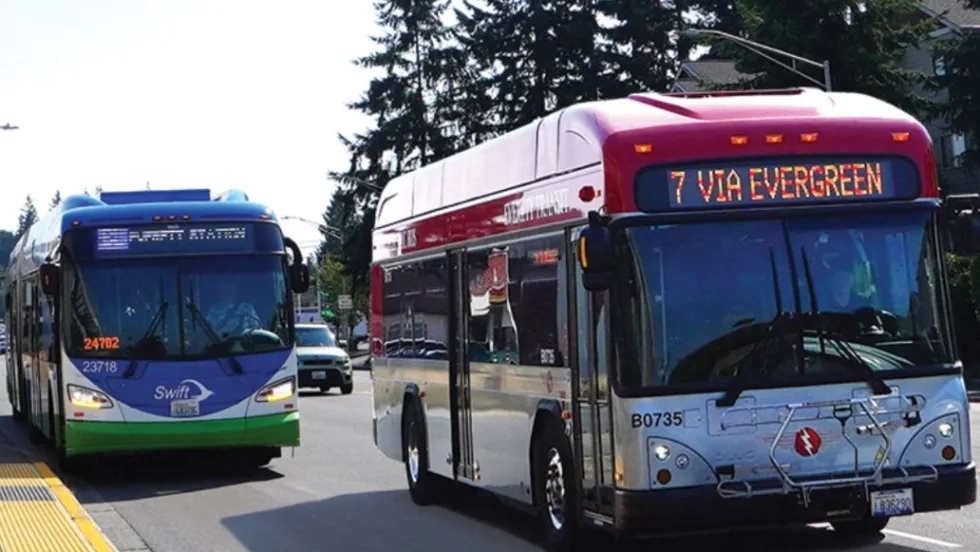
Everett Transit, Community Transit Outline Consolidation Agreement
The proposed agreement calls for a 50% increase in bus service in Everett, a new microtransit zone, continued paratransit service, and the transfer of Everett Transit operations to Community Transit.
Read More →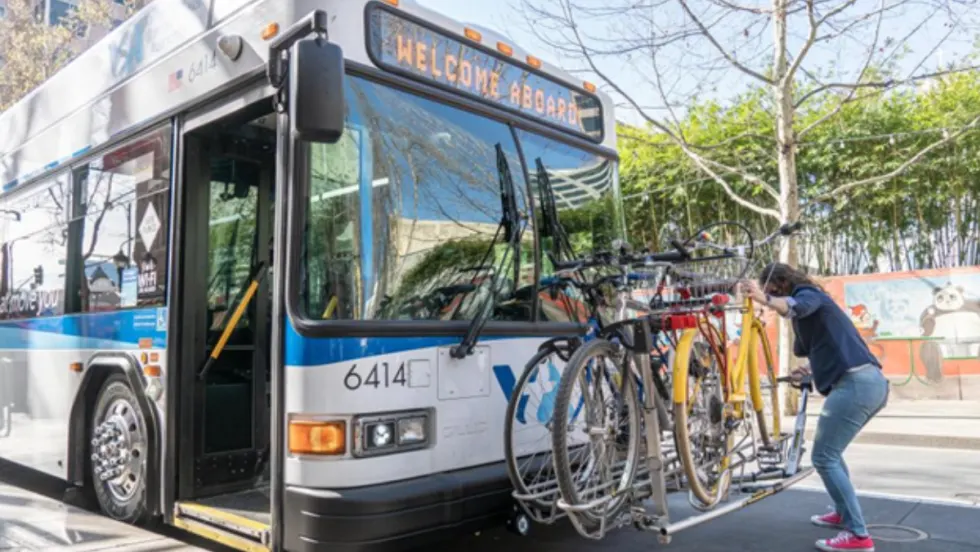
What Multimodal Data Can Tell Transit Agencies About Rider Demand
See how bike-on-bus data is giving transit agencies new insight into rider demand, capacity constraints, and gaps in first- and last-mile connections.
Read More →
From Hardware to Digital Partner: Luminator Charts Its Next Chapter
CEO Magnus Friberg discusses Luminator’s shift toward becoming a digital partner, the growing importance of software and interoperability, and how AI can help agencies improve operations and passenger experience.
Read More →
Biz Briefs: Alstom Lands Canadian Contract, LYT to Supply California TSP, and More
In METRO's latest installment, we take a look at recent news from Complete Coach Works, Beep, FlixBus, and more partnerships making headlines across the transportation sector.
Read More →
CharterUP’s Armir Harris on Technology, AI, and the Future of Group Mobility
In a recent episode of METROspectives, CharterUP Founder/CEO Armir Harris discussed the company’s evolution from an online charter bus marketplace into a technology platform supporting public- and private-sector mobility and much more.
Read More →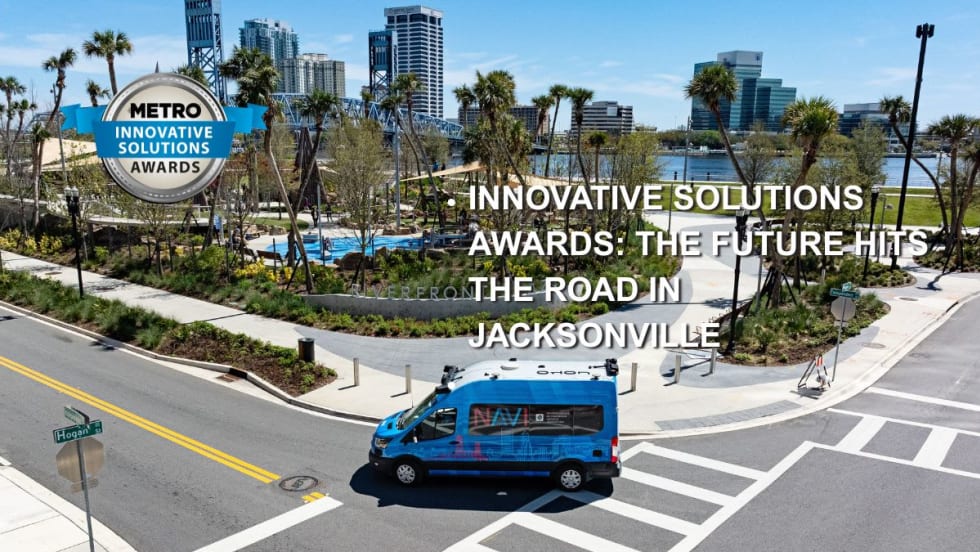
Jacksonville’s NAVI Project Charts a New Course for Autonomous Public Transportation
Through its NAVI program, JTA is showing how autonomous vehicles, intelligent infrastructure, and coordinated operations can work together to deliver everyday public transportation.
Read More →
Biz Briefs: Luminator Marks Milestone and More
From manufacturers and suppliers to transit agencies and motorcoach operators, these updates offer a snapshot of the projects, partnerships and business moves driving the industry forward.
Read More →
New Tricks for Old Bureaucracies: Joshua Schank on Making Transit Innovation Stick
Former LA Metro Chief Innovation Officer Joshua Schank discusses why good ideas aren't enough, how transit agencies can overcome resistance to change, and why today's challenges demand more innovation.
Read More →