




RELATED: Alstom to extend Panama Metro line
Alstom achieved a good level of orders, sales for 3rd quarter
Booked a strong $2.6 billion of orders, a 46% increase compared to the same period last year. The group’s sales increased to $1.7 billion, up 7% compared to $1.6 billion over the third quarter 2014/15.
January 14, 2016
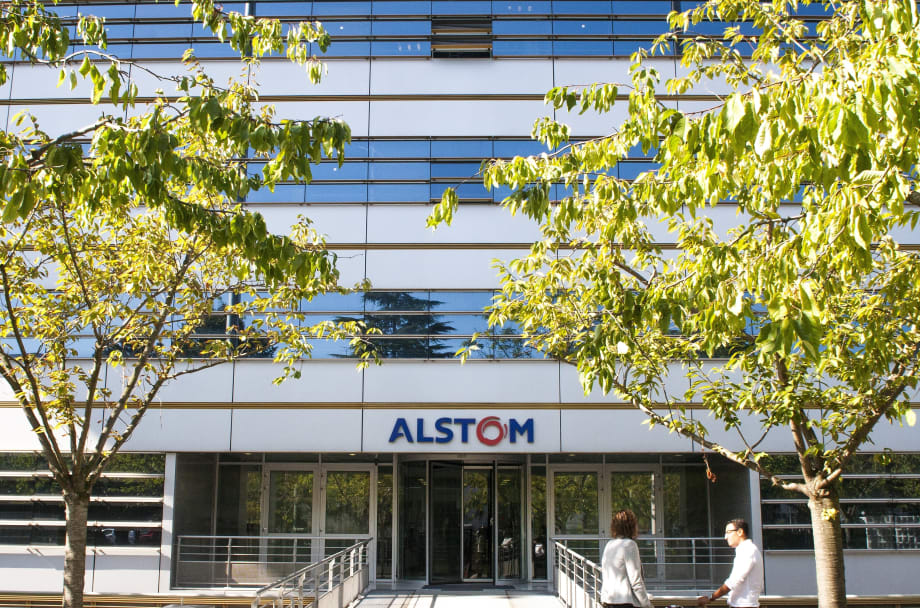
Alstom headquarters in Saint Ouen, France.
Alstom / A.Pavone
3 min to read
Alstom headquarters in Saint Ouen, France.
Alstom / A.Pavone
Over the third quarter 2015/16 (from Oct. 1 to Dec. 31, 2015), Alstom booked a strong $2.6 billion of orders, a 46% increase compared to the same period last year. The group’s sales increased to $1.7 billion, up 7% compared to $1.6 billion over the third quarter 2014/15.
For the first nine months of 2015/16 (from April 1 to Dec. 31, 2015), Alstom’s order intake reached $6.8 billion compared to $8.7 billion over the same period last year which included a $4.3 billion contract in South Africa. The group’s sales amounted to $5.3 billion, up 8% and 3% organically compared to the first nine months of 2014/15. The book-to-bill remained strong at 1.3.
At $31.1 billion on Dec. 31 2015, the backlog represented over 4 years of sales.
GE signalling has been consolidated since 2 November 2015. A geographic breakdown of reported orders and sales is provided in Appendix 1. All figures mentioned in this release are unaudited.
“Alstom achieved again a sound commercial performance. The first nine months of 2015/16 showed a high level of orders at $6.8 billion with commercial successes across all regions and product lines. The pipeline remains active and includes major projects. Sales increased 3% organically compared to the first nine months of 2014/15 and growth is expected to continue at a similar pace for the end of this fiscal year," said Patrick Kron, Alstom’s chairman/CEO.
Detailed review
Alstom booked $2,560 million of orders during the third quarter of 2015/16, compared to $1,753 million over the same period last year. Major commercial successes for this quarter included regional trains in Belgium, Pendolino trains and associated maintenance in Italy, electrification, signalling and telecommunications project in India, locomotives in Switzerland, regional trains in Germany, extension of metro in Panama as well as tramway for Nice in France.
Sales increased to $1,751 million in the third quarter 2015/16, compared to $1,629 million for the same period last year, mainly fuelled by deliveries of suburban and regional trains in France, regional trains in Germany and Italy, tramways in Algeria and a maintenance contract in United Kingdom.
Key events of the third quarter 2015/16
Following closing of the sale of its Energy activities (Power generation and Grid) to General Electric on Nov. 2, 2015, Alstom is today entirely refocused on rail transport. The Group used part of the proceeds to acquire General Electric rail signalling activities and reinvest in three joint ventures with General Electric (in the fields of grid, renewable and French steam & nuclear).
Alstom Shareholders’ Meeting, convened on Dec. 18, 2015, approved all submitted resolutions. The return of around $3.4 billion cash to shareholders through a share buy-back was approved with a majority of 99.93%. The shareholders’ meeting also approved the appointment, proposed by the French State, of M. Olivier Bourges, as director.
On Dec. 29, 2015, Alstom increased its stake in the Russian company Transmashholding to 33%.
Outlook
The outlook is unchanged. For the medium term, sales are expected to grow at over 5% per year organically and the operating margin should gradually improve within the 5-7% range. Free cash flow is expected to be in line with net income before Energy activities contribution with possible volatility on short periods.
More Rail

New York MTA Advances Final Contract for Second Avenue Subway Expansion
Contract Four is the largest in the Second Avenue Subway Phase 2 project and includes construction of station infrastructure, tracks, and signals for the subway expansion, MTA officials said. Work on Contract Four will begin in 2027.
Read More →
San Diego MTS Breaks Monthly Trolley Ridership Record
Agency officials said July’s ridership indicates MTS’s continued recovery from the pandemic.
Read More →
Report Examines NJ TRANSIT Reliability, Funding Challenges
The Garden State Initiative analysis examines the roles of Amtrak infrastructure, fleet management, and agency operations while recommending a more performance-based approach to improving reliability.
Read More →
Stadler, CapMetro Sign Long-Term Rail Fleet Support Agreement
Beginning in 2027, Stadler will provide on-site technical expertise, spare parts support, training, and obsolescence management to help extend the reliability and longevity of CapMetro’s GTW fleet.
Read More →
Biz Briefs: Alstom Lands Canadian Contract, LYT to Supply California TSP, and More
In METRO's latest installment, we take a look at recent news from Complete Coach Works, Beep, FlixBus, and more partnerships making headlines across the transportation sector.
Read More →
CATS Gold Line Marks 5 Years of Service, 2.8M Passenger Trips
With a six-mile expansion planned, the Charlotte streetcar is positioned to connect more neighborhoods and major transit hubs across the region.
Read More →
Why Simulating Pedestrian Movement Has Become Essential for Modern Rail Stations
Pedestrian microsimulation is helping rail planners identify bottlenecks, test station designs, and prepare complex transit hubs for growing passenger volumes.
Read More →
Amtrak Begins Major Construction at New York’s Sunnyside Yard
The new maintenance facility will support Amtrak’s Airo trainsets while improving maintenance efficiency and turnaround times in New York.
Read More →
Chicago Leaders Unveil Plans for O’Hare Airport Express Train
The privately developed project would offer a 15-minute trip between downtown and O’Hare’s Terminal 2, with trains operating every 15 minutes on a dedicated track. The service would use battery-electric trains and three existing freight rail rights-of-way.
Read More →
OCTA Maps Out 30-Year Strategy to Protect Coastal Rail Corridor
The draft feasibility report identifies strategies to protect the coastal rail line for decades as the agency continues near-term stabilization and sand placement efforts.
Read More →