



Alstom’s Citadis LRVs Debut on Toronto’s Finch West LRT
The Citadis LRVs will operate on an entirely new line, with a dedicated right-of-way separated from traffic.

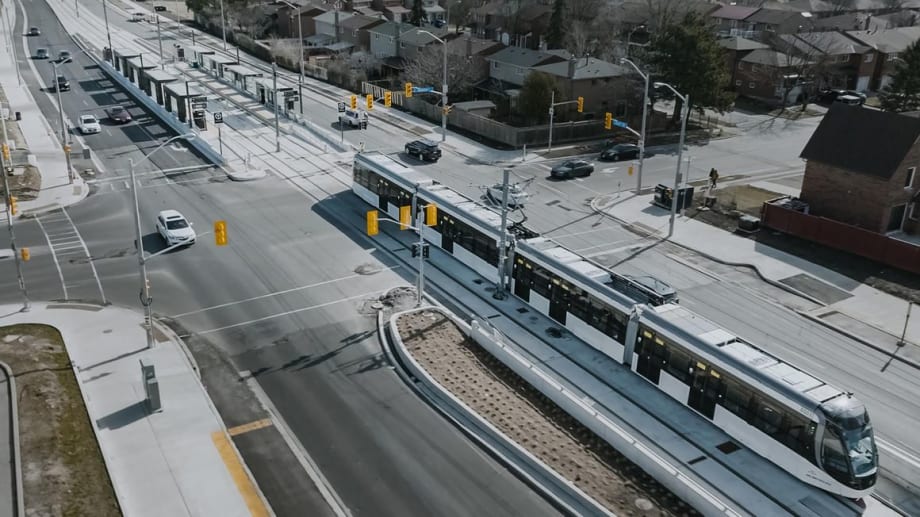
Made by Alstom at its Brampton facility and tested at its Kingston site, each Citadis vehicle offers a spacious design, accommodating up to 300 passengers comfortably while being fully accessible for strollers and people with mobility needs.
Photo: Alstom SA 2025. Metrolinx
Alstom, in partnership with Metrolinx, welcomed the commissioning of 18 Citadis light-rail vehicles (LRVs) on Toronto’s Finch West Light Rapid Transit (LRT) line.
The Finch West LRT marks a significant step forward in delivering sustainable, efficient transit to Toronto’s growing communities, all powered by Alstom’s commitment to innovation and Canadian expertise.
Connecting via Transit
The Citadis LRVs will operate on an entirely new line, with a dedicated right-of-way separated from traffic.
The line is 6.4 miles long; it has 16 stops and two stations: the Finch West station in the east and the Humber College Station in the west. It is connected to the Toronto Transit Commission (TTC) Line 1 Finch West subway station via a pedestrian portal.
The project will cut down travel time and increase transit reliability. The Finch West LRT project is part of the Ontario government’s multibillion-dollar investment in public transit systems that will help connect Ontarians via transit for generations.
Toronto’s New LRVs
Made by Alstom at its Brampton facility and tested at its Kingston site, each Citadis vehicle offers a spacious design, accommodating up to 300 passengers comfortably while being fully accessible for strollers and people with mobility needs.
The 100% low-floor Citadis vehicle is designed for the Canadian market and capable of operating in winter conditions down to -38°C. They are fitted with winterized systems to ensure operational performance and optimize passenger comfort and experience through reinforced insulation, powerful HVAC, and snow and ice management, said Alstom officials.
To date, Alstom has delivered more than 8,000 Citadis LRVs to 140 cities in more than 30 countries worldwide.
Manufacturing the Vehicles
Vehicle assembly for the Finch LRV took place in Brampton from 2020 to 2024. At peak production, this contract supported over 180 jobs in Ontario and expanded the size of a critical workforce for the growing rail sector.
Over the last few months, Alstom has worked with its partners at Metrolinx and the TTC to test, maintain, and prepare for the launch of these modern, efficient vehicles. Alstom is also responsible for the maintenance of the cars, the track, and the catenary system for the next 30 years.
More Rail

New York MTA Advances Final Contract for Second Avenue Subway Expansion
Contract Four is the largest in the Second Avenue Subway Phase 2 project and includes construction of station infrastructure, tracks, and signals for the subway expansion, MTA officials said. Work on Contract Four will begin in 2027.
Read More →
San Diego MTS Breaks Monthly Trolley Ridership Record
Agency officials said July’s ridership indicates MTS’s continued recovery from the pandemic.
Read More →
Report Examines NJ TRANSIT Reliability, Funding Challenges
The Garden State Initiative analysis examines the roles of Amtrak infrastructure, fleet management, and agency operations while recommending a more performance-based approach to improving reliability.
Read More →
Stadler, CapMetro Sign Long-Term Rail Fleet Support Agreement
Beginning in 2027, Stadler will provide on-site technical expertise, spare parts support, training, and obsolescence management to help extend the reliability and longevity of CapMetro’s GTW fleet.
Read More →
Biz Briefs: Alstom Lands Canadian Contract, LYT to Supply California TSP, and More
In METRO's latest installment, we take a look at recent news from Complete Coach Works, Beep, FlixBus, and more partnerships making headlines across the transportation sector.
Read More →
CATS Gold Line Marks 5 Years of Service, 2.8M Passenger Trips
With a six-mile expansion planned, the Charlotte streetcar is positioned to connect more neighborhoods and major transit hubs across the region.
Read More →
Why Simulating Pedestrian Movement Has Become Essential for Modern Rail Stations
Pedestrian microsimulation is helping rail planners identify bottlenecks, test station designs, and prepare complex transit hubs for growing passenger volumes.
Read More →
Amtrak Begins Major Construction at New York’s Sunnyside Yard
The new maintenance facility will support Amtrak’s Airo trainsets while improving maintenance efficiency and turnaround times in New York.
Read More →
Chicago Leaders Unveil Plans for O’Hare Airport Express Train
The privately developed project would offer a 15-minute trip between downtown and O’Hare’s Terminal 2, with trains operating every 15 minutes on a dedicated track. The service would use battery-electric trains and three existing freight rail rights-of-way.
Read More →
OCTA Maps Out 30-Year Strategy to Protect Coastal Rail Corridor
The draft feasibility report identifies strategies to protect the coastal rail line for decades as the agency continues near-term stabilization and sand placement efforts.
Read More →