



Alstom's hydrogen fuel-cell train undergoes testing in the Netherlands
The series of tests is being performed at night at up to about 87 miles per hour without passengers.

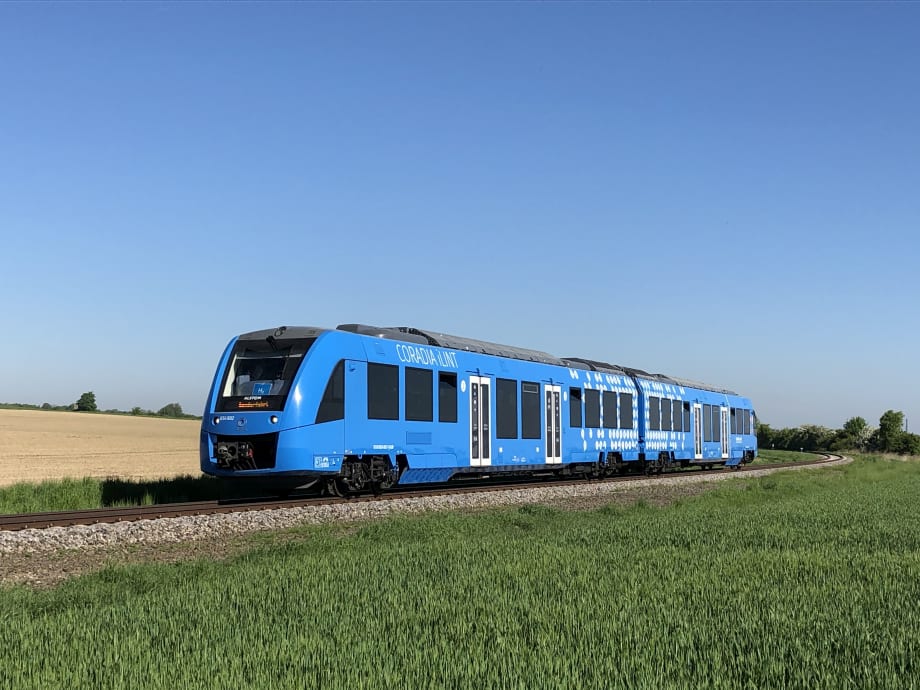
The Coradia iLint is the world's first regional passenger train to enter service equipped with fuel cells to convert hydrogen and oxygen into electricity, thus eliminating pollutant emissions related to propulsion.
Alstom/Rene Frampe
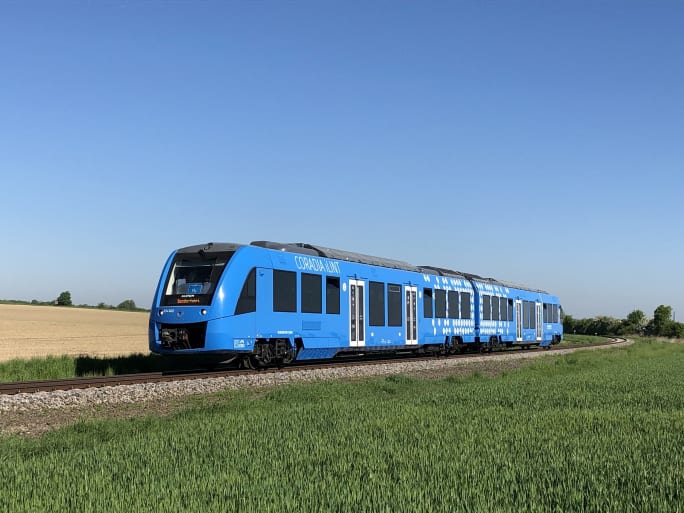
The Coradia iLint is the world's first regional passenger train to enter service equipped with fuel cells to convert hydrogen and oxygen into electricity, thus eliminating pollutant emissions related to propulsion. Alstom/Rene Frampe
Alstom performed 10 days of tests of the Coradia iLint hydrogen fuel-cell train on the approximate 40.3 miles of line between Groningen and Leeuwarden in the north of the Netherlands. The tests follow 18 successful months of passenger service on the Buxtehude–Bremervörde–Bremerhaven–Cuxhaven line in Germany, where a total of 41 Coradia iLint have already been ordered. The latest tests make the Netherlands the second country in Europe where the train has proven itself a unique emissions-free solution for non-electrified lines.
Last October, Alstom and the Province of Groningen, local operator Arriva, the Dutch railway infrastructure manager ProRail, and the energy company Engie signed a pilot project agreement to test the Coradia iLint, the world’s first passenger train powered by hydrogen fuel cells, in the Netherlands. DEKRA, an independent testing inspection and certification company, has been appointed test leader.
The series of tests is being performed at night at up to about 87 miles per hour without passengers. For the purpose of the tests, a mobile filling station has been erected by Engie for refueling the Coradia iLint with completely green — sustainably produced — hydrogen.
The Coradia iLint is the world's first regional passenger train to enter service equipped with fuel cells to convert hydrogen and oxygen into electricity, thus eliminating pollutant emissions related to propulsion. The train is quiet, and its only emission is water. Purpose-built for use on non-electrified lines, it provides clean, sustainable traction with no sacrifice in performance. It has a range of approximately 621 miles — the same as equivalent-size diesel multiple units. The train is developed and produced by the Alstom teams in Salzgitter, Germany and Tarbes, France.
More Rail

New York MTA Advances Final Contract for Second Avenue Subway Expansion
Contract Four is the largest in the Second Avenue Subway Phase 2 project and includes construction of station infrastructure, tracks, and signals for the subway expansion, MTA officials said. Work on Contract Four will begin in 2027.
Read More →
San Diego MTS Breaks Monthly Trolley Ridership Record
Agency officials said July’s ridership indicates MTS’s continued recovery from the pandemic.
Read More →
Report Examines NJ TRANSIT Reliability, Funding Challenges
The Garden State Initiative analysis examines the roles of Amtrak infrastructure, fleet management, and agency operations while recommending a more performance-based approach to improving reliability.
Read More →
Stadler, CapMetro Sign Long-Term Rail Fleet Support Agreement
Beginning in 2027, Stadler will provide on-site technical expertise, spare parts support, training, and obsolescence management to help extend the reliability and longevity of CapMetro’s GTW fleet.
Read More →
Biz Briefs: Alstom Lands Canadian Contract, LYT to Supply California TSP, and More
In METRO's latest installment, we take a look at recent news from Complete Coach Works, Beep, FlixBus, and more partnerships making headlines across the transportation sector.
Read More →
CATS Gold Line Marks 5 Years of Service, 2.8M Passenger Trips
With a six-mile expansion planned, the Charlotte streetcar is positioned to connect more neighborhoods and major transit hubs across the region.
Read More →
Why Simulating Pedestrian Movement Has Become Essential for Modern Rail Stations
Pedestrian microsimulation is helping rail planners identify bottlenecks, test station designs, and prepare complex transit hubs for growing passenger volumes.
Read More →
Amtrak Begins Major Construction at New York’s Sunnyside Yard
The new maintenance facility will support Amtrak’s Airo trainsets while improving maintenance efficiency and turnaround times in New York.
Read More →
Chicago Leaders Unveil Plans for O’Hare Airport Express Train
The privately developed project would offer a 15-minute trip between downtown and O’Hare’s Terminal 2, with trains operating every 15 minutes on a dedicated track. The service would use battery-electric trains and three existing freight rail rights-of-way.
Read More →
OCTA Maps Out 30-Year Strategy to Protect Coastal Rail Corridor
The draft feasibility report identifies strategies to protect the coastal rail line for decades as the agency continues near-term stabilization and sand placement efforts.
Read More →