




Chicago Union Station serves 37.6 million Amtrak and Metra rail passengers annually, 120,000 on a typical weekday.
Amtrak refurbishes Chicago Union Station Great Hall
The centerpiece of the Great Hall is the 219-foot-long skylight that soars 115 feet above the floor.
December 4, 2018
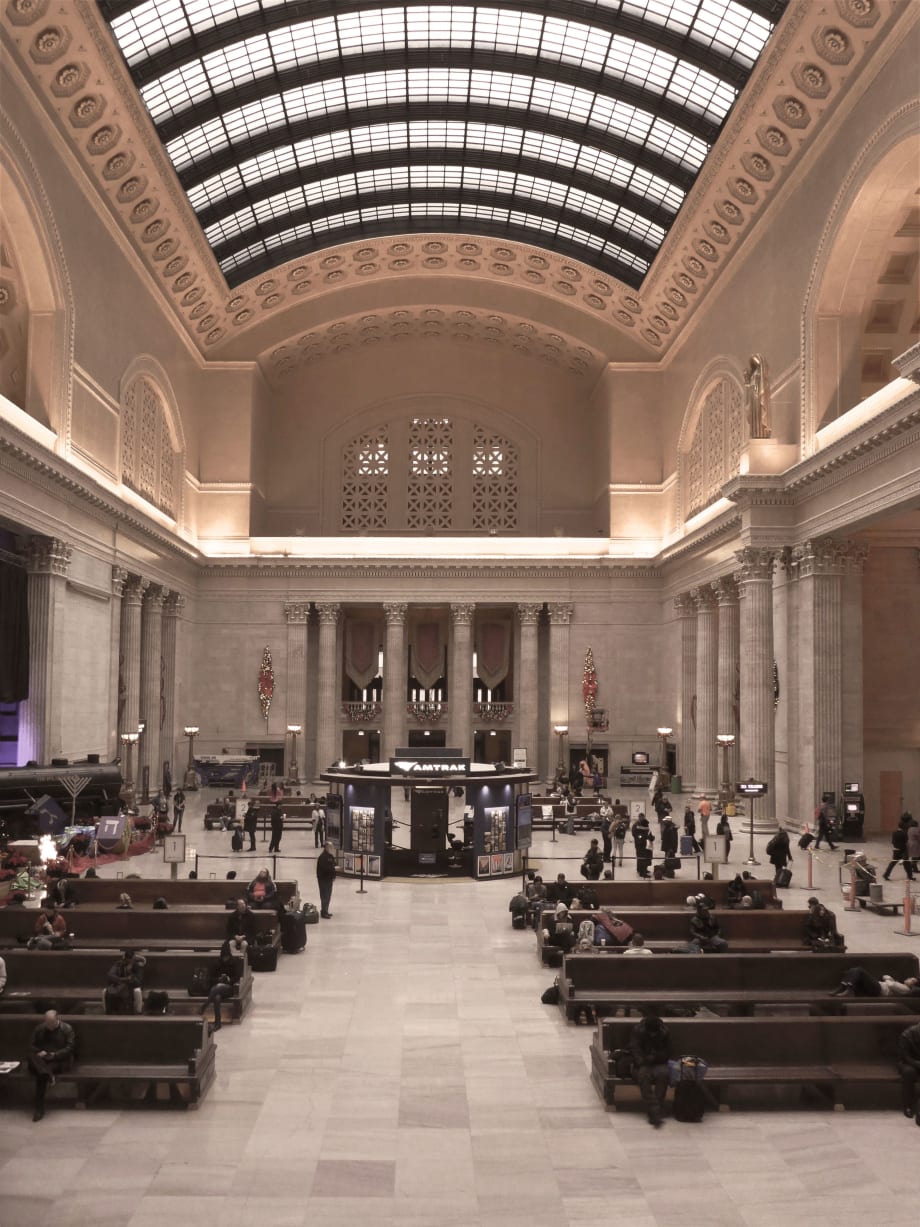
Chicago Union Station, completed in 1925, was designed by Daniel Burnham and successor firm Graham, Anderson, Probst & White. Photo: Amtrak
2 min to read
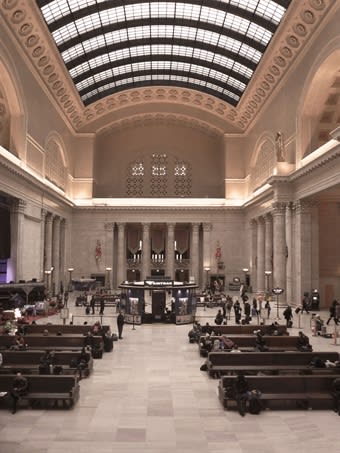
Chicago Union Station, completed in 1925, was designed by Daniel Burnham and successor firm Graham, Anderson, Probst & White. Photo: Amtrak
On Nov. 29, Customers of Amtrak, Metra and other users of Chicago Union Station enjoyed a holiday lighting ceremony like no other in the station’s 93-year history, showing off a Great Hall painted in its original colors, made brighter by a restored skylight and improved lighting accenting the historic space that has been Chicago’s front door since 1925.
The Amtrak-funded $22 million project was largely completed in time for what are annually the most popular weeks of the year for Amtrak travel in the national network’s fourth busiest station. With work conducted by Berglund Construction, architect Goettsch Partners devised a creative solution to maintain usage of the Great Hall by using a suspended working deck for most of the last 12 months. The iconic skylight had been obscured by the deck until the last several days.
Chicago Union Station, completed in 1925, was designed by Daniel Burnham and successor firm Graham, Anderson, Probst & White. The centerpiece of the Great Hall is the 219-foot-long skylight that soars 115 feet above the floor. It had deteriorated due to flaws within the original design that led to water damage to the walls of iconic space and to the skylight itself.
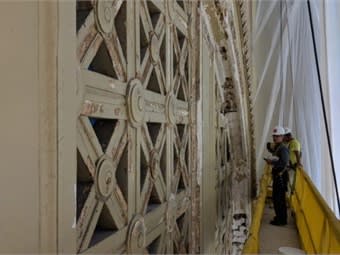
Photo: Amtrak
In order to maintain the historic appearance of the skylight from within the Great Hall, to protect it and to overcome issues with the original drainage system, the team constructed a modern energy-efficient skylight with 858 panes of clear high-efficiency glass five feet above the original skylight. Natural light into the Great Hall is increased by about 50% by replacing the 2,052 pieces of glass in the historic skylight with a textured glass surface matching the original look.
A new elevator from Canal Street is now active, the first time there has been ADA-compliant access to the Great Hall from the west side of the street. The Henry Hering figural statues representing day and night have been restored and will be illuminated, 24 ceiling chandeliers restored and re-hung, and 27 historic reproduction light fixtures installed.
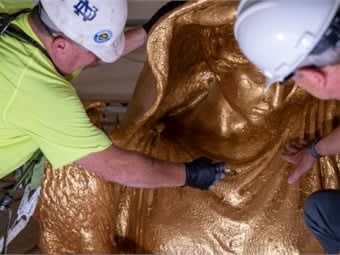
The Henry Hering figural statues representing day and night have been restored and will be illuminated in the refurbished Union Station in Chicago. Photo: Amtrak
The area’s Regional Transportation Authority (RTA) and the City of Chicago have been Amtrak partners in planning for the station’s future and its redevelopment.
A new ChicagoUnionStation.com to improve station wayfinding and to book events will feature images of the renovated station when it debuts next month. Early next year, the site will host a documentary video centering on this project while looking at the station’s past and highlighting its future, including a new Clinton Street entrance for improved Great Hall access and services.
More Rail

New York MTA Advances Final Contract for Second Avenue Subway Expansion
Contract Four is the largest in the Second Avenue Subway Phase 2 project and includes construction of station infrastructure, tracks, and signals for the subway expansion, MTA officials said. Work on Contract Four will begin in 2027.
Read More →
San Diego MTS Breaks Monthly Trolley Ridership Record
Agency officials said July’s ridership indicates MTS’s continued recovery from the pandemic.
Read More →
Report Examines NJ TRANSIT Reliability, Funding Challenges
The Garden State Initiative analysis examines the roles of Amtrak infrastructure, fleet management, and agency operations while recommending a more performance-based approach to improving reliability.
Read More →
Stadler, CapMetro Sign Long-Term Rail Fleet Support Agreement
Beginning in 2027, Stadler will provide on-site technical expertise, spare parts support, training, and obsolescence management to help extend the reliability and longevity of CapMetro’s GTW fleet.
Read More →
Biz Briefs: Alstom Lands Canadian Contract, LYT to Supply California TSP, and More
In METRO's latest installment, we take a look at recent news from Complete Coach Works, Beep, FlixBus, and more partnerships making headlines across the transportation sector.
Read More →
CATS Gold Line Marks 5 Years of Service, 2.8M Passenger Trips
With a six-mile expansion planned, the Charlotte streetcar is positioned to connect more neighborhoods and major transit hubs across the region.
Read More →
Why Simulating Pedestrian Movement Has Become Essential for Modern Rail Stations
Pedestrian microsimulation is helping rail planners identify bottlenecks, test station designs, and prepare complex transit hubs for growing passenger volumes.
Read More →
Amtrak Begins Major Construction at New York’s Sunnyside Yard
The new maintenance facility will support Amtrak’s Airo trainsets while improving maintenance efficiency and turnaround times in New York.
Read More →
Chicago Leaders Unveil Plans for O’Hare Airport Express Train
The privately developed project would offer a 15-minute trip between downtown and O’Hare’s Terminal 2, with trains operating every 15 minutes on a dedicated track. The service would use battery-electric trains and three existing freight rail rights-of-way.
Read More →
OCTA Maps Out 30-Year Strategy to Protect Coastal Rail Corridor
The draft feasibility report identifies strategies to protect the coastal rail line for decades as the agency continues near-term stabilization and sand placement efforts.
Read More →