
Amtrak served more than 3.5 million Acela customers in FY19, a 4.3% increase from FY18.
In Dec. 2019, Acela had its best month ever, with a 16% ridership increase over the previous year.


 MENU
MENU SEARCH
Train to travel from New York to Colorado ahead of 2021 launch.
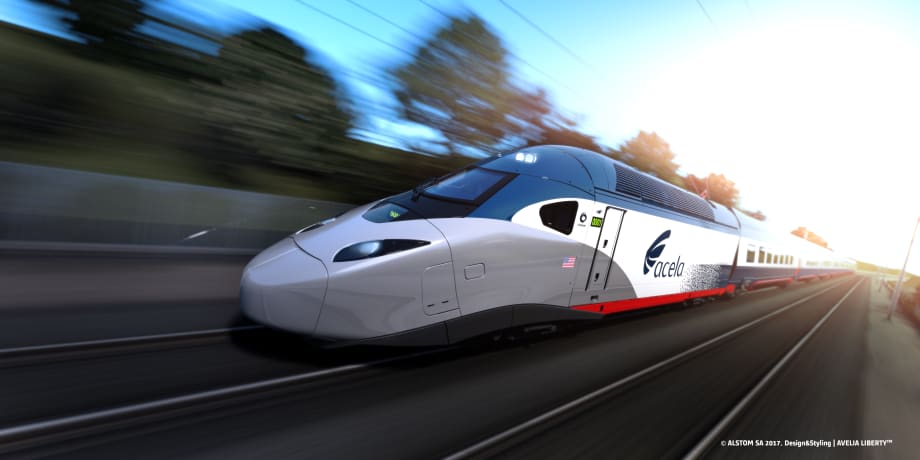
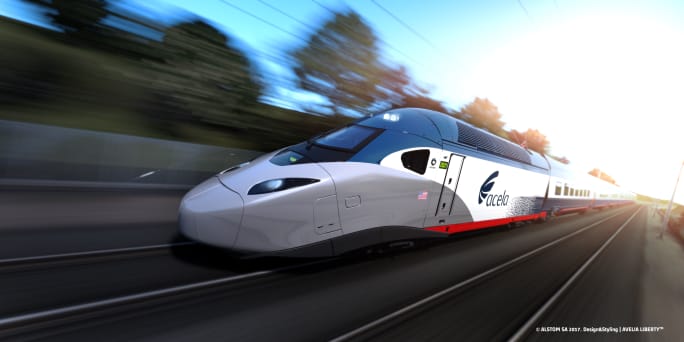
The prototype set will travel from Buffalo, N.Y., to La Junta, Colo., via Chicago, from February 17 to the 19, on the route used by the Amtrak Lake Shore Ltd. and Southwest Chief trains. © ALSTOM SA 2017
The first of Amtrak’s 28 new Acela trainsets, scheduled to enter service throughout the Northeast Corridor (NEC) in 2021, will be leaving from Alstom’s facility in Hornell, N.Y. on Monday, Feb, 17 for high-speed testing at the Transportation Technology Center near Pueblo, Colo. Nine months of dynamic testing will include the trainset’s pantograph, railway dynamics, tilting, traction, slip/slide and wayside protection, brakes, and train control management systems. Once complete, the trainset will return to Alstom for installation of its interiors.
The new trains will accommodate nearly 25 percent more customers while continuing the spacious, high-end comfort of the current Acela service. Each train will feature improved Wi-Fi access, personal outlets, USB ports and adjustable reading lights and feature sustainable components, including seating made from recycled leather.
Acela trains are also the country’s fastest, most comfortable and all-electric intercity trains, providing a more environmentally friendly way to travel. Amtrak will further reduce its carbon footprint by using 40 percent less energy per Acela customer when these trains enter service.
In preparation for the new fleet, Amtrak is undertaking a record amount of track and infrastructure work along the NEC aimed at improving ride quality, increasing reliability, and increasing overall on-time performance.
Alstom is building the next-generation high-speed Acela trainsets using parts manufactured by nearly 250 suppliers in 27 states, with 95 percent of the components produced domestically. More than 1,300 new jobs are being generated in nearly 90 communities across the U.S. to support production, including the creation of new, sustainable, high-tech, engineering and manufacturing jobs. Alstom employs more than 800 people in Hornell, including members of the International Association of Machinists and Aerospace Workers.
Alstom has also completed the assembly of its second trainset, which is expected to travel to Amtrak’s Penn Coach Yard in Philadelphia for testing in March 2020. The construction of the third trainset began in November 2019 and is tentatively scheduled to travel to Philadelphia for testing in September 2020.

Contract Four is the largest in the Second Avenue Subway Phase 2 project and includes construction of station infrastructure, tracks, and signals for the subway expansion, MTA officials said. Work on Contract Four will begin in 2027.
Read More →
Agency officials said July’s ridership indicates MTS’s continued recovery from the pandemic.
Read More →
The Garden State Initiative analysis examines the roles of Amtrak infrastructure, fleet management, and agency operations while recommending a more performance-based approach to improving reliability.
Read More →
Beginning in 2027, Stadler will provide on-site technical expertise, spare parts support, training, and obsolescence management to help extend the reliability and longevity of CapMetro’s GTW fleet.
Read More →
In METRO's latest installment, we take a look at recent news from Complete Coach Works, Beep, FlixBus, and more partnerships making headlines across the transportation sector.
Read More →
With a six-mile expansion planned, the Charlotte streetcar is positioned to connect more neighborhoods and major transit hubs across the region.
Read More →
Pedestrian microsimulation is helping rail planners identify bottlenecks, test station designs, and prepare complex transit hubs for growing passenger volumes.
Read More →
The new maintenance facility will support Amtrak’s Airo trainsets while improving maintenance efficiency and turnaround times in New York.
Read More →
The privately developed project would offer a 15-minute trip between downtown and O’Hare’s Terminal 2, with trains operating every 15 minutes on a dedicated track. The service would use battery-electric trains and three existing freight rail rights-of-way.
Read More →
The draft feasibility report identifies strategies to protect the coastal rail line for decades as the agency continues near-term stabilization and sand placement efforts.
Read More →